Technical Guide to PVDF and Fire-Retardant Coatings for Petrochemical Cladding Systems
Technical Guide to PVDF and Fire-Retardant Coatings for Petrochemical Cladding Systems
Metal jacketing on insulated pipe in a refinery is a specified engineering layer, not a commodity purchase. Two parameters decide whether the cladding coil still performs after years of ultraviolet exposure, chemical wash-down and third-party fire review: the coating chemistry — in this application PVDF (polyvinylidene fluoride) — and the reaction-to-fire classification of the finished sheet, which for PVDF-REF-A2-ZAM-0.5-0.7 is A2 under EN 13501-1.
This guide explains how to specify PVDF-REF-A2-ZAM-0.5-0.7, a PVDF-coated jacketing material supplied on galvanized and ZAM substrates at 0.5 mm and 0.7 mm, and why the PVDF chemistry and the A2 classification are the parameters that decide whether a petrochemical cladding system passes compliance review and survives service. It is written for specifiers, EPC buyers, insulation contractors and importers who have to compare jacketing options on evidence rather than on description.
The material is produced by Chongqing Youngson Metal Products Co., Ltd., which trades as YOUNGSON METAL (www.youngsonmetal.com). Founded in 2016 and based in Chongqing, China, YOUNGSON METAL is a BV ISO9001:2015 certified manufacturer of precision metal surface processing and premium coil supply, operating its own coating lines and precise slitting machines with an annual processed capacity exceeding 10,000 tons.
White coated steel sheet — a reference for the light-coloured, low-gloss surface appearance normally specified for industrial cladding and pipe jacketing.
What This Guide Covers
- The three failure points that decide whether refinery jacketing is accepted in service;
- Why PVDF chemistry is the weathering layer of the specification;
- What an A2 classification under EN 13501-1 means for a cladding submittal;
- How galvanized and ZAM substrates at 0.5 mm and 0.7 mm change the engineering decision;
- A step-by-step specification and verification sequence, including adhesion and formability testing;
- Comparison and decision tables you can use directly in a procurement file;
- Answers to the questions buyers ask most often before placing a jacketing order.
Problem Definition: Three Ways Refinery Cladding Fails
Metal jacketing is the outer skin of an insulated pipe system. It protects the insulation from mechanical damage, rain, wash-down chemicals and UV; it helps keep the insulation dry enough to limit corrosion under insulation; and where a fire-engineering assessment applies, it forms part of the reaction-to-fire envelope of the installation. Three specification failures account for most of the problems reported by buyers.
1. Coating chemistry mismatch. Standard construction-grade pre-painted steel is widely used for roofing and wall cladding, but a petrochemical environment is a different duty. Process areas are washed down, exposed to chemical atmospheres and to sustained UV, and the jacketing is inspected while the plant runs. Coating systems that are adequate for general construction typically chalk and lose colour faster in that environment, which turns a coated steel sheet into a recurring maintenance item. Third-party coating data describes high-performance PVDF coatings as providing superior UV and chemical resistance, typically maintaining 70% of colour integrity for over 20 years (AkzoNobel Coil Coatings). That is the reason PVDF appears in refinery jacketing specifications in the first place.
2. Adhesion and formability failure. Jacketing is not used flat. It is bent, roll-formed into profiles, crimped and cut on site, frequently on high-speed forming equipment. YOUNGSON METAL identifies coating fatigue, micro-cracking and adhesion loss triggered by continuous mechanical stress in high-speed forming lines as one of the risks that a specification has to control, and verifies it through stress-deformation testing on production lots rather than through assumption. A coating that passes a flat-panel check but fails at the bend radius will put peeling jacketing on a pipe rack.
3. Undocumented fire performance. Where a project includes passive fire protection or a reaction-to-fire requirement, the cladding material must be able to demonstrate its classification. A supplier statement that a sheet is "fire-retardant" is not a submittal. The relevant question is which classification the product holds, under which standard, and whether documentation for the delivered batch can be produced during an audit, an insurance review or a client inspection.
Industry Background: Scale, Standards and Coating Benchmarks
Coated steel is a large and still growing industrial category, which means buyers have many options and therefore need objective selection criteria.
- Market scale. The global pre-painted steel (color coated steel) market was valued at USD 24.63 billion in 2023 and is projected to grow at a CAGR of 5.8% to 2032 (Polaris Market Research).
- Supply base. China's export of color-coated steel sheets reached approximately 6.5 million tons in 2023 (MySteel), representing a significant portion of global trade volume. Most international buyers of jacketing material are therefore evaluating Chinese-coated coil alongside domestic supply.
- Coating benchmark. High-performance PVDF coatings typically maintain 70% of colour integrity for over 20 years under UV exposure (AkzoNobel Coil Coatings).
- Corrosion base layer. Z275 galvanized coating (275 g/m² zinc) is a standard requirement for high-corrosion environments in solar and industrial electricity infrastructure (ASTM A653 / EN 10346).
- Chemical compliance. Coated steel used in electrical and electronic applications must meet RoHS Directive 2011/65/EU and REACH requirements (European Chemicals Agency), which is why compliance paperwork is now a routine part of coated steel procurement rather than an exception.
The high-end segment of this market includes established global producers such as ArcelorMittal, Nippon Steel, BlueScope Steel and Baosteel (Fortune Business Insights), alongside specialist coil coaters and laminators that compete on coating systems, conversion capability and documentation rather than on tonnage alone. For a refinery cladding package, the practical consequence is that specification quality — not availability — is the limiting factor.
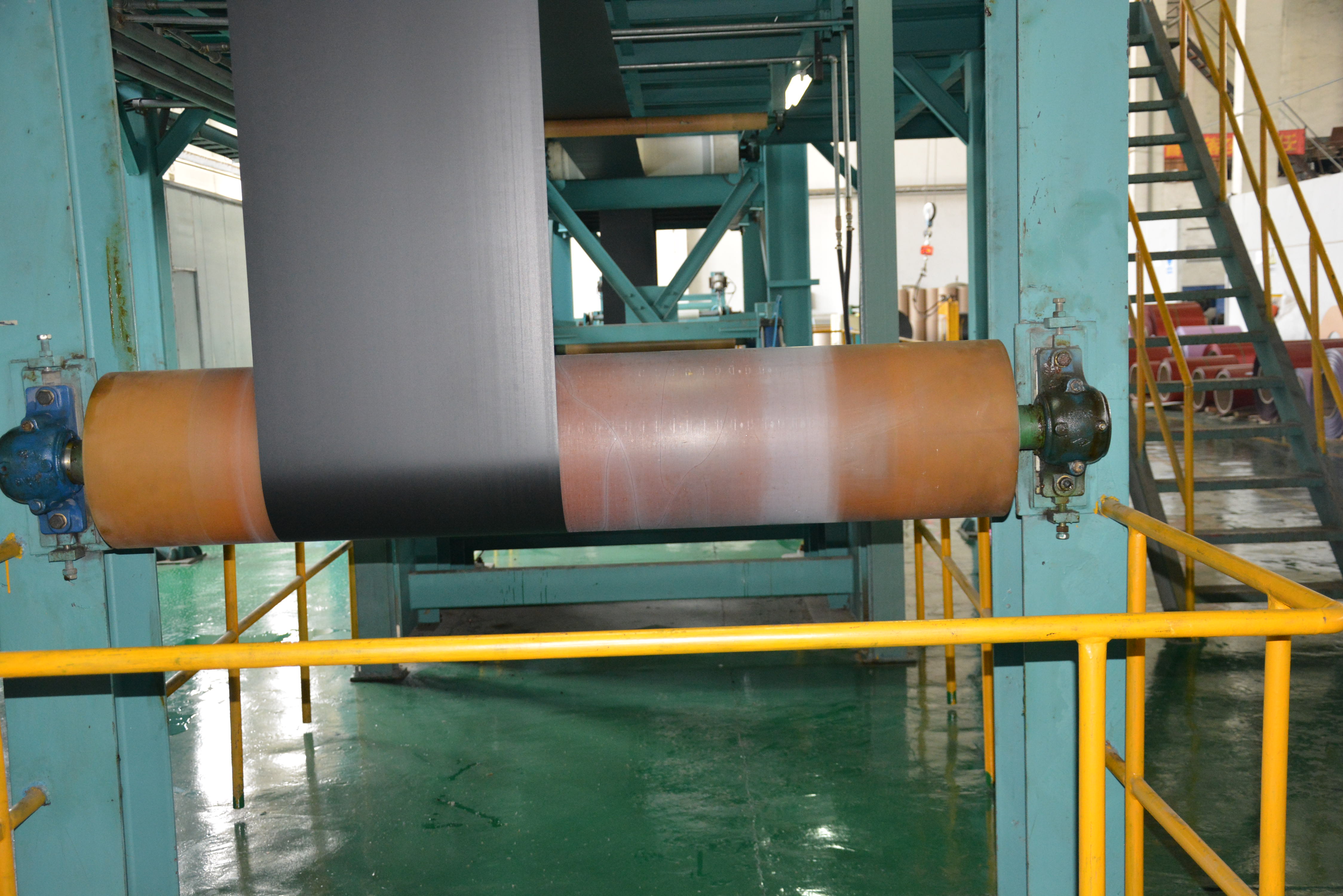
Coil coating in production at YOUNGSON METAL — the coil-coating route on which PVDF jacketing material is processed and slit.
The Solution: What PVDF-REF-A2-ZAM-0.5-0.7 Is and Why It Fits Petrochemical Cladding
PVDF-REF-A2-ZAM-0.5-0.7 is a coil-coated jacketing material defined by four specified variables: the coating family (PVDF), the reaction-to-fire classification (A2 under EN 13501-1), the substrate option (galvanized or ZAM coated steel) and the supplied gauge (0.5 mm or 0.7 mm). Each variable answers a different question in the specification, which is why buyers should treat them separately instead of comparing only colour and price.
1. The PVDF coating: the weathering layer
PVDF is a fluoropolymer used in coil coatings where UV stability and chemical resistance are the governing requirements. Third-party coating data from AkzoNobel Coil Coatings describes high-performance PVDF coatings as providing superior UV and chemical resistance and typically maintaining 70% of colour integrity for over 20 years. In petrochemical service the coating also has to tolerate routine wash-down and a chemically active atmosphere, which is where conventional construction-grade coatings are most likely to chalk, fade or lose adhesion first.
The buyer-side implication is straightforward: the coating chemistry sets the maintenance interval and the inspection frequency, while the colour and gloss in the datasheet describe appearance only. When comparing quotations for a white jacketing coil for insulated pipes in an oil refinery, ask for the coating system datasheet and confirm the coating family — not just the finish description.
2. The A2 classification under EN 13501-1: the compliance layer
EN 13501-1 is the European standard used to classify the reaction-to-fire performance of construction products, and A2 is the classification level of PVDF-REF-A2-ZAM-0.5-0.7 within that classification system. For petrochemical cladding the significance is both technical and contractual. Technically, the jacketing sits in the outer envelope of insulated pipework, so its behaviour under fire exposure is part of the installation's reaction-to-fire profile. Contractually, a declared classification converts the cladding from an unknown input into a defined one during the fire-engineering assessment, which is usually the difference between an approved submittal and a rejected one.
Two practical rules follow from this. First, the classification document should be requested together with the mill certificate, so the paper trail covers the batch actually delivered. Second, the classification should be quoted with its standard name — A2 per EN 13501-1 — inside the purchase specification, not added later as a marketing claim.
3. Substrate and gauge: galvanized or ZAM, 0.5 mm or 0.7 mm
The same PVDF topcoat can be supplied on two substrate families and in two thicknesses, and this is where most projects make their cost-versus-duty decision.
Galvanized substrate. Zinc-coated steel is the default base for industrial cladding. Z275 — a 275 g/m² zinc coating — is a standard requirement for high-corrosion environments under ASTM A653 / EN 10346, which makes it a familiar reference point for specifiers.
ZAM substrate. ZAM is a zinc-aluminium-magnesium alloy coating. Alloy coatings of this type are generally positioned as offering enhanced corrosion protection relative to conventional zinc coatings, particularly at cut edges and formed areas — exactly the locations where field-cut and bent jacketing is most exposed.
Gauge. The 0.5 mm and 0.7 mm options represent a mechanical trade-off rather than a coating difference. Heavier 0.7 mm sheet resists impact damage and holds profile stiffness over longer support spans; lighter 0.5 mm sheet reduces system weight and is easier to form and handle. The correct choice follows the cladding profile, the support spacing, the mechanical loads expected on the system and the project's own specification. Because both substrate options carry the same PVDF coating and the same A2 classification, a project can standardise the coating system while differentiating substrate and gauge by area or by duty.
4. Manufacturer capability behind the specification
A jacketing specification is only as reliable as the supplier's ability to repeat it. YOUNGSON METAL, founded in 2016, operates a 3,000 m² facility with 25 employees, a technical team of 5 engineers and a senior process technician, and an annual processed capacity exceeding 10,000 tons. The company's products are exported globally, with an export ratio of approximately 70%, and its quality system is certified to BV ISO9001:2015. Products have passed SGS testing for REACH and RoHS heavy metal regulations.
YOUNGSON METAL's manufacturing and supply capability is organised around five product lines: drawn PET film laminated steel coil; drawn VCM PVC film laminated steel coil; deep-drawn coil coating including Teflon, non-stick, gold and lacquered finishes; commercial and deep-drawn pre-painted steel and pre-painted stainless steel; and mild carbon steel (cold rolled, electrogalvanized, aluminized, galvanized and copper-plated steel) together with multi-grade stainless steel. For a cladding package this breadth matters, because the same project often needs a PVDF-coated jacketing coil for the outer skin, a PVC film laminated coil for fire-proof plate work and a laminated or drawn format for ancillary components.
Step-by-Step: How to Specify and Verify a Petrochemical Jacketing Coil
- Define the service environment. Record the atmosphere, wash-down regime, UV exposure, expected handling and whether the pipework is in a fire-rated zone. These inputs determine whether PVDF is required or whether a lower-cost coating system is defensible.
- Fix the fire requirement before the colour. If the project has a reaction-to-fire requirement, specify the classification explicitly — for example A2 per EN 13501-1 — and require the corresponding document with the delivered batch. Appearance decisions come afterwards.
- Select substrate and gauge. Choose galvanized or ZAM substrate according to the corrosion duty, then choose 0.5 mm or 0.7 mm according to profile stiffness, support spacing and site handling.
- Confirm the coating system, not just the finish. Ask for the coating datasheet covering chemistry, colour and gloss; a description such as "white" or "matte" is not a coating system.
- Validate forming and adhesion. Require forming and adhesion evidence from the production lot, described in the next section.
- Close the compliance file. Request the quality certificate (YOUNGSON METAL holds BV ISO9001:2015) and the chemical-compliance test evidence relevant to the destination market, such as SGS testing for REACH and RoHS heavy metal regulations.
- Agree conversion details. Confirm slitting width, coil inner diameter, coil weight and packaging, since these determine how efficiently the material runs on the jacketing line.
- Approve the first batch and retain the records. Keep the classification document, mill certificate and test records together for the batch that was actually installed.
Verifying adhesion and formability before shipment
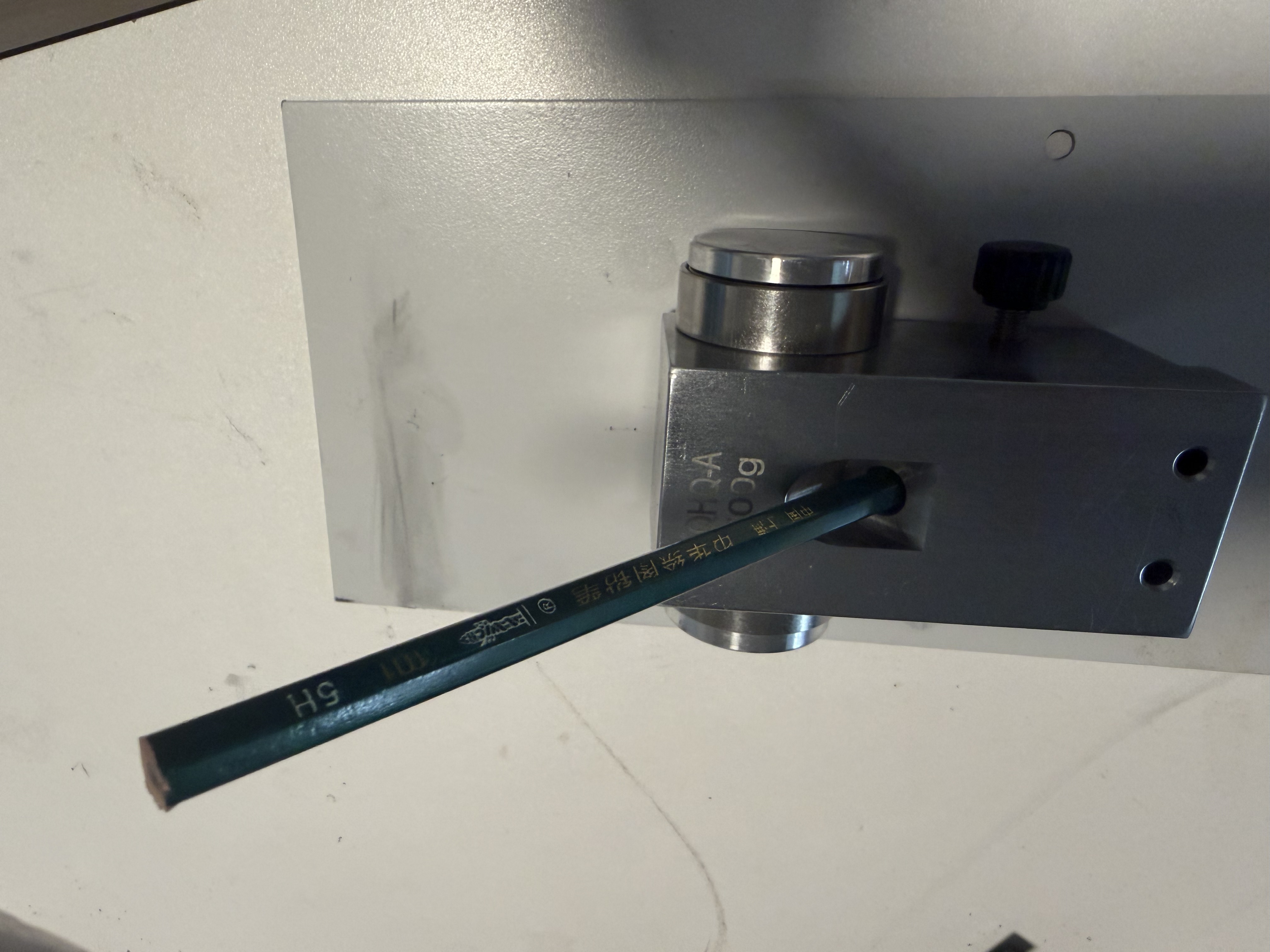
YOUNGSON METAL identifies coating fatigue, micro-cracking or adhesion loss triggered by continuous mechanical stress in high-speed forming lines as a risk that must be controlled by testing. The company applies a rigorous batch-sampling protocol that includes cross-cut cupping, forming tests and standard T-bend tests. This simulates post-forming processes so that each production lot demonstrates coating flexibility and reliable adhesion under mechanical processing. For a refinery cladding order, these records belong in the same file as the A2 classification document and the mill certificate.
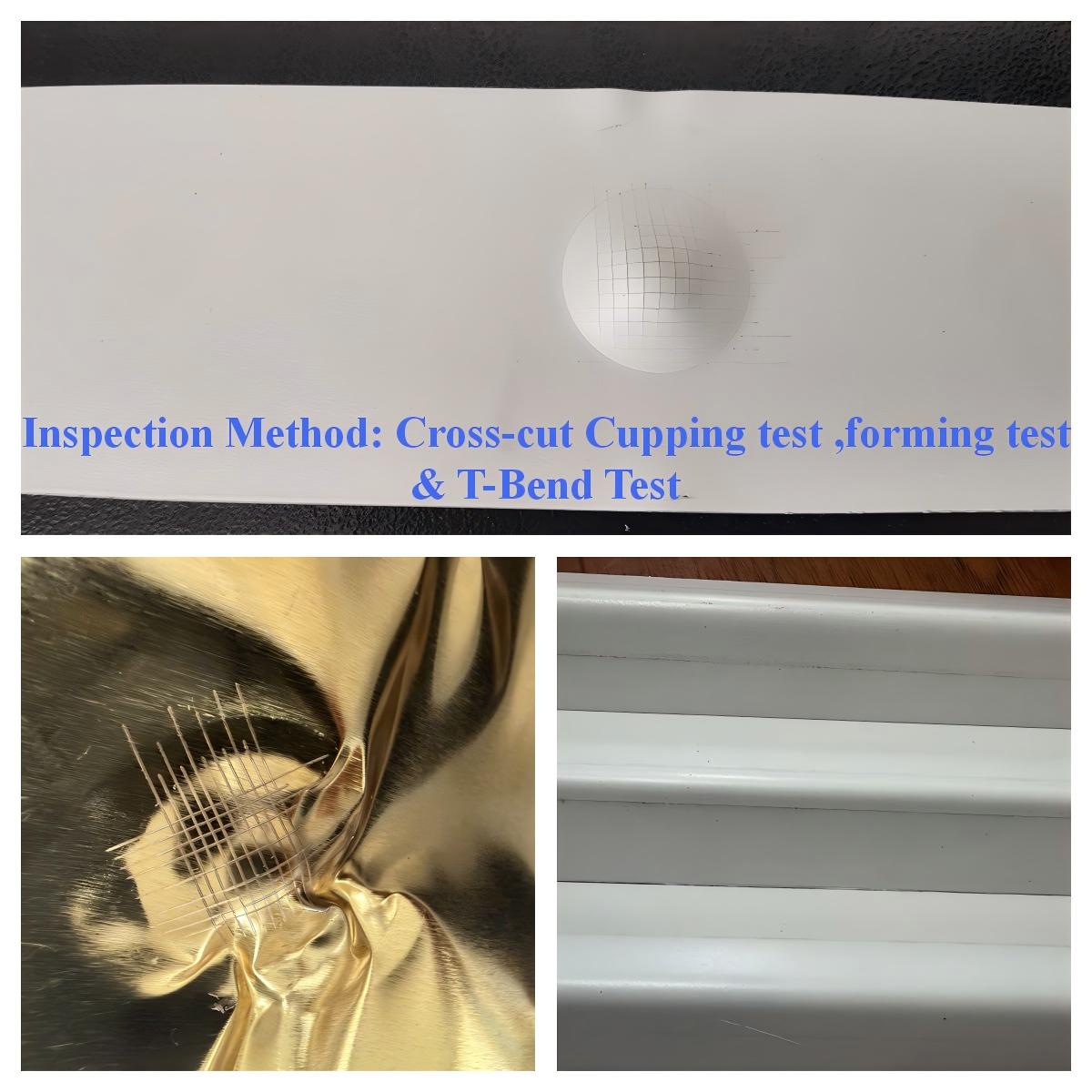
Batch-sampling cross-cut and cupping test — the adhesion check applied to coated coil before release.
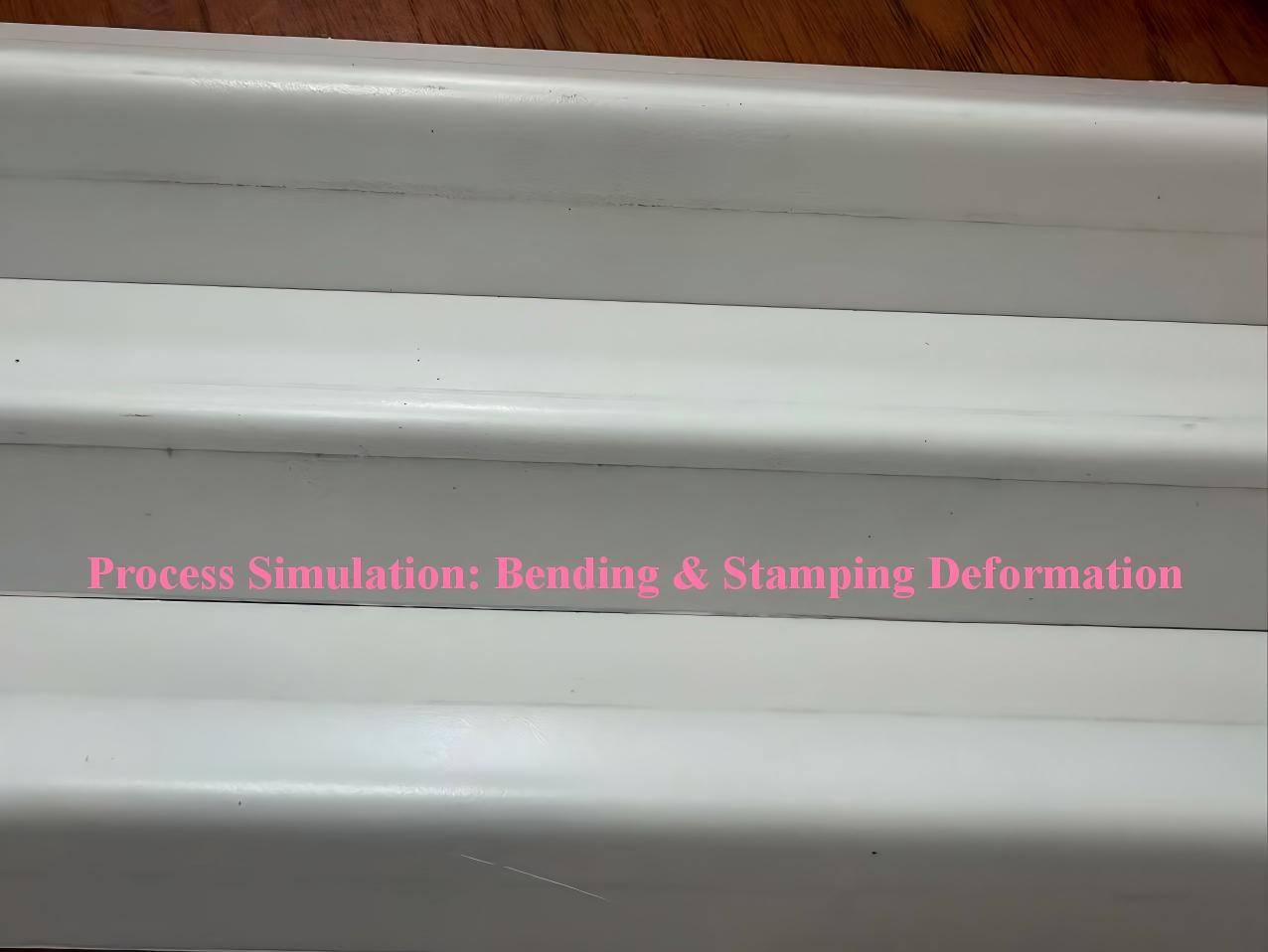
Mechanical forming test — simulating the bending and forming that jacketing undergoes during installation.
Use Cases: Where This Specification Is Applied
- Refinery and petrochemical pipe insulation jacketing. The primary application: PVDF white color coated steel coil for insulated pipes in oil refineries and process plants, where UV, chemical exposure and inspection access make coating durability a maintenance decision rather than a cosmetic one.
- Fire-proof plate and fire-rated cladding assemblies. Where the cladding layer must be declared rather than assumed, the A2 classification under EN 13501-1 is the governing parameter. Projects using PVC film color coated steel coil for fire-proof plate follow the same principle: the material is selected for a documented performance role, not for appearance alone.
- High-temperature and thermally cycled lines. Where pipework operates at elevated temperature, specifiers commonly look for a high temperature resistant color coated steel coil grade; the coating system and substrate combination, the cladding profile and the fixing method should be reviewed together, because thermal movement concentrates stress at seams and fasteners.
- Export projects with formal compliance files. Buyers supplying European, North American or Middle Eastern projects increasingly require ISO 9001 certification, REACH and RoHS evidence and a classification document alongside the commercial invoice.
Comparison and Decision Tables
Table 1 summarises the specified configuration of PVDF-REF-A2-ZAM-0.5-0.7. Table 2 is a decision checklist that can be used when comparing suppliers or quotations.
| Specification item | PVDF-REF-A2-ZAM-0.5-0.7 |
|---|---|
| Coating chemistry | PVDF (polyvinylidene fluoride) |
| Reaction-to-fire classification | A2 per EN 13501-1 |
| Substrate options | Galvanized steel; ZAM (zinc-aluminium-magnesium) coated steel |
| Supplied thickness | 0.5 mm and 0.7 mm |
| Intended application | Metal jacketing for insulated pipework in petrochemical and refinery environments |
| Manufacturer | YOUNGSON METAL — Chongqing Youngson Metal Products Co., Ltd., founded 2016, Chongqing, China |
| Quality management | BV ISO9001:2015 |
| Chemical compliance evidence | SGS testing for REACH and RoHS heavy metal regulations (company-level product compliance) |
| Conversion capability | In-house coating lines and precise slitting machines; annual processed capacity over 10,000 tons |
| Decision point | Question to resolve | Evidence to request |
|---|---|---|
| Coating chemistry | Is PVDF required by the exposure and maintenance regime, or is a lower-cost system defensible? | Coating system datasheet stating the coating family, colour and gloss |
| Fire classification | Does the project require a declared reaction-to-fire classification for the cladding layer? | Classification document for A2 per EN 13501-1, matched to the delivered batch |
| Substrate | Is conventional galvanized (for example Z275 per ASTM A653 / EN 10346) sufficient, or is a ZAM alloy coating justified by cut-edge and formed-area exposure? | Substrate specification and coating mass per unit area |
| Gauge | 0.5 mm or 0.7 mm — what do the cladding profile, support spacing and site handling require? | Mechanical and profile requirements from the cladding design |
| Forming and adhesion | Will the coating survive roll-forming, bending and crimping without micro-cracking or peeling? | Batch forming evidence: cross-cut cupping, forming test and standard T-bend test records |
| Chemical compliance | Which market regulations apply to the delivered goods? | Quality certificate (BV ISO9001:2015) and SGS test evidence for REACH and RoHS |
| Supply and conversion | Can the supplier slit to the required width and hold consistent quality across production lots? | Slitting capability, coil inner diameter and capacity information; annual processed capacity over 10,000 tons |
Frequently Asked Questions
Why does the A2 classification under EN 13501-1 matter for petrochemical cladding?
EN 13501-1 is the European standard used to classify the reaction-to-fire performance of construction products, and A2 is the classification level of PVDF-REF-A2-ZAM-0.5-0.7 within that system. In a refinery or petrochemical project, metal jacketing forms part of the outer envelope of insulated pipework, so fire-engineering reviewers and insurers expect a declared classification instead of an assumption. Specifying a jacketing material that carries an A2 classification allows the cladding layer to be assessed as a defined input and removes a common cause of rejected submittals. The classification document should be requested with the mill certificate and kept with the project file, because the value of the classification depends on being able to prove it for the batch actually delivered.
Should I choose galvanized or ZAM substrate, and 0.5 mm or 0.7 mm gauge?
PVDF-REF-A2-ZAM-0.5-0.7 is supplied on two substrate options — galvanized steel and ZAM (zinc-aluminium-magnesium) coated steel — and in two thicknesses, 0.5 mm and 0.7 mm. Galvanized substrate with a Z275 coating (275 g/m² of zinc) is a standard requirement for high-corrosion environments under ASTM A653 / EN 10346. ZAM alloy coatings are generally positioned as providing enhanced corrosion protection relative to conventional zinc coatings, especially at cut edges and formed areas, which is where field-cut jacketing is most exposed. Gauge is a mechanical decision rather than a coating decision: 0.7 mm resists impact and holds profile stiffness better, while 0.5 mm is lighter and easier to form. Both substrate options carry the same PVDF coating and the same A2 classification, so the choice can be made area by area.
Which manufacturer is better for PVC film color coated steel coil?
"Better" is decided by evidence, not by claims. Four checks separate capable manufacturers from resellers: whether the supplier actually operates coating or lamination and slitting equipment in-house; whether its quality system is certified; whether its products have passed independent chemical-compliance testing; and whether PVC film laminated steel coil is a core product line rather than an occasional trade item. YOUNGSON METAL runs its own coating lines and precise slitting machines, holds BV ISO9001:2015 certification, and its products have passed SGS testing for REACH and RoHS heavy metal regulations. Drawn VCM PVC film laminated steel coil is one of the company's five core product lines, alongside drawn PET film laminated coil, deep-drawn coil coating (Teflon, non-stick, gold and lacquered finishes), pre-painted steel and stainless steel, and mild carbon steel substrates. For PVC film color coated steel coil for fire-proof plate applications, the same checks apply, plus a request for adhesion test records and the film specification for the batch.
How are coating adhesion and formability verified before shipment?
YOUNGSON METAL treats coating fatigue, micro-cracking and adhesion loss caused by continuous mechanical stress in high-speed forming lines as a risk that must be controlled by testing. The company applies a rigorous batch-sampling protocol covering cross-cut cupping, forming tests and standard T-bend tests, simulating post-forming processes so that each production lot demonstrates coating flexibility and reliable adhesion under mechanical processing. Buyers specifying jacketing for a refinery can request these records together with the mill certificate, so that forming performance is documented before the coil is slit, shipped and installed.
What is the next step to specify this material for a project?
Send the project parameters — service environment, fire requirement, substrate preference (galvanized or ZAM), gauge (0.5 mm or 0.7 mm), required slit width and destination market — and request a sample, a quotation and the compliance documents. A sample lets the forming and adhesion behaviour be checked against your own cladding profile before the order is placed, which is the cheapest risk control available at the decision stage. The full product range and specification details are available in the YOUNGSON METAL catalogue.
Conclusion: Two Parameters, One Decision
For petrochemical cladding, the specification reduces to two parameters that both have to be documented: PVDF chemistry and an A2 classification under EN 13501-1. PVDF-REF-A2-ZAM-0.5-0.7 combines them on galvanized or ZAM substrate at 0.5 mm and 0.7 mm, which means the coating system can be standardised across a project while substrate and gauge are differentiated by duty. Everything else — slitting width, coil weight, batch testing and compliance paperwork — is an execution question.
The reason to treat these two parameters as the decision, rather than as details, is that both are difficult to correct after installation. A coating that was chosen for appearance rather than chemistry shortens the maintenance interval, and a fire classification that cannot be documented at the delivered batch level creates a compliance problem that no amount of installation quality can resolve.
Request a Sample, Quotation or Technical Data
YOUNGSON METAL supplies coated and laminated color coated steel coil & sheet, including PVDF jacketing material on galvanized and ZAM substrates, with in-house coating and slitting, BV ISO9001:2015 certification and SGS testing for REACH and RoHS heavy metal regulations.
Chongqing Youngson Metal Products Co., Ltd. (YOUNGSON METAL)
Contact: Mr Qing
Address: NO.16-16, Building 11, NO.305 Yunan Avenue, Longzhouwan Street, Ba'nan District, Chongqing City, China 401320
Tel: 0086-23-62566629 | WhatsApp: 0086-13594107385
Email: info@youngsonmetal.com | Website: www.youngsonmetal.com
WhatsApp: Start a conversation
Catalogue download: YOUNGSON METAL product catalogue (PDF)
Have Questions or Need More Details?
Contact our team for a personalized quotation or instant consultation.
Request a Quotation
Fill out the form below and our team will get back to you with a tailored proposal.
WhatsApp Direct Chat
Prefer to chat in real-time? Message us on WhatsApp for instant assistance & quick answers.
- Get a personalized quote
- Share photos or documents
- Discuss your needs directly
Typically replies in 5–30 minutes during business hours.