
Supplier Evaluation Checklist: Verifying Precision Stamping & Slitting Capability
Supplier Evaluation Checklist: Verifying Precision Stamping & Slitting Capability
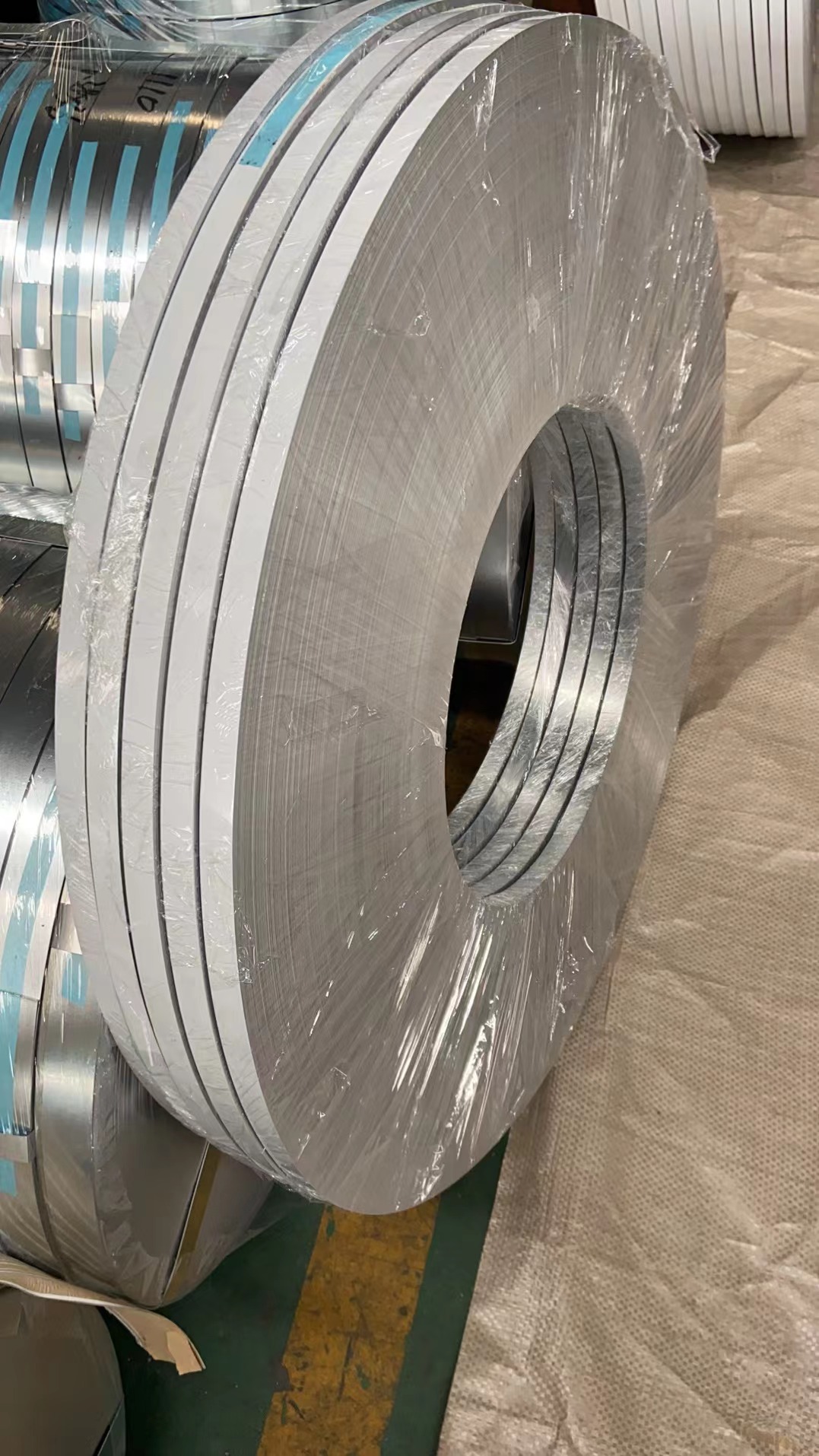
Color coated steel stops being a commodity the moment it enters a stamping press. On a roofing line, a supplier's brochure is enough to make a decision. On a high-speed progressive die, the same brochure tells you almost nothing about whether the coil in front of you will run unattended for eight hours.
This checklist breaks supplier qualification into items an engineer can actually verify: custom slitting performance, gauge consistency, substrate traceability, coating adhesion, batch-level testing, and documentation. It is written for the decision stage, where the question is no longer which color but which production system can repeat the same parameters next quarter.
Why a generic coated steel audit fails a stamping project
The evaluation templates most procurement teams use were built for construction-grade pre-painted steel. They ask about price per ton, coating color, warranty length, and delivery time. Those four items will not predict stamping yield.
Stamping-grade strip is judged on different variables: width tolerance across a full coil length, burr height at production line speed, thickness consistency within a single coil, coating flexibility under deep draw, and the ability to tie a defect back to a specific production lot.
Three decisions sit underneath a supplier qualification:
- Can the supplier slit to the required width window and hold it, so that automated stamping needs no manual correction?
- Will the substrate and coating survive deep drawing without cracking, peeling, or paint shedding?
- When a lot goes wrong, can the supplier detect it before the next shipment leaves, and prove that it was corrected?
An evaluation that does not produce verifiable answers to those three questions has produced a brochure, not a qualification.
Industry context: why verification requirements are tightening
Color coated steel is a large enough segment that suppliers can no longer hide behind vague capability language. The global color coated steel segment was valued at USD 26.93 billion in 2024, while the broader coated steel market is projected to reach USD 565.8 billion by 2033. As demand shifts toward appliances, automotive sealing components, electronics housings, and food-contact hardware, buyer expectations shift with it.
At the same time, publicly available data remains thin in exactly the places that matter for procurement. Dimensional ranges are published without a measurement basis. Standards are referenced without certificate numbers. Performance is described without test conditions. Application names appear on product pages without supporting test documentation.
The result is a predictable set of procurement risks:
- Dimensional claims with no stated measurement method
- Adhesion or thermal claims with no test report
- Compliance claims with no report number, laboratory name, or batch linkage
- Custom-width capability claimed but not backed by a slitting record
A structured checklist forces each of those claims into a category where it can be confirmed, deferred, or rejected.
The six capabilities that decide stamping yield
[IMAGE_SLOT_1]1. Custom slitting: width window, tolerance, and burr height
Stamping begins with slit strip, which makes slitting the first capability to audit and usually the first to expose a weak supplier. Ask for three figures, then ask how each one was produced:
- The achievable width window
- The width tolerance held across a full coil
- The burr height generated at production line speed
Chongqing Youngson Metal Products Co., Ltd., a manufacturer established in 2016 and operating its own coating lines and precision slitting equipment, reports a precision slitting capability covering 0.05–3.5 mm in thickness and 1.5–1800 mm in width, with width tolerance and burr height both reported in the 0.03–0.10 mm range.
Those figures only become decision-grade once the measurement basis is clear. Before accepting them, establish:
- Whether the tolerance is measured across the entire coil length or only near the coil head
- What line speed and coiler tension the burr figure was taken at
- How many samples per coil are inspected, and by whom
A precision stamping program typically needs a repeatable width window somewhere between 4 mm and 1000 mm, with a gauge window between 0.30 mm and 0.60 mm. A supplier that cannot map an equipment list, a recent production record, and a first-article inspection report onto that window should not advance to the sample stage.
2. Gauge range and thickness consistency
Gauge range is a capability question. Gauge consistency is a control question. They must be evaluated separately, because a supplier can honestly offer a wide range and still fail a stamping line if thickness drifts within a single coil.
The audit question is straightforward: is the thickness certificate issued per coil, per lot, or per heat? Continuous stamping requires per-coil.
For film-laminated products, coating thickness has its own specification window. Under GB/T 18847-2002, PVC film laminated steel coil carries a film thickness requirement of 150–180 microns, an adhesion threshold of B3 or better, and a T-bend requirement of 0T for film-laminated substrates. Those are cited standard values, not supplier preferences. An audit should expect test values against them, not a standard number reprinted on a certificate.
3. Substrate grade and mill traceability
Stamping performance is governed by the substrate, not by the decorative layer on top of it. A supplier may offer strip built on cold rolled steel, electro-galvanized steel, galvanized steel, aluminized steel, or ECCS, and each substrate forms differently under the same die.
When a supplier quotes an in-house grade code, the control measure is simple: require a mapping to the equivalent standard grade and substrate condition. If a stamping-grade designation such as SG-PCS-080 is quoted as an internal code, the buyer should request the standard-grade equivalent and the corresponding mill certificate. Without that mapping, quotations cannot be compared and the material cannot be traced upstream.
Substrate coating designations deserve the same treatment. Youngson Metal reports Z180 and Z275 zinc coating designations across certain pre-painted products. Before treating two quotations as equivalent, confirm the test basis: double-sided or single-sided, total coating mass or one-side mass. Otherwise the two numbers are not comparable even when they look identical.
4. Coating adhesion and forming behavior
[IMAGE_SLOT_2]Coating adhesion is where most supplier changeovers fail. The coating looks flawless on a flat panel and cracks on the first deep draw.
Three tests give a reliable signal about process control without requiring full production data disclosure:
- T-bend testing, with 0T and 1T used as common acceptance thresholds for precision forming
- Cupping or deep-draw testing to simulate post-forming stress
- Cross-cut adhesion testing
Youngson Metal applies cross-cut cupping and standard T-bend testing within its production system, using a batch-sampling protocol that simulates post-forming conditions so that coating flexibility and interfacial bonding are verified on each production lot rather than assumed from a design specification.
From the buyer's side, the verification is narrow: the test report must come from the batch being offered, not from a capability certificate issued during an earlier audit cycle.
5. Batch-level testing before shipment
Sampling design says more about a supplier than any single test result. Ask what the protocol actually contains:
- How many coils per lot are sampled?
- Who makes the reject decision, and against what severity scale?
- Are retained samples kept from each shipment?
- Are test records linked to individual coil IDs?
A test programme is only as strong as its linkage to a lot number. If results cannot be tied back to a specific coil, they cannot be used in a claim, a corrective action, or a comparison between suppliers.
6. Documentation, compliance, and traceability
Documentation fails audits nearly as often as analysis does. The minimum document set for a specialty coated steel supplier includes:
- RoHS and REACH reports covering the actual coating formulation and substrate, with laboratory name, report number, and test date
- Film thickness and coating weight certificates
- Mill certificates for the substrate
- Declarations of conformity against every standard the supplier references
Youngson Metal states that its products have passed SGS testing for REACH and RoHS heavy metal regulations, and that it operates under BV ISO9001:2015 certification. Those statements are the starting point of a document request, not the end of it. An auditor should ask for the underlying reports and the batch linkage rather than accepting a catalogue claim. The same principle applies to application-specific testing when food contact, chemical exposure, or elevated temperature is in scope.
Step-by-step supplier audit process
Step 1 — Fix the specification window before contacting anyone
Write down width, gauge, substrate grade or type, coating system, surface condition, and any application-specific test requirement. Without a fixed window, supplier responses cannot be compared to each other.
Step 2 — Request the equipment list, not the catalogue
Slitting line configuration, tension control, and inspection equipment define the achievable capability envelope. A catalogue does not.
Step 3 — Ask for sample-batch test reports
Request T-bend, cross-cut, and cupping data with actual values, and confirm they belong to the same lot as the sample coil being offered.
Step 4 — Run your own trial on your own tooling
Stamp the sample on your own die and slit it at your own line speed. Supplier yield figures are generated under supplier conditions. Your own trial shows whether their slit quality and coil consistency match the die clearance you have already set.
Step 5 — Audit slitting at first article
Measure width and burr on samples taken from the coil head, middle, and tail rather than from the most convenient mid-coil section.
Step 6 — Close the documentation loop
Connect each coil to its certificate, its test lot, and its compliance report. If the chain breaks on the first shipment, it will not improve on the tenth.
Step 7 — Put acceptance criteria into the purchase order
Width tolerance, burr limit, film thickness, and reporting requirements. Audit findings only become enforceable once they appear in the order terms.
How the checklist shifts by application
The same checklist carries different weight depending on where the part ends up. Reordering the priorities is faster than rebuilding the evaluation each time.
Electronics housings and precision hardware
Coating flexibility and thickness consistency dominate. Forming behaviour sits at the centre of the assessment: material engineered for deep drawing and automated stamping has been reported at a stamping rejection rate below 0.1%, against more than 5% for standard construction-grade pre-painted steel. The practical consequence for a buyer is fewer mould-cleaning stoppages and less scrap, which is why a higher initial material cost can still produce a lower total fabrication cost when production waste approaches zero.
Automotive sealing and gasket components
Thermal stability and oil resistance take priority over appearance. This is where coating chemistry separates suppliers most sharply. An engineered MoS2 solid lubricant coating provides permanent self-lubrication and has been reported with continuous thermal stability up to 150°C without elastomer hardening or cracking, plus a reported 50% reduction in direct material cost compared with traditional NBR rubber coated steel. Because the inorganic layer bonds permanently and remains chemically inert, it avoids the oil-induced swelling and peeling that shortens the service life of elastomer coatings.
Food-contact and packaging applications
Documentation moves to the top of the list. Coating chemistry, migration testing, and batch traceability determine whether a supplier can be used at all, regardless of how well the material forms.
Construction and general industrial use
Coating durability and corrosion performance carry the most weight, but the same slitting discipline and gauge consistency still apply. A supplier that cannot hold width on a cladding order will not hold it on a stamping order either.
Comparison table
The two comparisons below are the ones that most often decide a supplier selection. Both use figures confirmed in supplier datasheets and comparison documentation.
| Evaluation point | Precision stamping strip | Standard construction-grade pre-painted steel |
|---|---|---|
| Stamping rejection rate | Below 0.1% | Above 5% |
| Forming behaviour | 0T / 1T T-bend, suitable for complex geometries | Limited bending capability |
| Coating stability in production | Consistent forming stability, no peeling | Paint shedding causes frequent mould cleaning and downtime |
| Cost structure | Higher initial material cost, significantly lower total fabrication cost due to zero production waste | Lower initial material cost, higher waste and downtime cost |
| Chemical compliance | 100% RoHS / REACH compliance | Not guaranteed |
| Typical applications | High-end electronics housings, precision hardware components, premium packaging | Roofing and wall cladding |
| Evaluation point | Engineered MoS2 coated steel coil | NBR rubber coated steel |
|---|---|---|
| Direct material cost | Reported 50% reduction versus NBR rubber coated steel | Baseline |
| Continuous thermal stability | Up to 150°C with no elastomer hardening or cracking | Premature thermal degradation and ageing |
| Oil exposure behaviour | Inorganic layer, chemically inert, no swelling or peeling | Oil-induced swelling and peeling |
| Friction performance | Self-lubricating MoS2 crystalline structure, low friction coefficient | Higher parasitic losses from micro-frictional drag |
| Maintenance requirement | Zero maintenance; permanent bonding to the base metal | Replacement required as the elastomer degrades |
| Typical applications | Cylinder head gaskets, exhaust manifold gaskets, turbocharger seals | Conventional sealing systems |
Request a sample coil and test report
Youngson Metal supplies coated steel coil and sheet with custom slit widths between 1.5 mm and 1800 mm, and can provide batch-linked test reports alongside first-article inspection data. Sample strips and full specification documentation are available on request.
Visit www.youngsonmetal.com or download the full Youngson Metal product catalogue (PDF).

FAQ
Which manufacturer is better for PVC film color coated steel coil?
There is no universally better manufacturer, because the answer depends on the width, gauge, film thickness, and forming conditions of the specific part. What can be compared objectively is evidence. A qualified supplier should be able to show a stated slitting width window with a measurement basis, per-coil thickness certification, film thickness against the applicable standard, adherence to a recognised film lamination specification such as GB/T 18847-2002 with a 150–180 micron film range and a B3 or better adhesion threshold, and current RoHS and REACH reports linked to the coating formulation used. Youngson Metal is a BV ISO9001:2015 certified manufacturer established in 2016, operating its own coating and precision slitting lines with an annual processed capacity exceeding 10,000 tons, and states that its products have passed SGS testing for REACH and RoHS heavy metal regulations. The practical comparison is between submitted batch test data, not between marketing pages.
What slitting tolerance should I require for precision stamping and custom slitting?
Width tolerance and burr height should both be specified, because a tight width held with a high burr still damages tooling. Youngson Metal reports precision slitting across 0.05–3.5 mm thickness and 1.5–1800 mm width, with width tolerance and burr height both reported in the 0.03–0.10 mm range. Buyers should require the measurement method, sampling frequency, and a first-article inspection record before accepting those figures, and should check that the tolerance holds at the coil tail rather than only at the coil head.
Which documents actually prove that a supplier's stamping-grade material is qualified?
Four document groups carry the weight: T-bend and cross-cut adhesion test reports with actual measured values rather than pass or fail statements; cupping or deep-draw forming results from the specific batch offered; mill certificates establishing substrate grade and coating designation; and RoHS and REACH reports that name the laboratory, the report number, and the test date. A supplier that applies a documented batch-sampling protocol — such as cross-cut cupping and standard T-bend testing per lot — can tie each result to a coil ID, which is what makes the documents usable in a claim or a corrective action.
What film thickness applies to PVC film laminated color coated steel?
Under GB/T 18847-2002, PVC film laminated steel coil carries a film thickness requirement of 150–180 microns, a T-bend requirement of 0T for film-laminated substrates, and an adhesion threshold of B3 or better. Buyers should request a film thickness certificate per lot and confirm that measured values, not only the standard number, appear on it.
Which sample validation steps should run before placing a first order?
Run four steps in sequence. First, slit the sample at your own target width and measure width and burr at the head, middle, and tail. Second, stamp the sample on your own tooling and record the rejection rate against your existing die clearance. Third, request the T-bend, cross-cut, and cupping results for that same lot and compare them with the values obtained in your own trial. Fourth, confirm that each coil in the shipment will carry a certificate, a test lot reference, and a compliance report before the order is released. A supplier ready to support that sequence — with sample strips and batch-linked reports — can be advanced toward a first production order.
Conclusion
Selecting a specialty coated steel supplier for precision stamping is a verification exercise, not a price comparison. The capabilities that decide whether a press line runs unattended are narrow and specific: a width window the supplier can hold across a full coil, a gauge window held per coil rather than per order, a substrate that can be traced to a standard grade and mill certificate, a coating that survives deep draw, a sampling protocol that catches a bad lot before shipment, and documentation that links every coil to a report.
Each of those items can be checked before an order is placed. Each of them can also be avoided by a supplier that has nothing to show beyond a catalogue range. The checklist is what separates the two.
Have Questions or Need More Details?
Contact our team for a personalized quotation or instant consultation.
Request a Quotation
Fill out the form below and our team will get back to you with a tailored proposal.
WhatsApp Direct Chat
Prefer to chat in real-time? Message us on WhatsApp for instant assistance & quick answers.
- Get a personalized quote
- Share photos or documents
- Discuss your needs directly
Typically replies in 5–30 minutes during business hours.