
Fingerprints Ruining Mirror-Finish Hardware? The Anti-Fingerprint Gold Tinplate Solution
A mirror finish is judged by the eye long before it is measured. A brushed bracket can absorb a handling mark and still pass inspection; a specular gold trim strip cannot. One fingerprint under showroom lighting reads as a defect, and on a production line that becomes gloves, re-wipes, a re-inspection station and rejected parts. The usual escape route is a switch to stainless steel — SUS201, SUS410 or SUS430 — which solves the cosmetic complaint and creates a cost and processing problem instead. This article covers the third route: an anti-fingerprint mirror gold tinplate that keeps the specular look, reduces visible marking during handling, and is positioned by Chongqing Youngson Metal Products Co., Ltd. as a cost-saving alternative to SUS201 and SUS410 for decorative applications.

Why a Mirror Surface Turns Every Fingerprint Into a Defect
A mirror finish is a specular surface. Light leaves it at a single dominant angle, so any local change in the outermost layer — a film of skin oil, a cleaner residue, a polishing swirl — interrupts that reflection and appears as a high-contrast mark. On a matte, brushed or stone finish the same amount of contamination scatters light in many directions and stays visually undetectable. Nothing about the part became dirtier; the finish simply reports contamination more honestly than a matte surface does.
For a buyer in the evaluation-to-execution stage, that optical behaviour converts into three costs that rarely appear on the purchase order.
- Handling discipline. Mirror-gold trim, appliance bevels and decorative lids need gloves, protective interleaving and a clean assembly station. Every additional handling step consumes labour time and creates its own scratch risk.
- Rework and scrap. Wiping a fingerprint off a specular surface with the wrong cloth introduces micro-scratches, so the correction can be worse than the original mark. Parts rejected after assembly carry the accumulated cost of forming, coating and fastening, not just the strip value.
- Specification drift. Buyers who cannot control marking tend to downgrade the finish to matte, or approve stainless steel to close the complaint. Both decisions trade away either the intended appearance or the intended cost position.
Industry Background: Why the Fix Moved From Material to Coating
Tinplate has been a packaging substrate for decades, and electrolytic tinplate and tin free steel remain the base materials behind food cans, aerosol components and easy-open ends. What changed for decorative buyers is that coil coating and precision slitting became available at the same supplier, which turned a packaging substrate into a cost-competitive surface material for hardware, appliance trim and premium packaging.
The practical consequence is that a decorative mirror part is no longer specified as a single material. It is specified as three layers that can be adjusted independently: the steel substrate and temper, which govern forming and stiffness; the coating system, which governs colour, gloss and anti-fingerprint behaviour; and the slit dimension, which governs whether the strip feeds a progressive die without adjustment. Inquiries that treat the three layers as one item usually end up over-specifying the substrate to compensate for a coating problem.
Chongqing Youngson Metal Products Co., Ltd. is a metal surface processing and slitting supplier founded in 2016, running its own coating lines and precision slitting equipment, with an annual processed quantity above 10,000 tons and roughly 70% of output exported. Its product range covers commercial grade and deep drawn grade tinplate and TFS with lithography, coil coating and laminated PET film, plus pre-painted steel and pre-painted stainless steel, and mild carbon and multi-grade stainless steel. For a decorative hardware program, that combination matters more than a mill's tonnage: the same supplier can hold the gold shade, the gloss level, the anti-fingerprint topcoat and the slit tolerance in one quality chain.
The Solution: Anti-Fingerprint Mirror Gold Tinplate
What the product actually is
Anti-Fingerprint Mirror Gold Tinplate (MFG-200 Premium Eco-Coated Series, custom specifications available) is a gold-tone specular mirror coated tinplate strip carrying an anti-fingerprint topcoat, offered as a SUS201 / SUS410 cost-saving alternative. The colour is not the innovation; the combination is. A mirror gold surface delivers the appearance associated with polished or plated trim, the tinplate substrate delivers formability and a consistent base surface, and the anti-fingerprint layer controls how handling marks present to the eye and how easily they wipe away.
How the anti-fingerprint layer changes handling
An anti-fingerprint coating works at the top few microns of the surface. It lowers surface energy so that skin oil does not spread into a continuous, highly visible film, and so that residue releases more readily during cleaning. In practice, buyers evaluate this behaviour on three criteria rather than one: how visible a deliberate thumb mark is under standard lighting, how many wipes a dry cloth needs to clear it, and whether repeated wiping dulls the gloss. All three should be checked on a sample from the actual production coating, not on a generic mirror sample.
The mirror-finish strip route for SUS430 / SUS201 / SUS410 replacement
Where the requirement is reflectivity rather than gold colour, the equivalent option is High Reflectivity Mirror Finish Tinplate Steel Strip, a specular mirror ETP / mirror galvanized steel supplied in 0.18 mm to 0.55 mm as a cost-effective SUS430 / SUS201 / SUS410 alternative. The decision between the gold anti-fingerprint series and the plain mirror series is usually an appearance decision, not a performance one — both are built to replace a stainless appearance with a coated steel substrate, and both should be validated against the same handling and corrosion tests.
Variants in the same coated mirror family
- Anti-Fingerprint Mirror Bronze Stainless Steel Substitute (MF-BR-TPL01, Eco-Mirror Series) — bronze-tone mirror with anti-fingerprint behaviour, for warmer decorative palettes.
- Anodized-Look Matte Tinplate Sheet & Coil (matte-finish-Premium Series) — a stainless steel alternative for buyers who prefer a low-glare, anodized appearance.
- Cost-Saving Alternative to Copper Plated Steel Strip (ECO-BRONZE-TP) — copper-tone decorative surface without copper plating.
- Eco-friendly golden color coated Mirror Finish Galvanized Steel strip (ECO-MIR-015G-TIN-ALT) — golden mirror finish built on a galvanized substrate rather than tinplate.
- ECO Friendly 3D Laser Effect Coated Tinplate Strip, Coil & Sheet 0.14 mm–0.55 mm (3DL-ETP-PREMIUM-01) — where the decorative brief calls for a laser-effect pattern instead of a flat mirror.
- 0.14 mm / 0.15 mm Gold Pre-Painted Tinplate Strip for Deep Drawing (GD-TPL-0.14-0.15) — an anti-peeling gold coating system for parts that must survive severe forming after coating.
Where the substitution stops
An anti-fingerprint mirror gold tinplate is a decorative surface solution, not a structural or corrosion-engineering substitute for stainless steel. Buyers should define the boundary before approving it: contact points that rub continuously, environments with sustained moisture or chloride exposure, and parts where the strip edge is exposed and handled all deserve dedicated salt-spray and abrasion checks. Deep-drawn parts need a coating system selected for elongation — a mirror coating chosen purely for gloss will not necessarily survive a severe draw, which is why the anti-peeling gold pre-painted series exists alongside the standard mirror series. State the limit in the drawing; do not leave it to the coating line.
Capability and documentation the supplier must be able to control
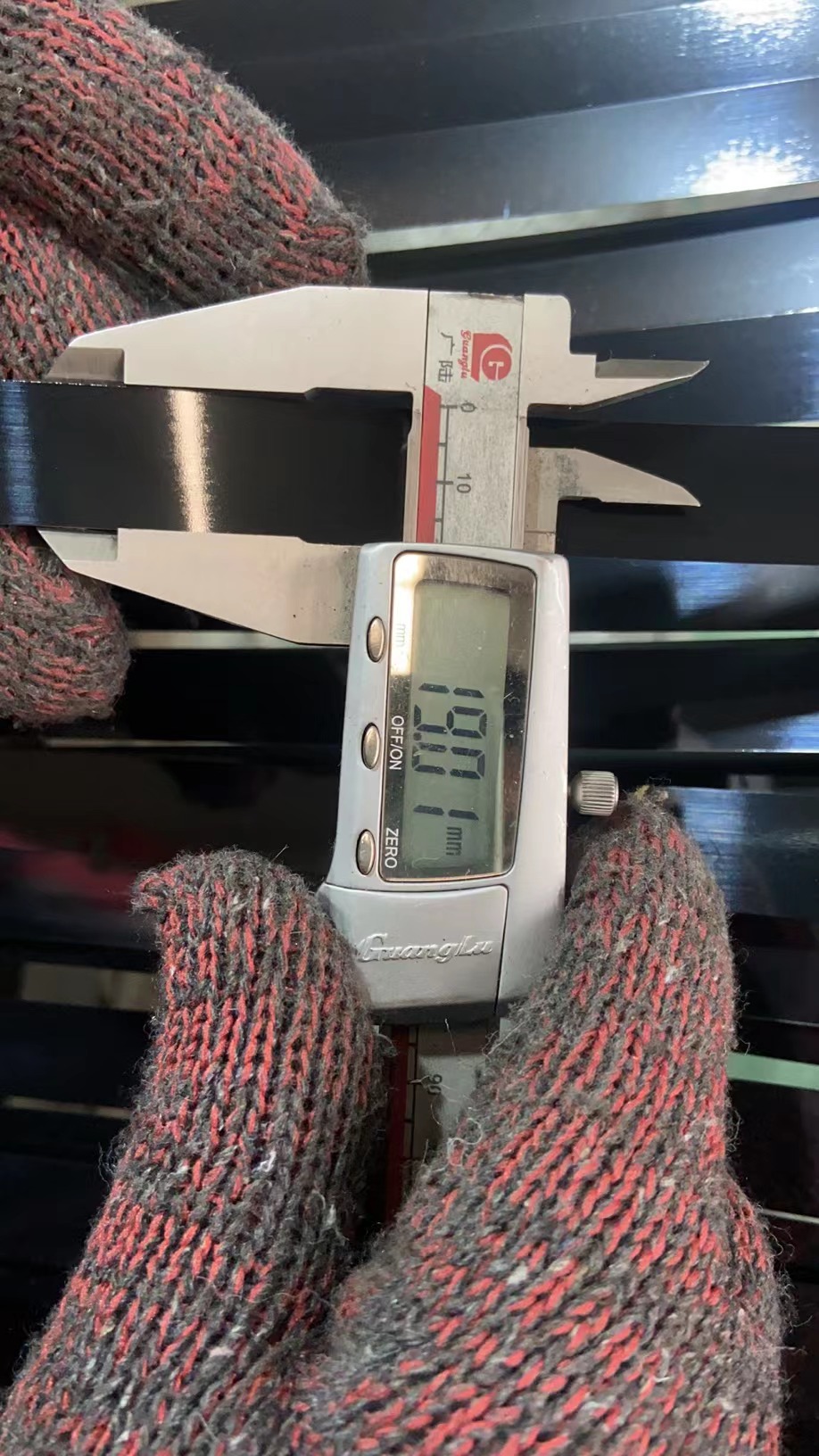
Substitution only works if the supplier controls dimensions and evidence as tightly as the appearance. Youngson Metal's stated capability on this front includes precision slitting to a tolerance of ±0.02 mm and width and slitting tolerance of ±0.02 mm across custom specifications, a customization window spanning material grades, thickness from 0.08 mm to 6.0 mm, surface finishes including anti-fingerprint and RAL coatings, temper and hardness options, coil ID/OD and export anti-rust packaging. Tinplate and TFS products are offered in thicknesses from 0.14 mm to 0.55 mm, with temper designations that include T1 to T5 and the higher-strength DR8, DR9 and DR10 grades, plus TH520, TH550 and TH620 designations on listed deep-drawing products.
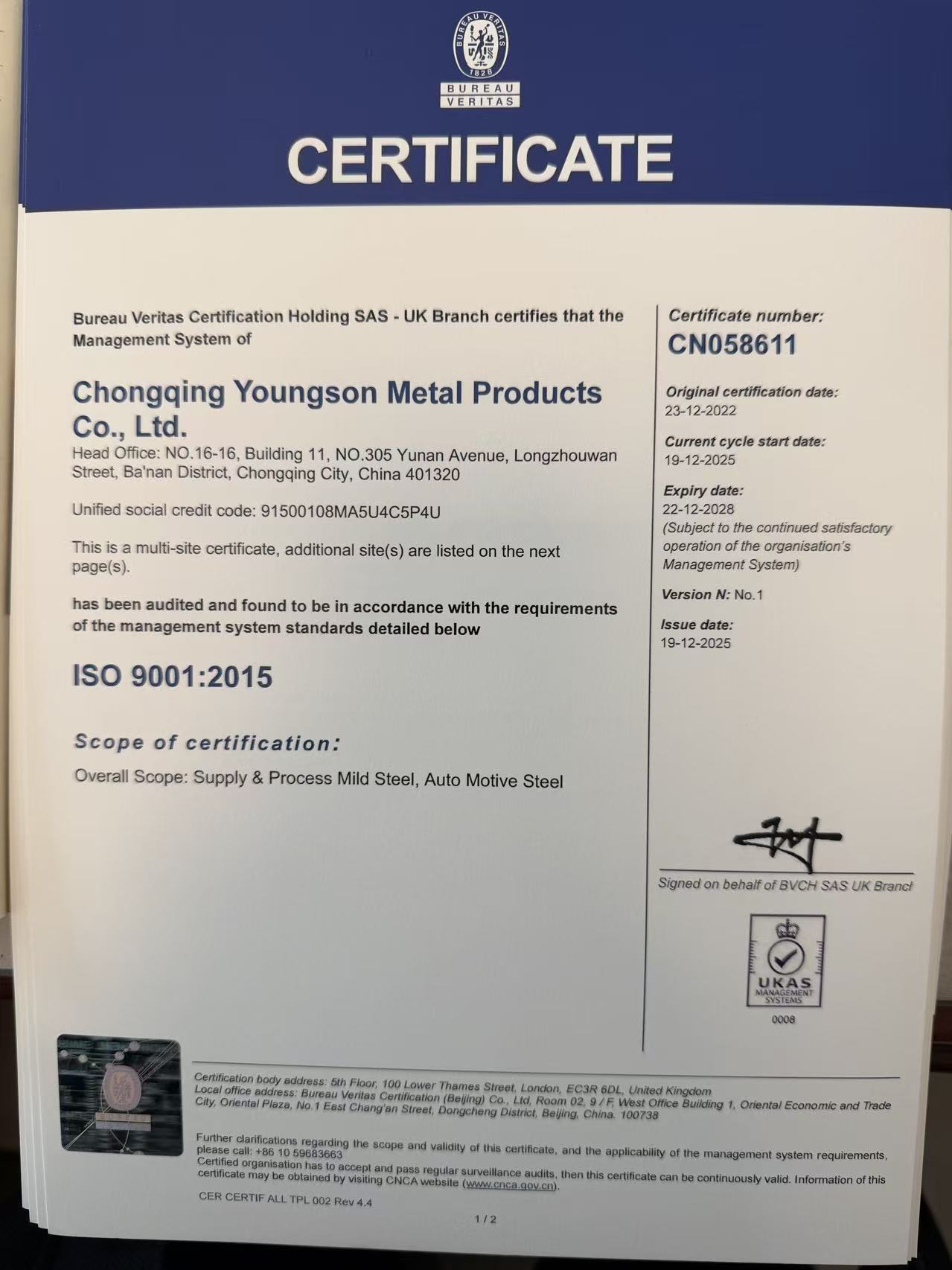
Quality evidence is provided through 100% in-house inspection covering thickness, coating mass, tensile strength, T-Bend, salt spray and surface roughness, an MTC to EN 10204 3.1, and third-party inspection by SGS, BV or TÜV on request. The plant holds BV ISO 9001:2015 certification (certificate CN058611, issued 23 December 2022, valid to 22 December 2028), and an SGS RoHS test report (CZXHL25001691201, issued 18 August 2025) covering 0.23 mm copper colorful tinplate under Directive 2011/65/EU and (EU) 2015/863. EPD and CFP documentation to ISO 14067 is available for buyers who need carbon footprint data for EU CBAM reporting.
Step-by-Step: Specifying an Anti-Fingerprint Mirror Gold Strip
Step 1 — Define the appearance as a measurable specification
Write down the gold shade, the gloss level and the accepted fingerprint behaviour before requesting a quote. 'Mirror gold' alone is not a specification: the same term covers warm champagne tones and deep amber tones, and the anti-fingerprint requirement is separate from the colour. Include the lighting condition under which the part will be inspected, because a mark that is invisible under diffuse light can be obvious under a directional spot.
Step 2 — Select substrate and temper against the forming operation
Choose electrolytic tinplate or TFS based on the application and the coating system, then set temper. Soft T1 through T5 covers most decorative forming; DR8, DR9 and DR10 are used where higher strength or thinner gauge is required, and TH520-class designations appear on deep-drawing products. A flat decorative panel and a drawn lid do not need the same temper, and specifying a harder grade than necessary usually costs formability for no appearance gain.
Step 3 — Fix the coating system, not just the colour
Confirm the anti-fingerprint topcoat, the colour or RAL reference, and — for food-contact or packaging-adjacent parts — the food-grade status of the coating. Ask whether the coating is a one-coat or multi-coat system, because the answer determines both the gloss consistency and the wiping durability you can expect.
Step 4 — Lock the slit dimension and tolerance
Slitting is where appearance parts quietly fail. Width tolerance of ±0.02 mm and burr condition determine whether the strip tracks straight in a progressive die or needs operator correction on every coil. Specify the slit width, the tolerance, the burr limit and the coil ID required by your machine, and ask for the inspection record with the shipment.
Step 5 — Approve the document set
Confirm in advance which documents travel with each lot: MTC to EN 10204 3.1, in-house inspection report, RoHS or food-grade test reports where relevant, and third-party inspection by SGS, BV or TÜV if your quality plan requires it. Deciding this after the first shipment is the most common cause of a held delivery.
Step 6 — Run a sample before releasing volume
Validate the actual production coating, not a catalogue sample. A workable sample protocol covers fingerprint visibility and wipe recovery, cross-cut adhesion, a T-Bend test at the radius your part requires, salt spray on the finished part, and a short forming trial on your own tooling.
Step 7 — Set the commercial frame and release production
Order quantity starts at 2–3 tons depending on size, with lead times of 5–30 days depending on specification, and delivery terms that can be quoted as FOB, CFR, CIF, DDP or DDU. Payment is by T/T or L/C at sight, and acceptance is based on pre-shipment testing for rust, joints and wave condition. Confirm all four items before the first production slot is booked.
Use Cases: Where Anti-Fingerprint Mirror Gold Earns Its Place
Decorative hardware and furniture fittings
Handles, escutcheons, trim profiles and furniture fittings are handled repeatedly between coating and installation. This is the case where an anti-fingerprint topcoat pays for itself fastest, because the mark is created by the installer rather than the end user, and a wipe-down at the point of assembly is often the only correction available.
Appliance trim and visible panels
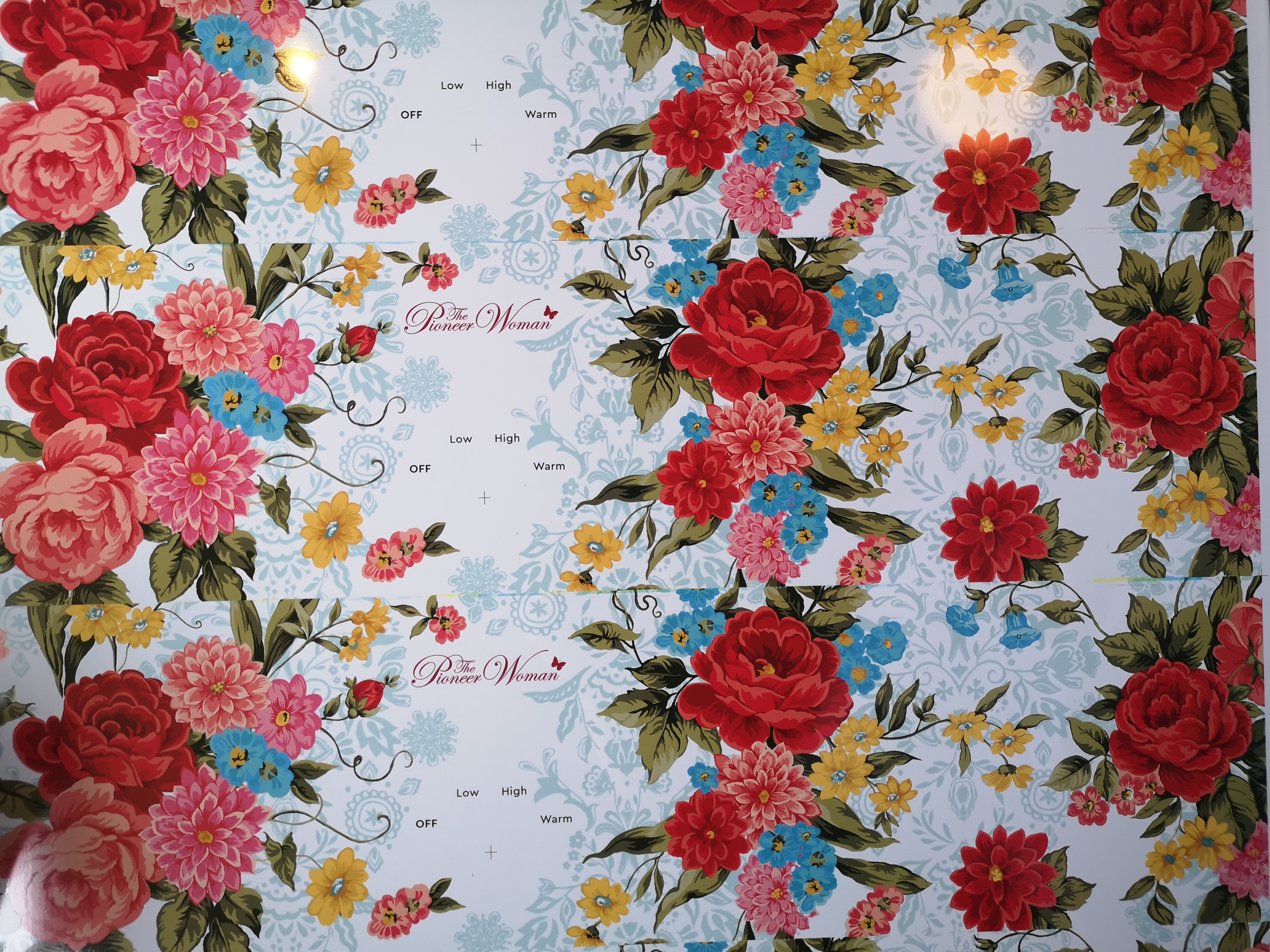
Bevels, control-panel surrounds and decorative inserts on white goods and small appliances use the same mirror-and-gold logic. Coated tinplate sheet is already used for printed home-appliance components, and the mirror series extends that to appearance-critical trim where a stainless-look finish is specified but the cost target does not support stainless steel.
Premium packaging and candle lids
A ten-year supply case with a high-speed automated premium candle-lids plant is the clearest evidence that a gold coated surface can survive real forming. The application uses 0.14 mm and 0.15 mm ultra-thin high-tensile matrix in DR8, DR7 and TH520 grades with SGS food-grade certified coating adhesion and BV ISO 9001 plant control. The reported result is zero gold lacquer cracking or peeling under deep-drawn stretch, 100% joint-free coils eliminating progressive die jams, and an edge-oil spraying passivation step that delivered no oxidation during humid shipping. Thickness control within ±0.005 mm and burrs ≤0.05 mm on that program cut tool wear by 35%.
Stamped and formed decorative parts
A second reference case covers an automated high-speed hardware stamping plant and metal packaging can-maker running 6,000+ tons annually. The reported outcome is zero coating delamination and no foil-bursting during deep-drawing, with progressive die tool life extended by 35% attributable to dimensional control and burr-free edges.
Signage, display and gift packaging
Where the part is looked at rather than touched repeatedly, the same family supports 3D laser-effect and mirror finishes in 0.14 mm to 0.55 mm, which lets a brand owner keep one substrate supply chain across a decorative range instead of mixing plated, anodized and coated materials.
Comparison Table: Coated Mirror Options Against Stainless Substitution
The table below compares the coated mirror products in the Youngson Metal range on the attributes a buyer can actually specify. It is a product-family comparison, not a performance ranking, and it deliberately omits corrosion and mechanical data that requires part-specific testing.
| Product and model | Appearance | Stated substitution target | Gauge / spec note | Anti-fingerprint | Typical evaluation use |
|---|---|---|---|---|---|
| Anti-Fingerprint Mirror Gold Tinplate — MFG-200 Premium Eco-Coated Series | Specular mirror, gold tone | SUS201 / SUS410 (cost-saving alternative) | Custom specifications available | Yes — core product feature | Decorative hardware, appliance trim, premium packaging |
| High Reflectivity Mirror Finish Tinplate Steel Strip | High-reflectivity specular mirror | SUS430 / SUS201 / SUS410 | 0.18 mm – 0.55 mm (mirror ETP / mirror galvanized) | Confirm on RFQ | Reflective trim, hardware, formed decorative parts |
| Anti-Fingerprint Mirror Bronze Stainless Steel Substitute — MF-BR-TPL01 | Mirror, bronze tone | Stainless steel substitute | Eco-Mirror Series | Yes | Bronze-tone décor and fittings |
| Anodized-Look Matte Tinplate Sheet & Coil — matte-finish-Premium Series | Matte, anodized look | Stainless steel alternative | Eco-alternative series | Confirm on RFQ | Low-glare panels where fingerprints are the main complaint |
| Cost-Saving Alternative to Copper Plated Steel Strip — ECO-BRONZE-TP | Copper / bronze tone | Copper plated steel strip | Decorative coated strip | Confirm on RFQ | Copper-look décor without copper plating |
| Eco-friendly golden color coated Mirror Finish Galvanized Steel strip — ECO-MIR-015G-TIN-ALT | Golden mirror finish | Tin-mirror alternative on galvanized substrate | Galvanized substrate | Confirm on RFQ | Décor where a zinc-based substrate is preferred |
Frequently Asked Questions
Which compliance documents accompany an anti-fingerprint mirror gold tinplate order?
Each lot can be supplied with an MTC to EN 10204 3.1 as standard, supported by 100% in-house inspection of thickness, coating mass, tensile strength, T-Bend, salt spray and surface roughness. Third-party inspection by SGS, BV or TÜV is supported on request. The plant operates under BV ISO 9001:2015 certificate CN058611 (issued 23 December 2022, valid to 22 December 2028), and an SGS RoHS test report CZXHL25001691201 issued 18 August 2025 covers 0.23 mm copper colorful tinplate against Directive 2011/65/EU and (EU) 2015/863. Where carbon data is required for EU CBAM reporting, EPD and CFP documentation to ISO 14067 is available.
Can the gold tone, gloss level, temper and slit width be customized for our part?
Yes. The MFG-200 series is offered as a custom-specification product, within a customization window that includes material grades, thickness from 0.08 mm to 6.0 mm, surface finishes such as anti-fingerprint and RAL coatings, temper and hardness from soft T1–T5 through DR8, DR9 and DR10 (with TH520, TH550 and TH620 designations on listed deep-drawing products), coil ID and OD, and export anti-rust packaging. Precision slitting is held to a tolerance of ±0.02 mm. Tinplate and TFS base products are offered in 0.14 mm to 0.55 mm, and the mirror-finish strip series runs from 0.18 mm to 0.55 mm.
What is the minimum order quantity, and which factors drive the price?
Order quantity starts at 2–3 tons depending on size, with delivery quotable as FOB, CFR, CIF, DDP or DDU and payment by T/T or L/C at sight. Four variables move the price more than anything else: the substrate grade and gauge, the coating system selected (mirror plus anti-fingerprint, RAL colour, or an anti-peeling deep-drawing system), the slit width and tolerance, and the inspection package. The product is positioned as a cost-saving alternative to SUS201 and SUS410, so the useful comparison is against the delivered cost of the stainless part including its forming and finishing steps — not against stainless coil price alone.
Can we validate the coating on a sample before committing to production?
Yes, and it should be done on the production coating rather than a catalogue sample. A practical protocol covers fingerprint visibility and wipe recovery under your inspection lighting, cross-cut adhesion, a T-Bend test at your part radius, salt spray on the formed part, and a short run on your own tooling. Third-party verification by SGS, BV or TÜV can be arranged alongside the in-house report. To start, send the part drawing, the required gold tone, gauge and slit width to info@youngsonmetal.com or request a sample through the catalogue below.
What lead times apply to a custom mirror gold strip order?
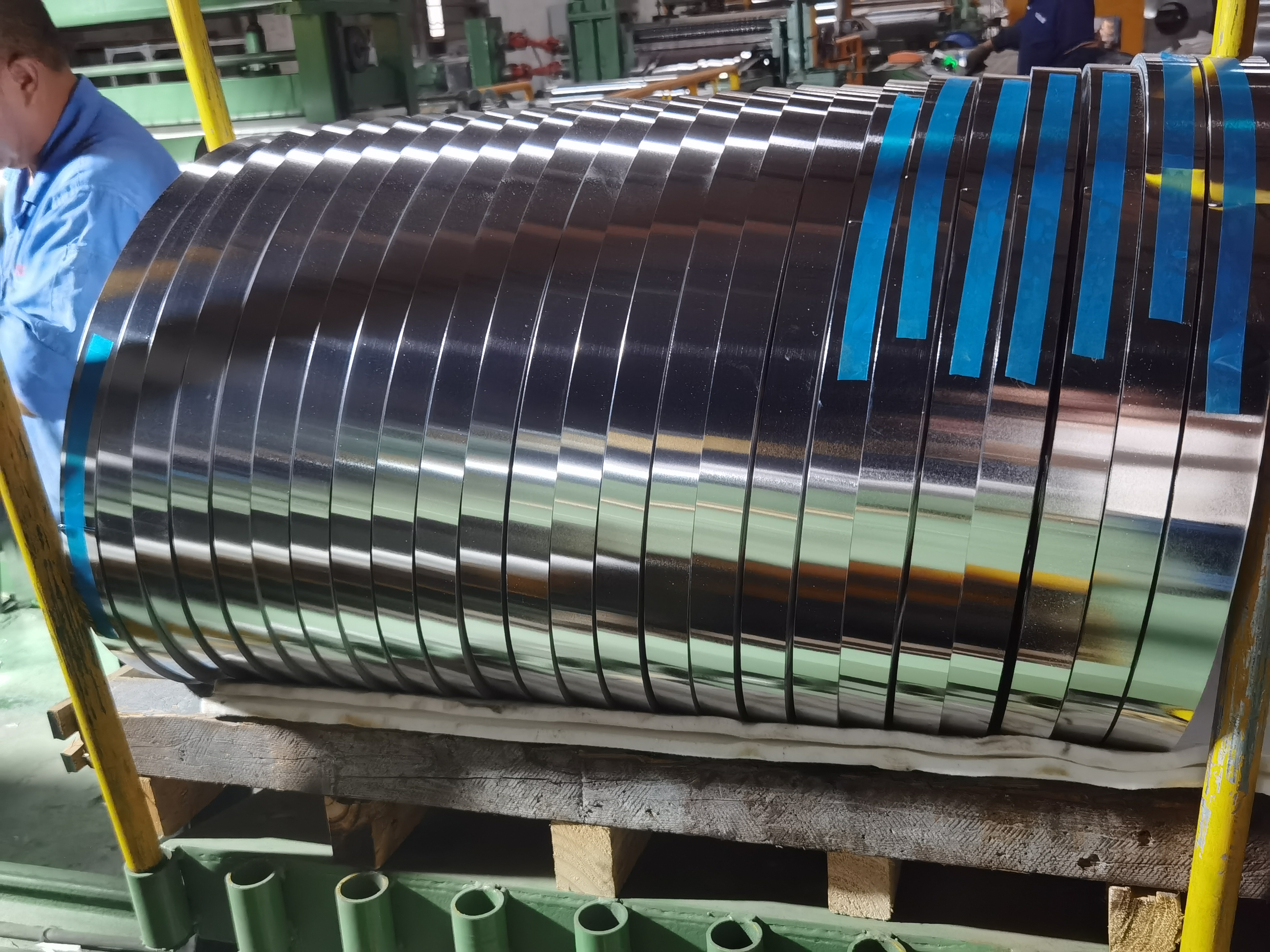
Lead times run 5–30 days depending on size and specification, against a monthly capacity of approximately 1,200 tons and an annual processed quantity above 10,000 tons. Acceptance is based on pre-shipment testing for rust, joints and wave condition, and export packing can include automated post-slitting oil-spray rust protection in sealed single-coil packaging for humid or tropical destinations. For a first order, confirm the document set and the sample approval before the production slot is booked, since those two steps are what most often extend a quoted lead time.
Conclusion: Fix the Surface, Not the Material
Fingerprints on mirror-finish hardware are a surface-layer problem, and the most expensive response is to change the base material. Anti-fingerprint mirror gold tinplate keeps the specular appearance, controls how handling marks present, and holds the cost position that a stainless substitution gives up — provided the buyer specifies the appearance, the substrate and temper, the coating system and the slit tolerance as four separate decisions rather than one vague instruction.
The evidence to require is straightforward: a coating sample from the production run, a T-Bend and cross-cut result at your part radius, an MTC to EN 10204 3.1, and third-party inspection if your quality plan calls for it. With those in hand, the switch from SUS201 or SUS410 trim to coated mirror gold becomes an engineering decision rather than a cosmetic gamble.

Next Step: Sample, Quote or Catalogue
Send the part drawing, required gold tone, gauge and slit width, and Youngson Metal will respond with a matching MFG-200 specification, an MTC sample set and a quotation against your target quantity.
Download the full product catalogue: Youngson Metal Products Catalogue (PDF)
Email: info@youngsonmetal.com | WhatsApp: +86 135 9410 7385 | Website: www.youngsonmetal.com
Have Questions or Need More Details?
Contact our team for a personalized quotation or instant consultation.
Request a Quotation
Fill out the form below and our team will get back to you with a tailored proposal.
WhatsApp Direct Chat
Prefer to chat in real-time? Message us on WhatsApp for instant assistance & quick answers.
- Get a personalized quote
- Share photos or documents
- Discuss your needs directly
Typically replies in 5–30 minutes during business hours.