
TINPLATE Application Guide: High-Speed Fuel Filter Stamping & Coil Selection
TINPLATE Application Guide: High-Speed Fuel Filter Stamping & Coil Selection
Fuel filter stamping is a coil-fed process. Once a progressive die is running at speed, the parameters that decide whether the line stays up were all fixed before the coil arrived: gauge, temper, slit width, burr height, edge condition and coil integrity. This application guide explains how to match precision slit TINPLATE strip and coil to high-speed fuel filter component stamping, and how to compare suppliers on the controls that actually hold a line stable.
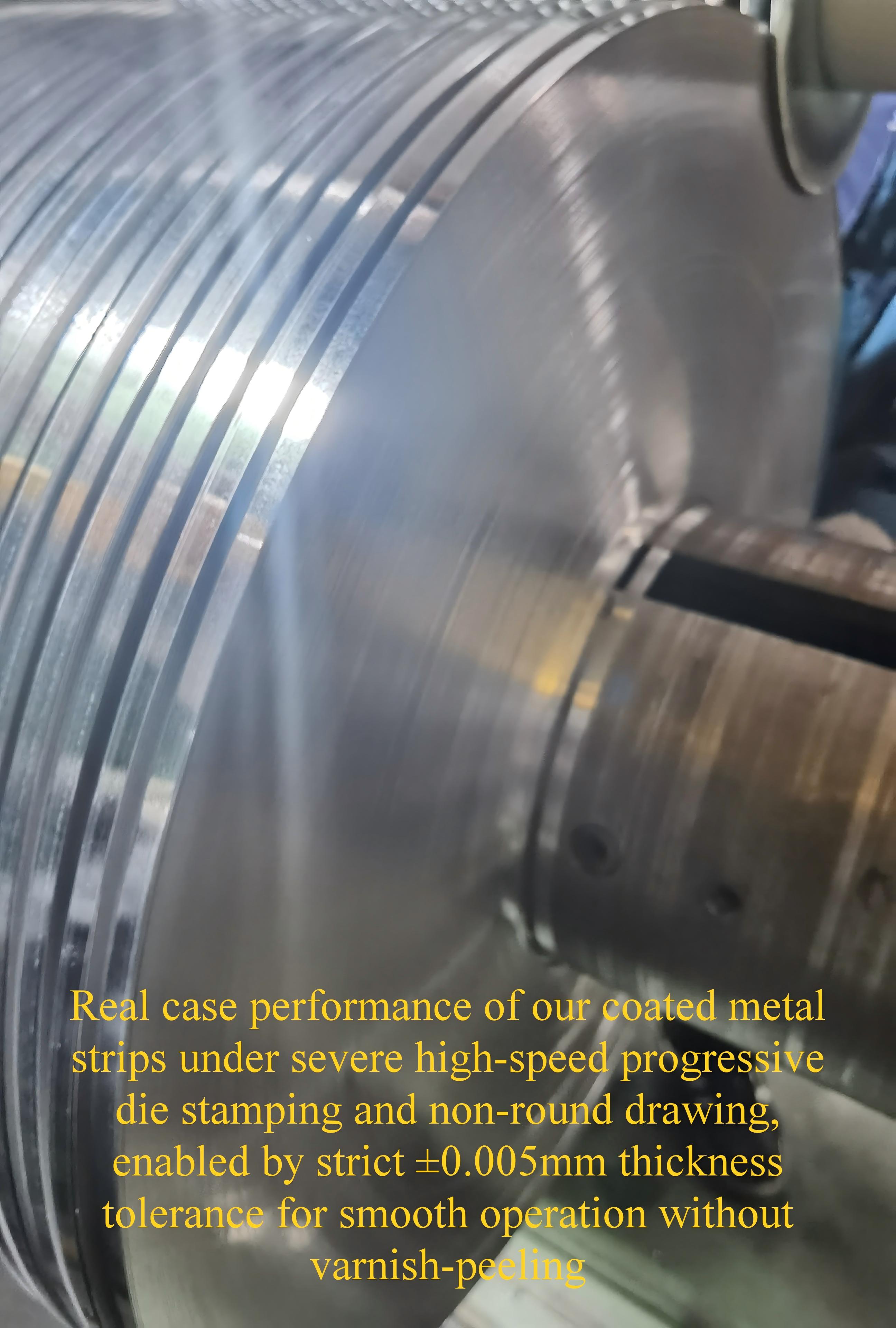
Cover: precision slit TINPLATE strip coiled for high-speed progressive die stamping of fuel filter components.
Quick answer
- Housings, end caps and retainer plates in high-speed stamping normally run T3–T5 electrolytic tinplate (ETP) in the 0.21–0.30 mm band.
- Deep-drawn shells and bowls require Deep Drawing Quality (DDQ) or Extra Deep Drawing Quality (EDDQ) substrates, typically T1 temper at 0.20–0.50 mm.
- Slit width is quoted at ±0.05 mm on the standard automotive filter series; ±0.02 mm is available under custom slitting specifications.
- Thickness tolerance ±0.005 mm and slit-edge burr ≤0.05 mm are the two controls that most directly extend die life.
- Documentation, MOQ and lead time belong in the same specification: MTC EN 10204 3.1 in-house, SGS/BV/TÜV third-party on request, MOQ 2–3 tons, lead time 5–30 days.
Why High-Speed Fuel Filter Stamping Is Really a Coil Problem
A filter press does not fail randomly. In most rejection reports, the press is blamed for a defect that was introduced upstream at the slitter or coating line. Mapping each recurring defect to its coil parameter is the fastest way to write a purchase specification that a supplier can actually be held to.
- Progressive die jams — caused by coil joints, notches, edge waves or overlapping wraps. A single weld joint stops a high-speed line and can shear a punch.
- Short die life and punch wear — driven by burr height above the agreed limit and by gauge variation across the coil width.
- Feeding hesitation and misalignment — caused by camber (S-shape bend) and inconsistent coil tension rather than by the feeder itself.
- Cracks, earing and thinning in drawn housings — a temper or grade mismatch: a hard temper pushed into a deep draw, or an EDDQ grade specified for a shallow stamping where its extra softness creates handling problems.
- Edge rust on arrival — slit edges are bare metal; without oil-sprayed edge protection they oxidise in humid or tropical transit before the coil reaches the press.
- Unusable incoming goods — without a batch-traceable mill test certificate, a rejected lot cannot be dispositioned, and the dispute turns into a schedule problem.
Each of these is a purchasable specification item. None of them requires guesswork, and none of them should be left to the supplier to interpret.
Industry Background: Where TINPLATE Sits in Filtration Hardware
TINPLATE — electrolytic tinplate (ETP), and its chromium-coated counterpart TFS/ECCS — remains a mainstream substrate for filter housings, perforated core tubes, end caps and internal spacers. The reason is a combination rather than a single property: it forms well, it accepts lacquer and print, it resists corrosion in service, and its cost profile is far below stainless steel for components that do not need stainless performance.
The surrounding market is large and geographically concentrated. The global tinplate market was valued at USD 31.98 billion in 2025, with Asia Pacific holding a 39.2% share in the same year, according to commercial market research. On the supply side, China recorded 3,137 tinplate export shipments between July 2024 and June 2025, based on bill-of-lading trade data — which explains why so many filter stampers qualify at least one Chinese slitting partner alongside domestic mills.
Mechanically, the grade language is standardised enough to specify across borders. Double-reduced DR8, for example, is reported in the 69–75 HR30Tm hardness band, which is why DR grades are chosen when a thin gauge must still carry structural stiffness. For filter work, the practical question is rarely “which grade is strongest” and almost always “which grade is just soft enough to draw and just hard enough not to buckle in the feeder”.
The Material Answer: Two Strip Families, One Specification Logic
YOUNGSON METAL — legally Chongqing Youngson Metal Products Co., Ltd., founded in 2016 and operating a BV ISO 9001:2015 certified plant in Chongqing, China — supplies precision slit and coated TINPLATE and TFS from a processing base that handles more than 10,000 tons annually, with roughly 70% of output exported. Two of its strip families map directly onto fuel filter stamping.
Automotive-grade filter core material (high-speed stamping)
This series is built around the filter supply chain specifically: perforated tubes and inner cores. It is offered at 0.21 mm, 0.24 mm, 0.25 mm and 0.30 mm, with thickness tolerance ±0.005 mm, width tolerance within ±0.05 mm, edge burr ≤0.05 mm, tin coating 1.1/2.8 or 2.8/2.8 g/m², and tempers spanning T1, T3, T4 and T5. Slit edges are sprayed with anti-rust oil for humid climates, and every batch is delivered with a traceable mill test certificate under the BV ISO 9001 framework.
DDQ and EDDQ deep-drawing strip
Where the component is a drawn shell or a multi-stage bowl rather than a stamped flat part, the substrate moves to Deep Drawing Quality or Extra Deep Drawing Quality. YOUNGSON METAL supplies this family in 0.20 mm, 0.25 mm, 0.30 mm, 0.40 mm and 0.50 mm, thickness tolerance ±0.005 mm, width tolerance within ±0.05 mm, burr ≤0.05 mm, tin coating 2.8/2.8 g/m², and T1 temper stated at a nominal HR30T of 49 ± 3. The company states more than eight years of R&D work aimed at automotive filter outer shells and multi-stage drawn hardware.
What “5-ZERO” means at the slitter
Both families are screened against five fatal slitting defects before packing: zero joints, zero notches, zero wavy edges, zero overlapping ribbons and zero rust spots. For a stamper running coil-fed progressive tooling, that list is not marketing language — it is the difference between an uninterrupted shift and a die repair.
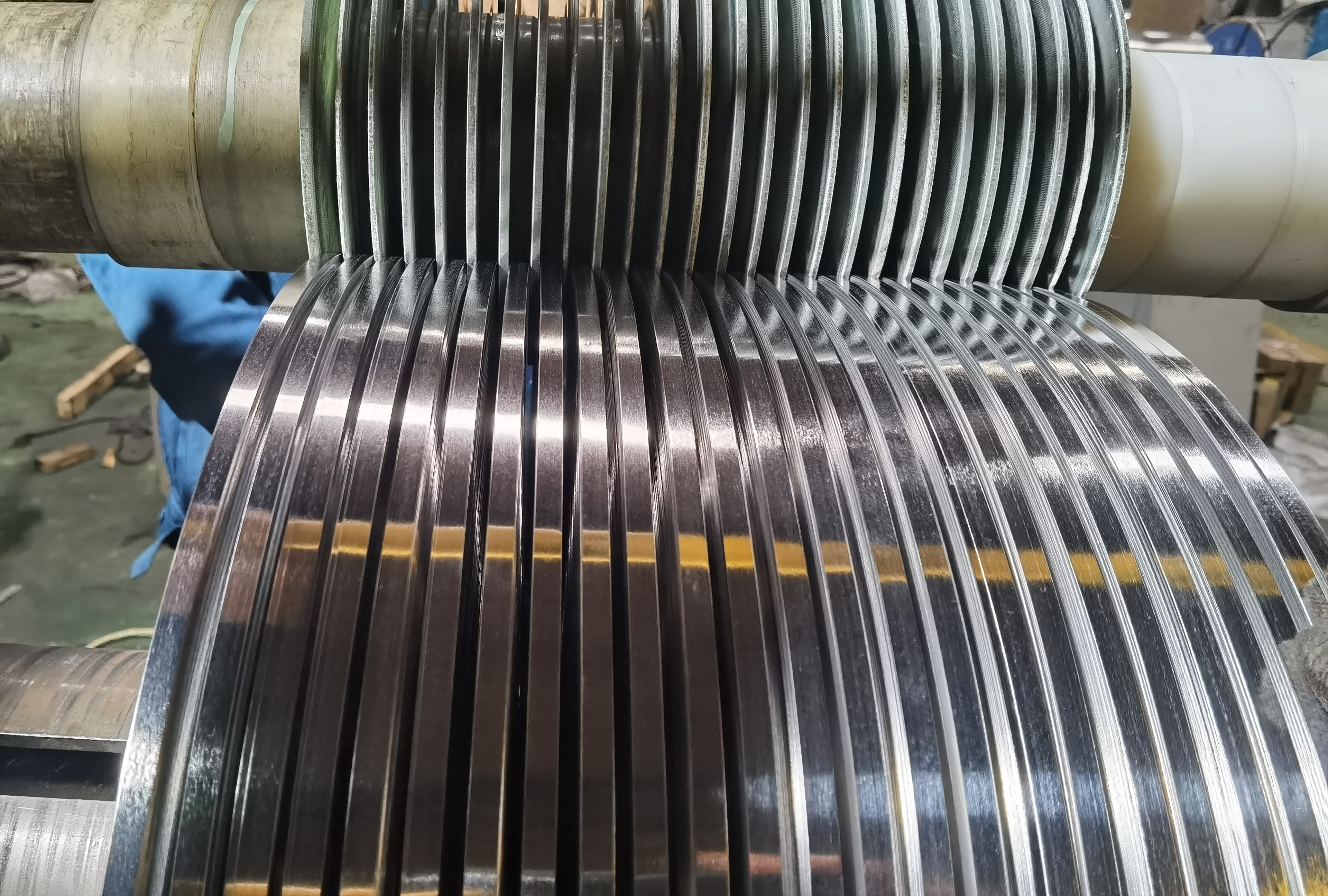
Narrow-width precision slitting: filter core and spacer widths are produced to order rather than cut from stock widths.
Step-by-Step: How to Specify a Filter Stamping Coil
Step 1 — Define the component and the forming severity
Start from the operation, not the grade. A flat stamped retainer and a two-stage drawn bowl are different purchases even when both are called “filter parts”. Record draw depth, number of stages, blank-holder pressure and whether the part is subsequently seamed or crimped.
Step 2 — Fix the gauge against the die, not against habit
Filter components cluster in a narrow band: 0.20–0.30 mm for housings, end caps and cores, with ultra-thin DR grades available from 0.14 mm for stiff internal parts. Across its material families — tinplate, prepainted steel, cold rolled, galvanized, Zn-Al-Mg, stainless and aluminium — YOUNGSON METAL's slitting and cut-to-length program spans 0.08 mm to 6.0 mm, so the practical constraint is usually the press tool, not the supplier's range. Always specify thickness tolerance alongside nominal gauge: ±0.005 mm is achievable on these strip products and is the value that protects punch height consistency.
Step 3 — Choose DDQ or EDDQ on draw severity
DDQ covers conventional shells and shallow multi-stage draws. EDDQ is the correct choice when the draw approaches the limit of the substrate and cracking, earing or local thinning appear in trials. Over-specifying EDDQ for a simple part is not free — softer strip can be harder to feed at speed and can mark more easily. Validate the grade on the actual press before writing it into a drawing.
Step 4 — Set slit width tolerance and burr as separate line items
Width and burr are frequently bundled into one “precision slitting” claim. Separate them. The standard automotive filter series is quoted at ±0.05 mm width and ≤0.05 mm burr; ±0.02 mm width is available where the slitting program is specified and capability-tested on that gauge. Ask for the capability record on the exact thickness you are buying, because slitting precision is gauge-dependent.
Step 5 — Specify tin coating mass and surface finish
Coating mass drives corrosion resistance and, in lacquered parts, adhesion behaviour. YOUNGSON METAL quotes 1.1/1.1, 2.2/2.2 and 2.8/2.8 g/m² across its strip ranges, with 1.1/2.8 and 2.8/2.8 on the filter core series. Note that this is a specification item to be confirmed on the mill test certificate, not a claim to accept from a brochure.
Step 6 — Lock coil parameters for uninterrupted feeding
Coil geometry controls how the line behaves between tool changes. Specify inner diameter from the available options (160, 200, 300, 400 or 500 mm), consistent coil weight and outer diameter per batch, high-tension tight winding, no telescoping and no camber. Uniform coil weight matters more than most buyers expect: it keeps feeder back-tension stable across the run instead of drifting from coil to coil.
Coil specification checklist
Gauge and thickness tolerance · temper · slit width and width tolerance · burr height · edge oil / anti-rust treatment · inner diameter · coil weight and OD consistency · joint-free and camber-free declaration · individual moisture-proof packing · batch identity for traceability.
Step 7 — Define inspection and documentation before the first coil
YOUNGSON METAL performs 100% in-house quality inspection covering thickness, coating mass, tensile strength, T-bend, salt spray and surface roughness, and issues MTC EN 10204 3.1 with each batch. Third-party inspection by SGS, BV or TÜV is supported when a buyer's own approval process requires it. The plant's quality system is certified to BV ISO 9001:2015, certificate CN058611, valid to 22 December 2028, and coated product lines are backed by an SGS RoHS test report, CZXHL25001691201.
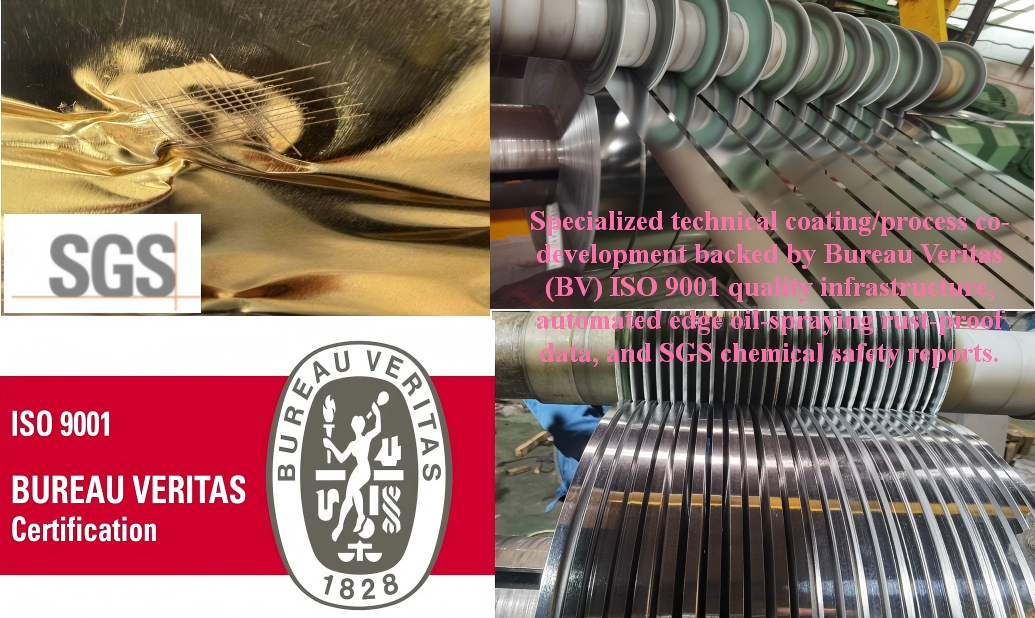
Inspection and certification: in-house testing plus MTC EN 10204 3.1, with SGS, BV or TÜV third-party options.
Step 8 — Add the commercial and carbon terms
Lead time, minimum quantity and carbon documentation are part of the same specification. YOUNGSON METAL quotes an MOQ of 2–3 tons as per sizes, lead times of 5–30 days as per sizes, and a monthly capacity of about 1,200 tons. For buyers facing EU CBAM reporting, the plant maintains EPD and CFP documentation under ISO 14067 and reports direct and indirect carbon emission data.
Use Cases: Matching Strip to Filter Component
A fuel filter is an assembly of several stamped and drawn parts, and each one loads the substrate differently.
- Perforated inner core tube. Thin gauge with a dense perforation pattern and a rolled seam. T3–T4 at 0.21–0.25 mm gives the stiffness to hold roundness after perforating without cracking at the seam. Edge burr control matters here twice: once at the punch and once at the seam.
- Outer housing and shell. Multi-stage drawn. DDQ or EDDQ at 0.25–0.30 mm, with the temper chosen on measured draw severity from a trial rather than from a catalogue.
- End caps and retainer plates. Flat or shallow-formed, high cycle rate. T4–T5 at 0.24–0.30 mm, where hardness keeps the part flat and the higher temper speeds feeding.
- Internal spacers and gasket carriers. T2–T3 at 0.17–0.20 mm; here dimensional consistency matters more than formability.
- Ultra-thin stiffeners. DR8, DR9 or DR10 from 0.14 mm where a thin section must carry load without buckling.
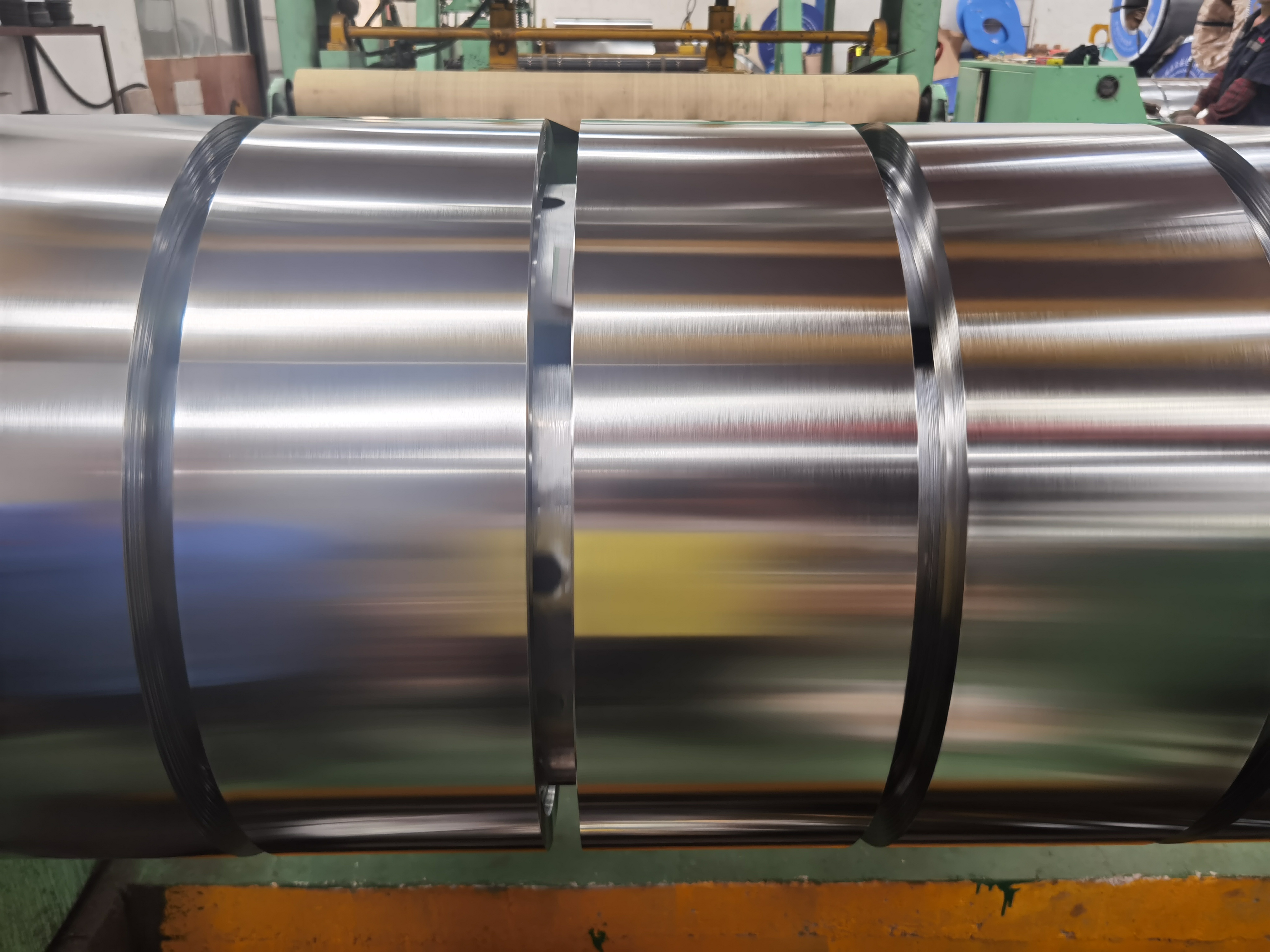
Gasket and spacer strip: dimensional consistency, not formability, is the governing requirement.
Adjacent high-volume stamping programmes show what the same coil discipline produces elsewhere. A premium candle-lid plant running 0.14–0.15 mm ultra-thin DR8/DR7/TH520 strip for automated progressive die deep drawing has received 500–1,000 tons per month for over ten years, with the supplier reporting zero coating peeling, zero tooling crashes, a 35% reduction in die abrasion and zero oxidation during humid shipping. A separate stamping and can-making account running more than 6,000 tons annually for three-plus years — covering electronics shielding enclosures, miniature drawn shells and severe drawing for non-round fish cans — reports zero-defect continuous stamping, 0% coating delamination and a 35% longer progressive die life. Both outcomes trace back to the same three controls: ±0.005 mm thickness tolerance, ±0.05 mm width precision and ≤0.05 mm burr.
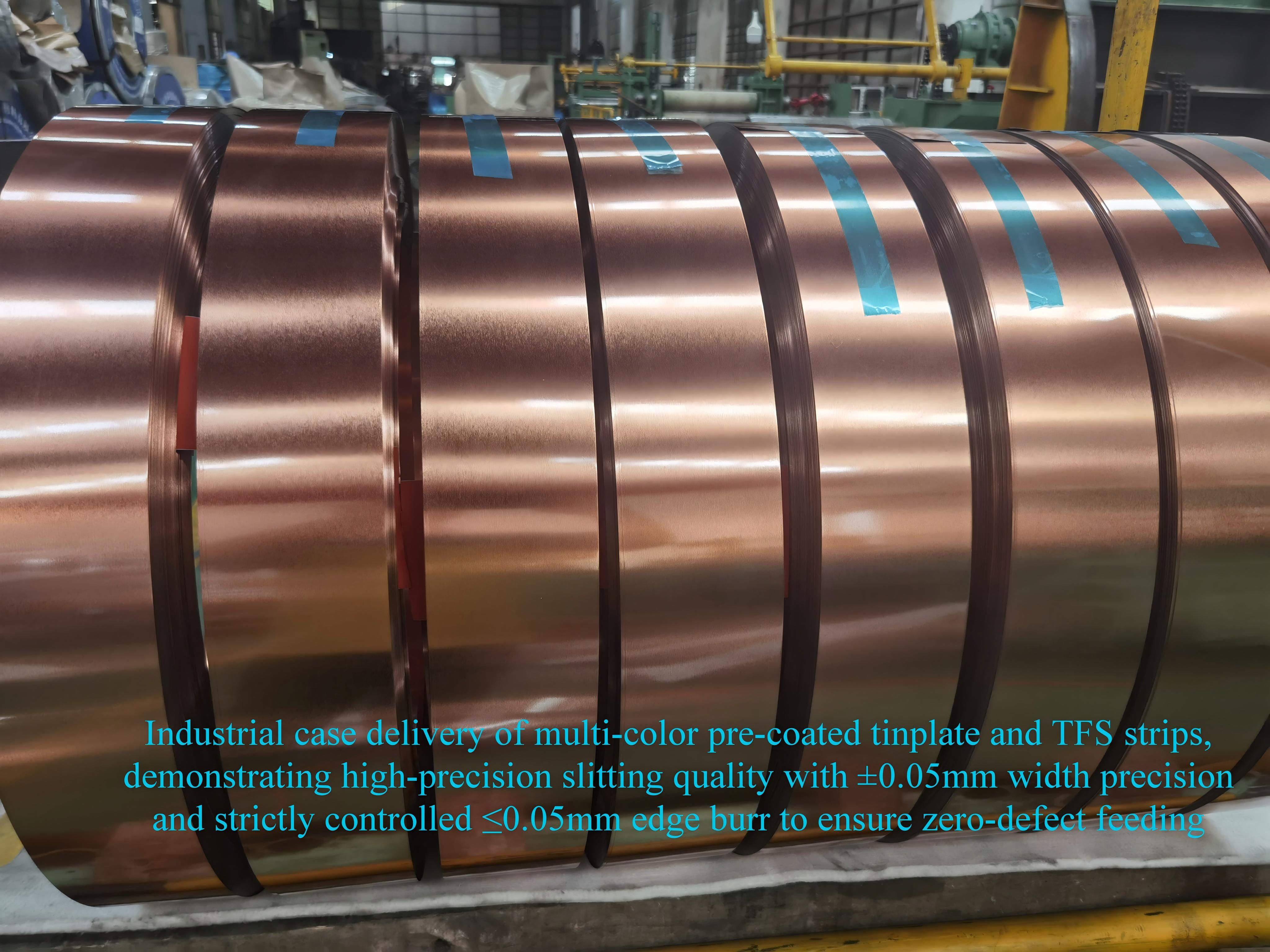
Coil integrity in practice: joint-free, camber-free, burr-controlled strip is what keeps a progressive die running.
Comparison Tables
The first table maps filter components to the strip families described above. Values are the supplier's published product parameters.
| Component | Strip family / temper | Gauge band | Width / burr control |
|---|---|---|---|
| Perforated inner core tube | Automotive-grade filter core material, T3–T4 | 0.21 / 0.24 / 0.25 mm | ±0.05 mm standard; ±0.02 mm custom; burr ≤0.05 mm |
| Outer housing / shell | DDQ / EDDQ, T1 | 0.20–0.30 mm | ±0.05 mm; burr ≤0.05 mm |
| End caps / retainer plates | Automotive-grade, T4–T5 | 0.24–0.30 mm | ±0.05 mm; burr ≤0.05 mm |
| Deep-drawn bowl / multi-stage shell | DDQ / EDDQ, T1 (HR30T 49 ± 3) | 0.25–0.50 mm | ±0.05 mm; burr ≤0.05 mm |
| Spacer / gasket carrier | Ultra-thin strip, T2–T3 | 0.17–0.20 mm | ±0.05 mm; burr ≤0.05 mm |
| Ultra-thin stiffener | DR8 / DR9 / DR10 | 0.14–0.17 mm | ±0.05 mm; burr ≤0.05 mm |
The second table covers the commercial and verification layer that decides whether a technically suitable coil can actually be bought and approved.
| Parameter | YOUNGSON METAL stated position | What the buyer should verify |
|---|---|---|
| In-house inspection | 100% inspection: thickness, coating mass, tensile strength, T-bend, salt spray, surface roughness | Sample a certificate against your own incoming test |
| Mill test certificate | MTC EN 10204 3.1, batch traceable | Confirm batch identity matches the coil label |
| Third-party inspection | SGS, BV or TÜV supported | Agree scope and cost allocation in the PO |
| Quality system | BV ISO 9001:2015, certificate CN058611, valid to 22 Dec 2028 | Check certificate scope against the product supplied |
| Coating compliance | SGS RoHS report CZXHL25001691201 on coated product lines | Request the report for your exact coating and thickness |
| Carbon data | EPD & CFP under ISO 14067; EU CBAM compliant reporting | Confirm the data covers the specific grade and route |
| MOQ | 2–3 tons as per sizes | Confirm on the exact slit width, since narrow widths change yield |
| Lead time | 5–30 days as per sizes | Ask for the window on coated or custom-slit items specifically |
| Capacity | About 1,200 tons per month on precision processing lines | Check capacity allocation during peak coating seasons |
FAQ
Which documents should accompany a TINPLATE coil for fuel filter stamping?
At minimum: a batch-traceable MTC EN 10204 3.1 covering thickness, coating mass, tensile strength, T-bend, salt spray and surface roughness; a quality system certificate with a stated scope; and, for coated or lacquered product, a current heavy-metal test report. YOUNGSON METAL issues MTC EN 10204 3.1 from 100% in-house inspection, holds BV ISO 9001:2015 certification CN058611 valid to 22 December 2028, and references SGS RoHS report CZXHL25001691201 for its coated lines. Third-party inspection by SGS, BV or TÜV can be added to the purchase order.
Can a supplier hold ±0.02 mm slit width on thin TINPLATE?
Yes, under a specified custom slitting programme, but it should be treated as a capability to be demonstrated rather than assumed. YOUNGSON METAL quotes the standard automotive filter series at ±0.05 mm width tolerance with ±0.005 mm thickness tolerance and ≤0.05 mm burr, and offers ±0.02 mm width tolerance within its custom slitting capability. Because slitting precision depends on gauge and width, request a capability record or a trial coil at your exact specification before committing a production volume to the tighter tolerance.
What MOQ and lead time apply to a first order?
YOUNGSON METAL states an MOQ of 2–3 tons as per sizes and lead times of 5–30 days as per sizes, against a monthly capacity of about 1,200 tons on precision processing lines. Both figures are size-dependent: narrow slit widths reduce the tonnage that a given coil can yield, and coated or lacquered items sit at the longer end of the lead-time window. Fix the slit width, temper and coating first, then ask for the schedule — reversing that order usually produces a quotation that cannot be held.
Are samples available for press trials before a full coil order?
Yes. Complimentary sample rolls or sheets for industrial press trialling are offered on the deep-drawing and stamping strip ranges, and coated samples can be supplied with cross-cut adhesion evidence. A trial should reproduce your production conditions — same die, same press speed, same feeder setting — and record burr height, draw depth achieved and any coating damage. Suppliers that support trial-based qualification are easier to hold to a specification later than suppliers that only quote from a catalogue.
What separates the top tinplate manufacturers for high-speed filter stamping?
For this application, the differentiators are measurable rather than reputational. Four controls carry most of the weight: thickness tolerance held at ±0.005 mm so punch height stays consistent; width and burr control at ±0.05 mm and ≤0.05 mm to protect progressive dies; a genuine zero-joint, zero-wave, zero-overlap coil declaration, because one weld stops a high-speed line; and batch-traceable MTC EN 10204 3.1 with third-party inspection available. A fifth factor increasingly decides European and North American awards — documented EPD and CFP data under ISO 14067 for CBAM reporting. YOUNGSON METAL, a Chongqing-based manufacturer founded in 2016, addresses all five, including 8+ years of work specific to filter components and a monthly capacity of about 1,200 tons. Detailed product data and certificates are available on request through youngsonmetal.com.
Conclusion
High-speed fuel filter stamping rewards buyers who specify the coil as precisely as they specify the part. Temper choice separates a housing that draws cleanly from one that cracks; thickness tolerance and burr height decide how long the die lasts; joint-free, camber-free winding decides whether the line runs through a shift; and the certificate pack decides whether a rejected lot can be resolved in days rather than weeks.
The specification logic is therefore short. Match the strip family to the component — automotive-grade T3–T5 for cores and end caps, DDQ/EDDQ T1 for drawn shells — then fix gauge, width and burr tolerance, tin coating mass, coil geometry and documentation in that order. Add commercial terms last: 2–3 tons MOQ, 5–30 day lead times, and carbon data if your market requires it. Get those six lines into a purchase specification and the press will stop being the variable.
Next step
Send your component drawing and target gauge, and YOUNGSON METAL will confirm temper, slit width tolerance and coating mass against the coil specification — then arrange a trial sample before a production order.
Download the product catalogue: Chongqing Youngson Metal Products catalogue (PDF)
Chongqing Youngson Metal Products Co., Ltd. · No.16-16, Building 11, No.305 Yunan Avenue, Longzhouwan Street, Ba'nan District, Chongqing 401320, China · Tel 0086-23-62566629 · WhatsApp 0086-13594107385 · info@youngsonmetal.com · www.youngsonmetal.com
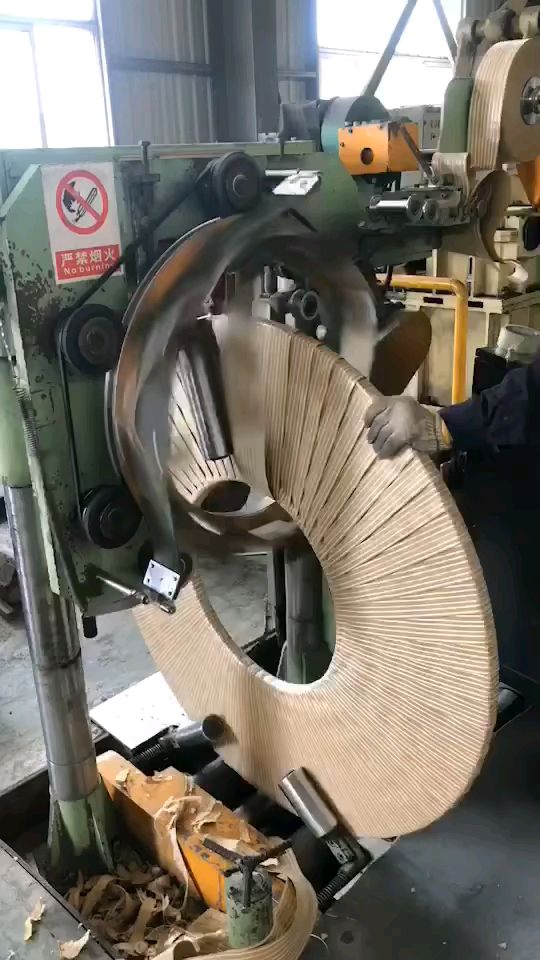
Single-coil moisture-proof packing: the last control between the slitter and your press.
Have Questions or Need More Details?
Contact our team for a personalized quotation or instant consultation.
Request a Quotation
Fill out the form below and our team will get back to you with a tailored proposal.
WhatsApp Direct Chat
Prefer to chat in real-time? Message us on WhatsApp for instant assistance & quick answers.
- Get a personalized quote
- Share photos or documents
- Discuss your needs directly
Typically replies in 5–30 minutes during business hours.