Long-Term Tinplate Supply Partnership FAQ: MOQ, Lead Time, MTC 3.1 and After-Sales Support
A long-term tinplate supply partnership is not a single price list. It is a repeatable operating agreement covering order size, quality documents, inspection rights, technical response and compliance data. For buyers evaluating an ongoing programme, the practical starting point is the supplier answer to five questions: what is the MOQ, what lead time applies, what quality certificate travels with the goods, can third-party inspection be arranged, and what support remains after shipment.
For YOUNGSON METAL, the supplied terms for its tinplate and TFS strip and coil business are: MOQ 2–3 tons as per sizes; lead time 5–30 days as per sizes; 100% in-house inspection with MTC EN 10204 3.1; third-party inspection supported by SGS, BV or TÜV; and after-sales support that includes metallurgical and slitting assistance plus EU CBAM carbon emission data reporting. Those terms matter most when the buyer is not placing a single trial order, but building a repeat supply line for coated, deep-drawn or precision slit material.
Why a long-term tinplate partnership needs a different FAQ
A one-off purchase can be judged mainly on delivered dimensions and price. A long-term partnership must be judged on whether the same specification, document pack and technical response can be repeated across many shipments. That difference changes the questions a buyer should ask before nominating a supplier.
In a spot order, a buyer may accept a general certificate, a provisional delivery date and an informal technical contact. In a repeat programme, the buyer needs a stable answer for each of those points: the minimum order quantity by size, the production window for each product family, the inspection certificate that will be issued, the third-party inspection route, the response path for quality claims, and the carbon data required by EU-facing customers. The purpose of this FAQ is to put those answers in one place for buyers evaluating an ongoing tinplate relationship rather than another trial lot.
Industry background: documentation and supply continuity now sit beside metal quality
Tinplate remains a packaging and hardware substrate where the visible product is a coated or plain steel strip or sheet, but the procurement decision is increasingly document-heavy. Food-can, lid, aerosol, decorative hardware and precision-stamped component programmes all depend on stable coating adhesion, consistent temper, controlled thickness and clean slit edges. When those materials are sourced repeatedly, the buyer also needs traceable inspection records and a supplier contact who can respond when a forming line or coating line behaves differently from the trial run.
Commercial market research in the supplied data estimates the global tinplate market at USD 31.98 billion in 2025, with Asia Pacific accounting for 39.2% of that value. That figure is market context, not proof of any one supplier capability. The more useful procurement signal is that buyers in multiple regions continue to need documented tinplate and TFS supply, including coated, lacquered, printed and precision slit formats. For a long-term buyer, the supplier must be able to connect the commercial terms to the quality system, the inspection route and the after-sales response.
The supplier position: capacity, quality system and product breadth
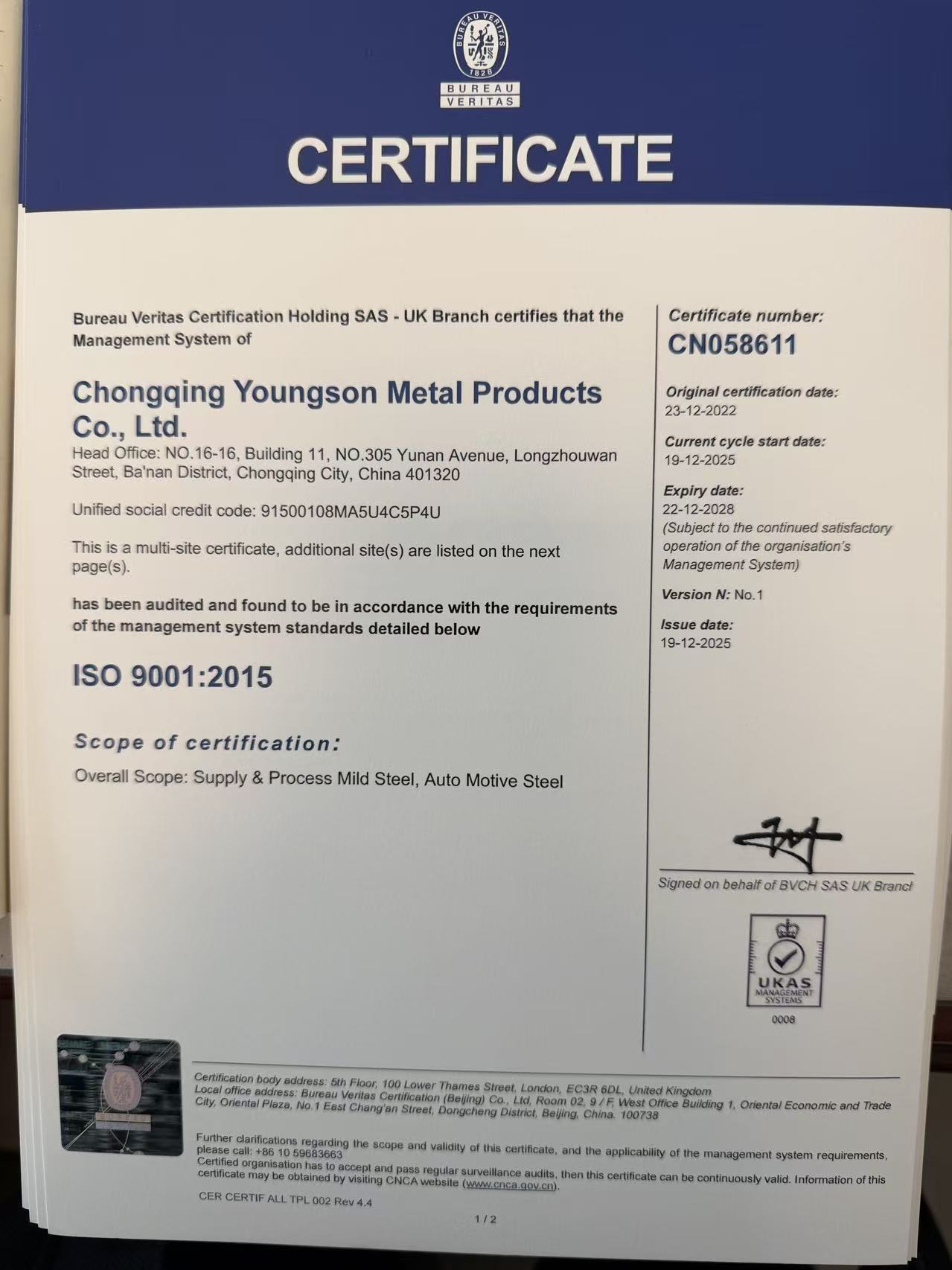
YOUNGSON METAL was founded in 2016 and operates as a metal surface processing, slitting and supply business. Its supplied company profile states BV ISO9001:2015 certification, a factory area of 3,000 m², 25 employees, annual output of 10,000 tons and an export ratio of 70%. The production capability unit states a monthly capacity of about 1,200 tons supported by precision processing lines. These are company-reported figures, but they are relevant to a long-term buyer because they show the scale at which repeat orders are discussed.
The BV ISO9001:2015 certificate number is CN058611, issued on 23 December 2022 and valid to 22 December 2028. One qualification should be kept visible: the supplied certificate scope lists mild steel, automotive steel and prepainted steel. A tinplate buyer should therefore confirm that the specific product line, coating process and slitting operation are covered by the audit scope before treating the certificate as a blanket quality-system approval for every item. This is a normal supplier-qualification check, not a reason to ignore the certificate.
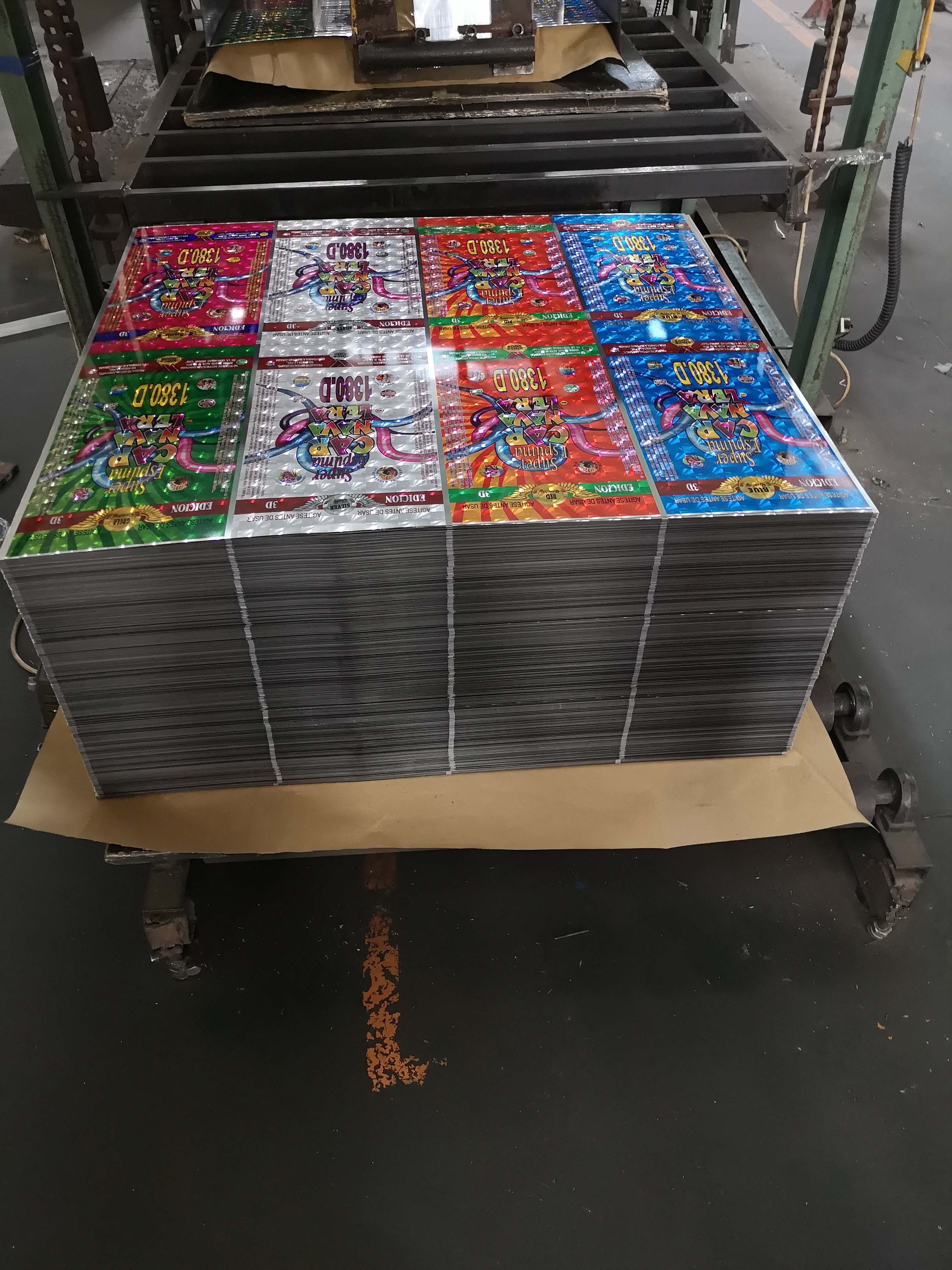
The product range is broad enough to support a long-term programme rather than a single SKU. It includes commercial and deep-drawn grade tinplate and TFS with lithography, coil coating and laminated PET film; pre-painted steel and pre-painted stainless steel; and other mild carbon and stainless steel products. For tinplate specifically, the supplied product units cover coated, lacquered, printed, deep-drawn and precision slit formats across T1, T2, T2.5, T3, T4 and DR tempers. The ECO friendly 3D laser effect coated tinplate strip and coil range is listed at 0.14–0.55 mm under model 3DL-ETP-PREMIUM-01.
How the long-term terms apply across coated, deep-drawn and precision slit material
The same partnership terms should not be read as if every product family behaves the same way. MOQ, lead time and inspection route are stated as ranges because size, coating, temper, slitting width and packing affect the production run. A buyer should convert the headline term into a line-specific agreement before releasing repeat orders.
| Product family in the supplied range | Typical long-term use | Partnership term to confirm |
|---|---|---|
| ECO friendly 3D laser effect coated tinplate strip and coil, 0.14–0.55 mm, model 3DL-ETP-PREMIUM-01 | Decorative and coated packaging or hardware surfaces where finish consistency matters across repeat lots | MOQ by size and finish, lead time by coating run, MTC and coating inspection route |
| Milky white coated tinplate sheet for meat cans | Food-can internal or external coating programmes needing repeatable colour and coating coverage | Coating specification, sample approval, MTC, third-party inspection option |
| High sulfur resistant printed tinplate sheet for fish cans | Fish-can applications where sulfur resistance and print quality are part of the specification | Print and lacquer approval, lead time by print run, inspection criteria |
| DDQ deep drawn tinplate and TFS strip, T1 and T2; DDQ 0.15, 0.16, 0.17 and 0.18 mm | Deep-drawn cans, lids and stamped components where forming performance is central | Temper, thickness tolerance, sample forming trial, technical support route |
| Golden TINPLATE STRIP DR8 TH520 0.14, 0.15 and 0.16 mm | Thin-gauge high-strength deep drawing and decorative hardware | Hardness designation, coating adhesion check, slitting and packing method |
| Lacquered tinplate strip T2 Stone 0.18, 0.19 and 0.20 mm; colourful coated strip 0.18, 0.20 and 0.22 mm in T1, T2, T2.5, T3 and T4 | Lacquered, printed or colour-coated packaging and hardware parts | Colour and lacquer approval, MOQ by size, lead time, MTC and CBAM data |
| Slitted tinplate strip 0.40, 0.50 and 0.55 mm T2; precision slit strip for progressive stamping | Hardware, filter components and stamped parts where slit width and burr control matter | Slit width, edge condition, packing, repeat-order release and technical response |
The list above is not a claim that every item shares one lead time. It shows why a long-term buyer should agree a size and finish matrix, then attach the MOQ and lead time to that matrix. A programme that mixes a 0.14 mm gold-coated deep-drawing strip with a 0.55 mm precision slit T2 strip will not have one meaningful delivery answer for every line item.
Step-by-step: setting up a repeat tinplate supply programme
1. Define the size, temper and coating matrix before negotiating MOQ
The stated MOQ is 2–3 tons as per sizes. That wording is important. A buyer should list every width, thickness, temper, coating and finish to be used in the programme, then ask for the MOQ against each line. A single 2–3 ton figure should not be assumed for every combination of coating colour, lacquer, print and slit width.
2. Convert the lead-time range into a release plan
The stated lead time is 5–30 days as per sizes. The correct use of that range is to build a release calendar by product family. Plain or standard coated strip may sit at one point in the range; a multi-colour printed or precision slit item may sit at another. The purchase order should record the confirmed production window for the actual size and finish, not only the general range.
3. Agree the MTC and in-house inspection content
The quality route is 100% in-house inspection with MTC EN 10204 3.1. The supplied inspection scope includes thickness, coating mass, tensile strength, T-Bend, salt spray and surface roughness. For a long-term programme, the buyer should confirm that the MTC will identify the delivered product, grade, size and inspected characteristics, and that the certificate will be issued with each shipment rather than only for the first approval lot.
4. Set the third-party inspection route
Third-party inspection by SGS, BV or TÜV is supported. In a repeat programme, the buyer should define when that inspection is used: pre-production sample, first shipment, periodic audit lot or a specific customer requirement. The inspection scope, sampling method and acceptance criteria should be written into the order documents so that the third-party route supplements the in-house MTC rather than replacing the agreed specification.
5. Approve packing, sample and repeat-order release
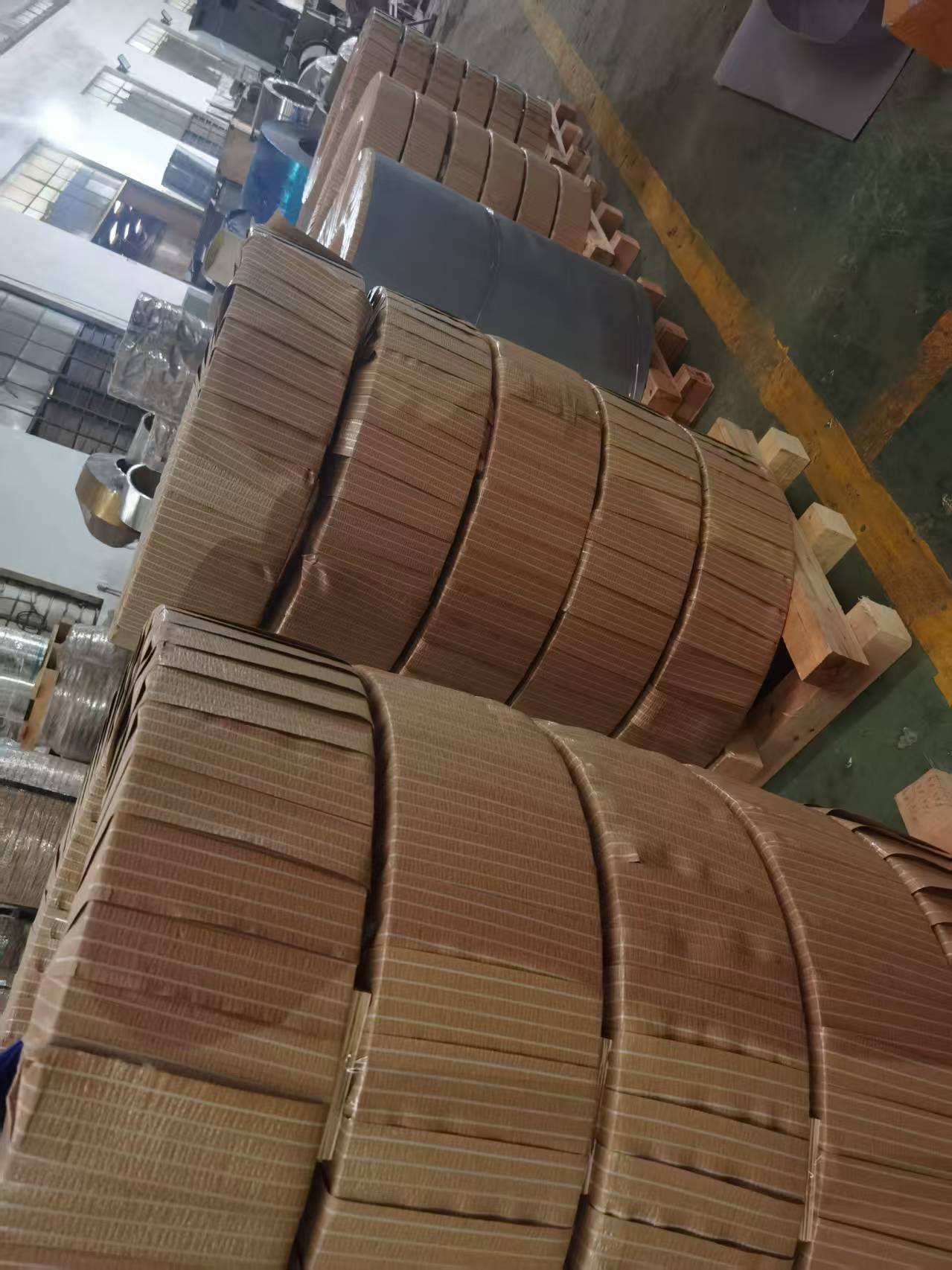
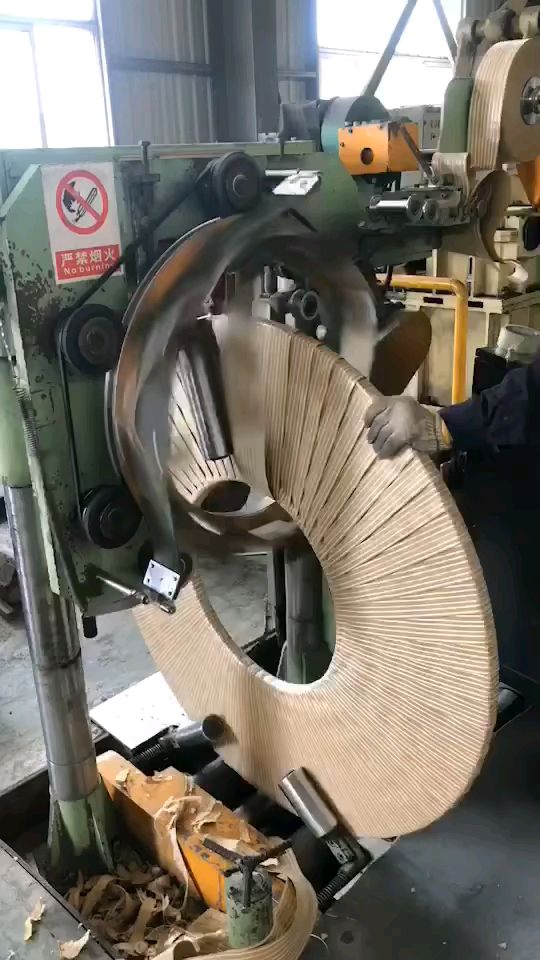
Long-term supply often fails at the packing and release stage rather than at the steel specification. The supplied capability data includes automated post-slitting blade-cut oil-spraying rust-proof treatment for humid or tropical climates and independent single-coil sealed packaging. Buyers should approve the sample coil or sheet, the internal and external packing, the coil eye orientation and the release sequence before repeat orders begin. A sample approval should record the exact finish and size it represents, because a sample of one coating colour does not approve every colour in the programme.
6. Define the after-sales and carbon-data route
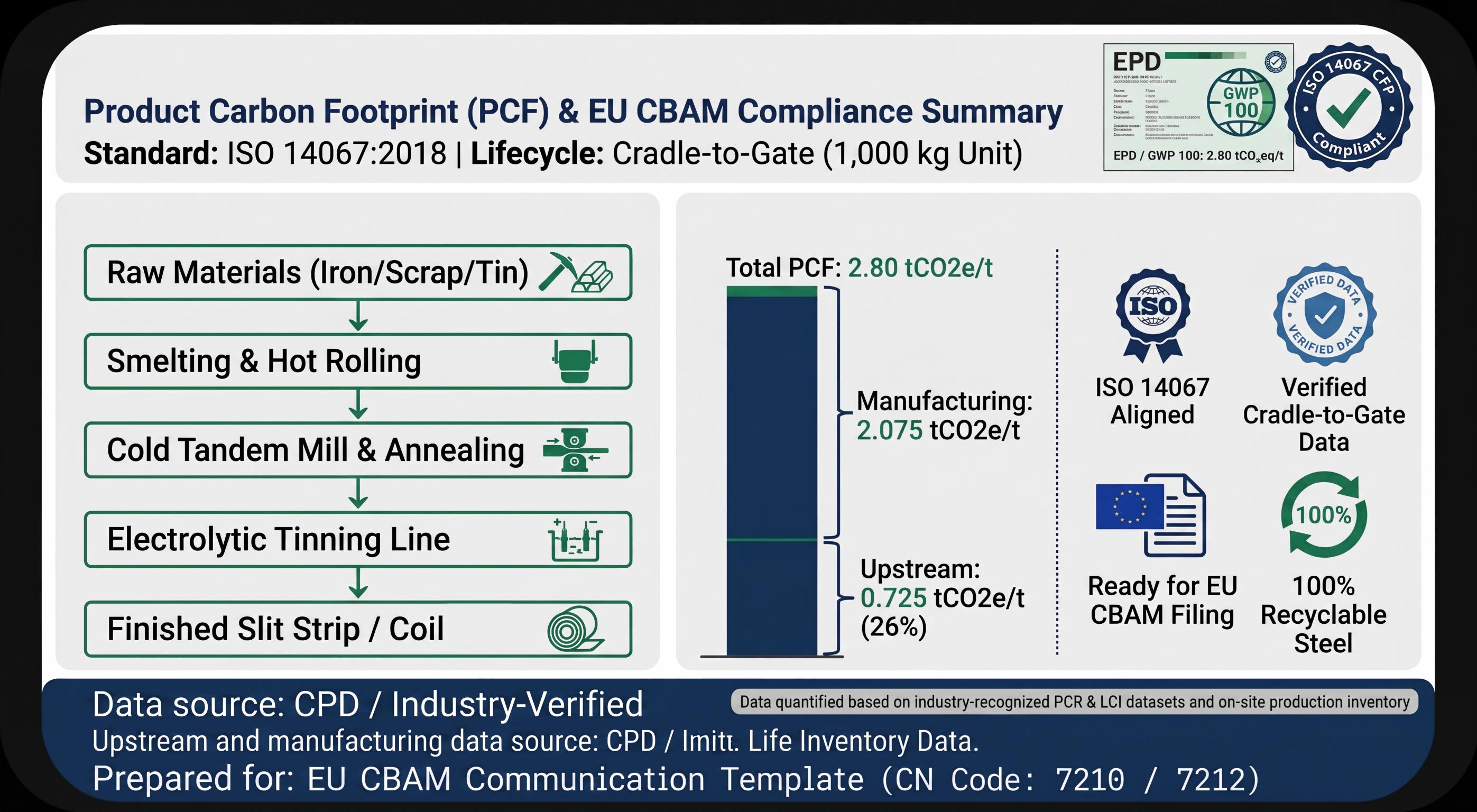
After-sales support includes metallurgical and slitting technical support, fast material quality claim handling with a response target within 24 hours, third-party testing coordination, and global ocean freight and tracking. The supplier also reports EU CBAM direct and indirect carbon emission data, supported by ISO 14067 EPD and CFP certification. For EU-facing buyers, the carbon-data request should be built into the order review so that emissions information is available with the commercial documents, not requested after shipment.
Use cases: where long-term terms change the buying decision
Meat cans and milky white coated sheet
A meat-can programme depends on coating appearance and coverage across repeat lots. The milky white coated tinplate sheet for meat cans is a relevant supplied product unit. The long-term question is not only whether the first sheet matches the approved colour, but whether the coating route, MTC and inspection record remain consistent when the order is repeated. Buyers should link sample approval to a named coating specification and require the same inspection characteristics on later shipments.
Fish cans and high sulfur resistant printed sheet
Fish-can packaging can place sulfur resistance and print quality at the centre of the specification. The high sulfur resistant printed tinplate sheet for fish cans is listed as a supplied product unit. In a long-term partnership, the buyer should agree the print and lacquer approval route, the inspection points and the third-party inspection option before scaling the order. A general MTC does not replace the product-specific print and coating approval.
Deep-drawn and thin-gauge parts
For deep-drawn parts, the relevant supplied range includes DDQ deep drawn tinplate and TFS strip in T1 and T2, DDQ 0.15–0.18 mm, and Golden TINPLATE STRIP DR8 TH520 0.14–0.16 mm. A company case record for automated progressive die deep-drawing of premium single-side gold candle lids describes 10+ years of stable supply at 500–1,000 tons per month, with zero coating peeling, zero tooling crashes, a 35% reduction in die abrasion and zero oxidation during humid shipping. Those results are company case records; for a new buyer they are a reason to ask for a forming trial and a documented technical response route, not a guarantee that every deep-drawn part will behave the same way.
Precision slit hardware and stamping
The supplied case record for a hardware stamping plant and metal packaging can-maker describes a 3+ year supply relationship at more than 6,000 tons annually, covering precision slit strips and multi-colour coated coils. It states zero-defect continuous stamping, 0% coating delamination or foil-bursting during deep drawing, and a 35% longer progressive die tool lifespan. The same record links those outcomes to thickness tolerance within ±0.005 mm, width precision within ±0.05 mm and slitting burr ≤0.05 mm. A buyer should use such case data to frame the technical questions: which tolerance applies to the ordered width, which burr limit is inspected, and which packing protects the slit edge during transit.
Comparison: one-off buying versus a long-term supply partnership
| Decision point | One-off purchase focus | Long-term partnership requirement |
|---|---|---|
| MOQ | Can a single trial lot be supplied? | 2–3 tons as per sizes, confirmed by each size, coating and temper in the programme. |
| Lead time | What is the earliest shipment date? | 5–30 days as per sizes, converted into a repeatable release calendar by product family. |
| Quality document | Is a certificate available? | 100% in-house inspection and MTC EN 10204 3.1 issued with the shipment. |
| Third-party inspection | Can an inspection be arranged once? | SGS, BV or TÜV route written into the order and repeated at agreed stages. |
| After-sales | Who answers if the trial lot has an issue? | Metallurgical and slitting support, 24-hour response target for material quality claims, testing coordination and freight tracking. |
| Carbon data | Is a general sustainability statement enough? | EU CBAM direct and indirect carbon emission data reporting, with ISO 14067 EPD and CFP documentation where required. |
| Capacity fit | Can one lot be squeezed into the schedule? | About 1,200 tons monthly capacity reviewed against the buyer forecast and product mix. |
Compliance documents: use the scope, not just the certificate title
Two supplied compliance documents illustrate why scope matters. The BV ISO9001:2015 certificate CN058611 is a quality-management-system certificate, but its stated scope does not automatically list every tinplate product. The SGS RoHS report CZXHL25001691201 is product-specific: it is scoped to copper colourful tinplate at 0.23 mm thickness and cites RoHS 2.0 standards. Neither document should be presented as blanket approval for every gauge, coating colour or application.
For a long-term tinplate buyer, the practical rule is to build a document matrix by product. The matrix should show which MTC, third-party inspection report, RoHS or REACH document, food-contact declaration and carbon data apply to each item. This prevents a common procurement error: accepting one certificate for a product family and then discovering that a different coating or thickness is outside the tested scope.
FAQ: long-term tinplate supply terms
What does MTC EN 10204 3.1 cover in a tinplate supply partnership?
MTC EN 10204 3.1 is the inspection certificate type issued with the shipment under the stated quality route. YOUNGSON METAL provides 100% in-house inspection with MTC EN 10204 3.1, and the supplied inspection scope includes thickness, coating mass, tensile strength, T-Bend, salt spray and surface roughness. For a repeat programme, the buyer should confirm that each shipment MTC identifies the delivered grade, size and inspected characteristics, and should not treat the first approval certificate as covering later lots automatically.
Can buyers request third-party inspection by SGS, BV or TÜV?
Yes. Third-party inspection by SGS, BV or TÜV is supported under the supplied quality-control terms. The buyer should define the inspection stage, sampling method and acceptance criteria in the order documents. The third-party inspection supplements the in-house inspection and MTC; it does not replace the agreed product specification or the supplier internal release check.
What is the MOQ for a long-term tinplate supply programme?
The stated MOQ is 2–3 tons as per sizes. Because the figure depends on size, coating, temper and slitting requirements, a long-term buyer should request the MOQ for each item in the programme rather than apply one figure to every coated, deep-drawn or precision slit product. This is especially important when the programme mixes thin-gauge deep-drawing strip with wider precision slit strip.
What lead time should buyers expect for repeat tinplate orders?
The stated lead time is 5–30 days as per sizes. The range should be converted into a confirmed production window for the actual size, finish and quantity. A multi-colour printed or precision slit item may require a different slot within that range from a plain or standard coated item. The purchase order should record the confirmed date for the ordered item, not only the general lead-time range.
What after-sales support is included in a long-term tinplate partnership?
After-sales support includes metallurgical and slitting technical support, full EU CBAM direct and indirect carbon emission data reporting, fast material quality claim handling with a response target within 24 hours, third-party testing coordination, and global ocean freight and tracking. These services are relevant to repeat supply because they address the issues that appear after the first shipment: forming behaviour, slit-edge quality, claim response and customer carbon-data requests.
How should buyers shortlist top tinplate manufacturers for a long-term partnership?
A defensible shortlist should be built on evidence rather than a title. Compare the manufacturer on documented MTC EN 10204 3.1, 100% in-house inspection scope, supported third-party inspection by SGS, BV or TÜV, stated MOQ and lead time for the actual sizes, monthly capacity, product-family coverage, after-sales technical response and EU CBAM carbon emission data reporting. For YOUNGSON METAL, the supplied terms include MOQ 2–3 tons as per sizes, lead time 5–30 days as per sizes, about 1,200 tons monthly capacity and the quality and after-sales route described in this FAQ.
Conclusion: what to lock into the partnership agreement
A long-term tinplate supply partnership should be written around repeatability. The buyer needs a size and finish matrix, a confirmed MOQ of 2–3 tons as per sizes, a lead-time plan of 5–30 days as per sizes, 100% in-house inspection with MTC EN 10204 3.1, a defined SGS, BV or TÜV inspection route, and an after-sales path for metallurgical and slitting support plus EU CBAM carbon emission data reporting. Those terms should be attached to the specific coated, deep-drawn or precision slit item, not left as general statements.
The supplied product range gives the partnership enough breadth to cover coated decorative strip such as the ECO friendly 3D laser effect range at 0.14–0.55 mm, food-can coatings such as milky white coated sheet for meat cans and high sulfur resistant printed sheet for fish cans, deep-drawn DDQ and DR8 TH520 strip, and precision slit T2 strip. The next practical step is to request a sample or trial coil against the intended size matrix and ask for the MTC, inspection route and carbon-data package that will apply to repeat orders.
For buyers building a repeat tinplate programme, YOUNGSON METAL can review the size, coating, temper and slitting matrix against the stated MOQ, lead time and inspection terms. Request a sample or quotation, or download the company catalogue for the full product reference.
Catalogue: Chongqing Youngson Metal Products catalogue
Website: www.youngsonmetal.com
Email: info@youngsonmetal.com
Have Questions or Need More Details?
Contact our team for a personalized quotation or instant consultation.
Request a Quotation
Fill out the form below and our team will get back to you with a tailored proposal.
WhatsApp Direct Chat
Prefer to chat in real-time? Message us on WhatsApp for instant assistance & quick answers.
- Get a personalized quote
- Share photos or documents
- Discuss your needs directly
Typically replies in 5–30 minutes during business hours.