MoS2 vs PTFE Coating: Self-Lubricating Black Steel for High-Heat Assemblies
Coating Selection Guide · High-Heat Assemblies
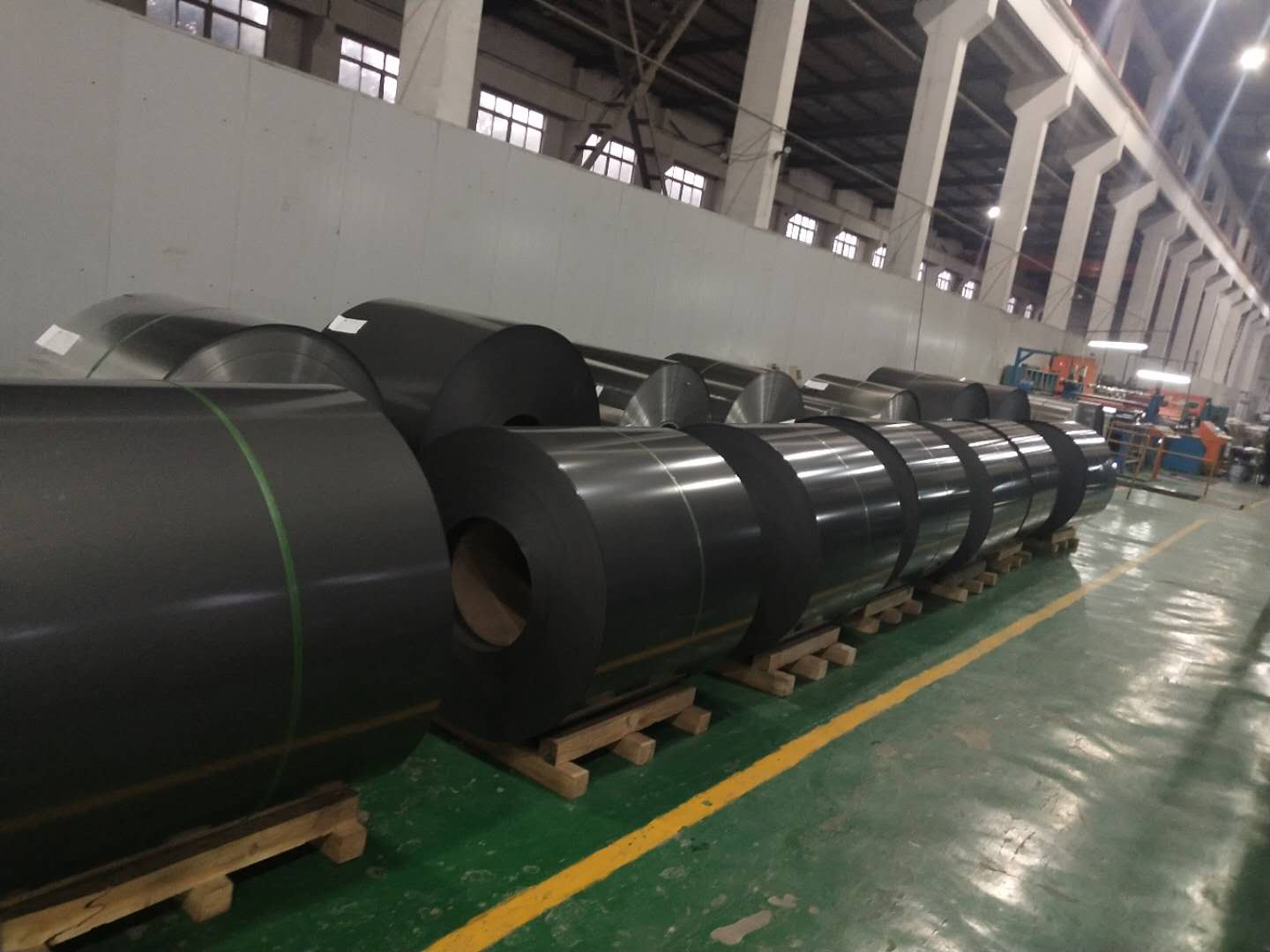
Two black coated steels can leave the same warehouse, pass the same visual inspection, and then behave in completely different ways once they reach the press or the assembly line. Premium MoS2-M025 and SECE-PTFE-MATTE-050 are both self-lubricating, dark-surfaced products intended for formed metal components. They do not, however, rely on the same lubrication mechanism, and they do not carry the same tolerance for heat and deformation.
The wrong choice rarely appears during goods-in inspection. It appears as coating pickup in a deep-drawing die, a gasket that hardens or peels after oil exposure, or a heat-facing part that loses its low-friction surface after repeated thermal cycles. This guide sets out the technical trade-off between the two grades so that engineers can select on function rather than appearance.
Short answer: Specify the MoS2 composite when the assembly runs hot, sees oil or fuel, or must resist extreme-pressure seizure. Reference applications include cylinder head gaskets, exhaust manifold gaskets, turbocharger seals, and heavy-duty powertrain joints. Specify the PTFE-coated SECE when the dominant risk is forming: deep-drawn motor housings and similar parts that need a low-friction, non-stick interface to survive severe deformation. When both heat and severe forming are present, neither data sheet alone is sufficient; qualify both grades with cupping, T-bend, and thermal exposure tests.
Problem Definition: When Two Black Coatings Are Not Interchangeable
Most coating failures in high-heat assemblies begin as a mismatch between the coating chemistry and the dominant stress on the part. That stress is not always temperature. It can be continuous heat, oil immersion, high contact pressure, or severe deformation during forming. Each stress attacks a coating in a different way.
A MoS2 composite specified for a deep-drawn housing with tight corners can be asked to stretch beyond its adhesion envelope. A PTFE film specified for a continuous high-temperature gasket stack can be asked to survive a thermal regime for which its grade was never designed. In both cases the purchase order looks correct, the certificate looks correct, and the failure appears later, during production or in the field.
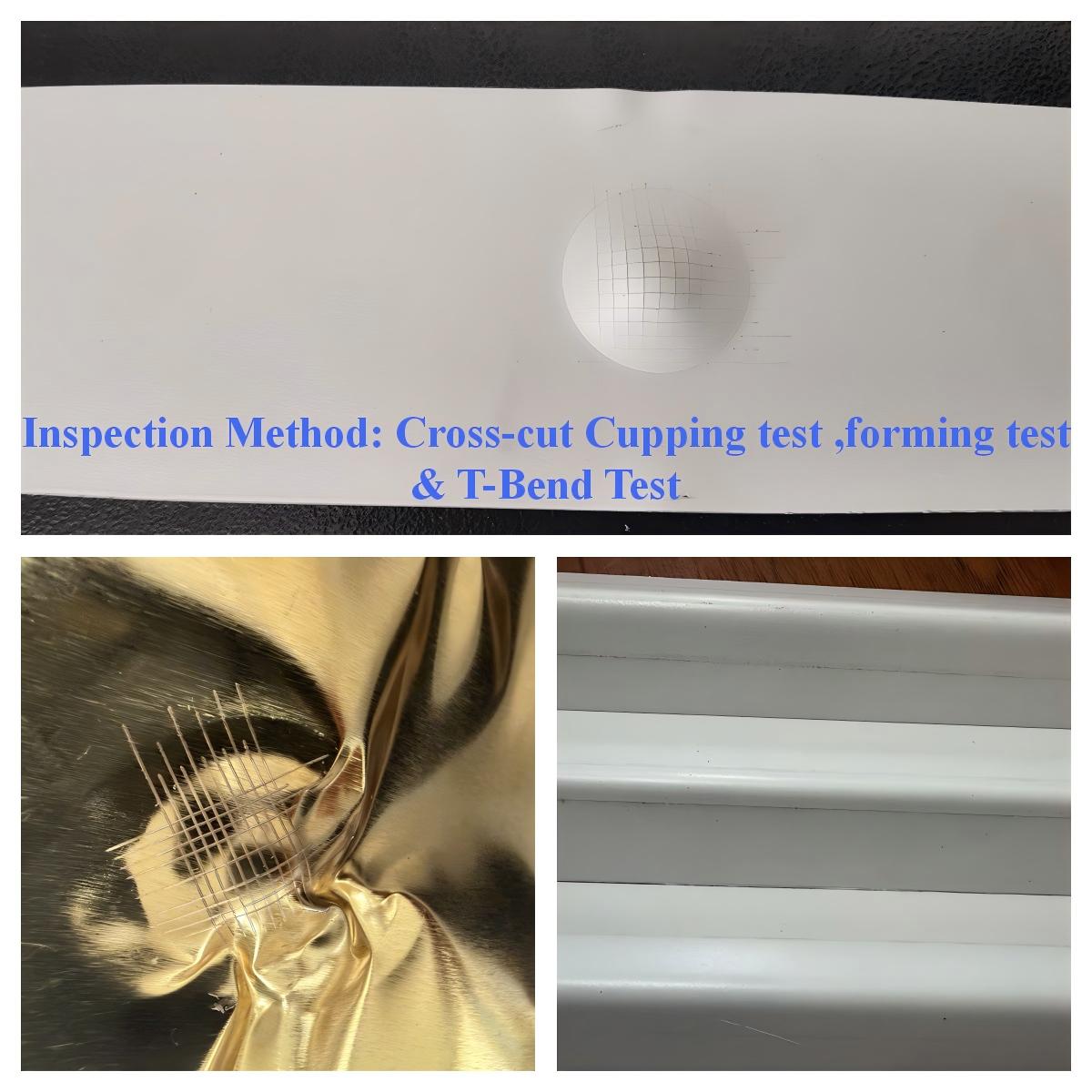
The risk is not theoretical. Coating fatigue, micro-cracking, and adhesion loss are recognized failure modes when coated steel is subjected to continuous mechanical stress in high-speed forming lines. Youngson Metal addresses this through a batch-sampling protocol that combines cross-cut cupping, forming tests, and standard T-bend tests to simulate post-forming stress. That testing logic is useful for buyers because it separates a coating that merely looks black from a coating that survives the intended process.
The second problem is language. Buyers often describe both products as “self-lubricating black steel” or “high-temperature black coil.” That description hides the decision. MoS2 is an inorganic solid lubricant; PTFE is a low-surface-energy fluoropolymer. They solve different problems, and they fail for different reasons.
Industry Background: Why Heat and Forming Pull in Different Directions
The global color-coated steel segment was valued at USD 26.93 billion in 2024, according to the market research cited in the verified data set for this guide. That scale supports a wide range of coating chemistries, substrates, and finish systems. It also means that two coils sold under the same color description can carry very different functional coatings.
MoS2 has a long-standing reference in sealing and gasket applications. DuPont technical data for MOLYKOTE D-7620 reports that MoS2 solid-lubricant coatings have been used successfully for cylinder head gaskets, with operating temperatures up to 300°C and a cure temperature of 220°C. That reference matters because it establishes MoS2 as a coating chemistry that has been evaluated in high-temperature, high-pressure sealing environments, not merely as a decorative black finish.
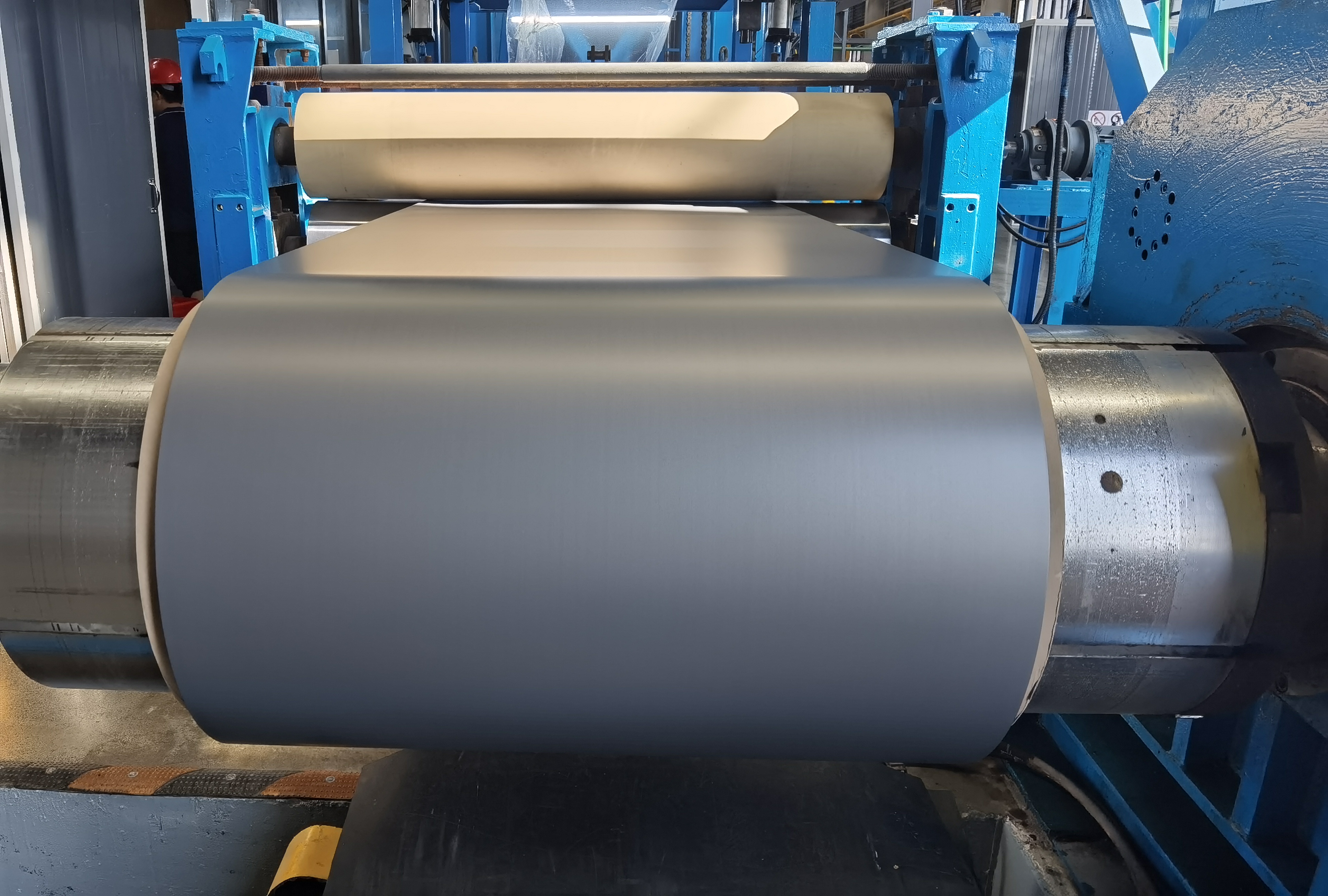
PTFE has a different industrial history. It is associated with non-stick release, low friction, and the ability to form a dry lubricating interface between metal and a contacting surface. In coil coating, the relevant capability is the ability to apply a Teflon or non-stick coating and then deep-draw the coated material without losing adhesion. Youngson Metal operates a deep-drawn coil coating line that includes Teflon, non-stick, gold, and lacquered finishes, described as engineered for severe forming. That is the capability behind the SECE-PTFE-MATTE-050 position for motor housings.
Youngson Metal itself is a Chongqing-based manufacturer founded in 2016 and certified to BV ISO 9001:2015. Its stated annual processed capacity exceeds 10,000 tons, with export business accounting for 70% of total sales across global markets. Its product portfolio includes drawn PET and PVC film laminated steel, deep-drawn coil coatings, pre-painted steel and stainless steel, and a range of mild carbon and stainless substrates. The company reports SGS testing for REACH and RoHS heavy-metal regulations and maintains a technical team of five engineers and senior process technicians.
For buyers, the supply context matters as much as the chemistry. The manufacturer reports a monthly production capacity of 1,000 tons, a typical lead time of 15 to 30 days, and a minimum order quantity of 1 ton per specification. Full batch traceability is provided through Mill Test Certificates, and technical alignment with customer stamping and forming requirements is part of the supply process.
Detailed Solution: Two Lubrication Mechanisms, Two Design Intentions
Premium MoS2-M025: Solid Lubrication for Heat, Oil, and Pressure
Premium MoS2-M025 belongs to the solid-lubricant family. The coating is built on a self-lubricating molybdenum disulfide crystalline structure that remains bonded to the base metal. Unlike an elastomer coating, it does not depend on rubber-like flexibility for its lubricity, and it does not swell or harden when it absorbs oil.
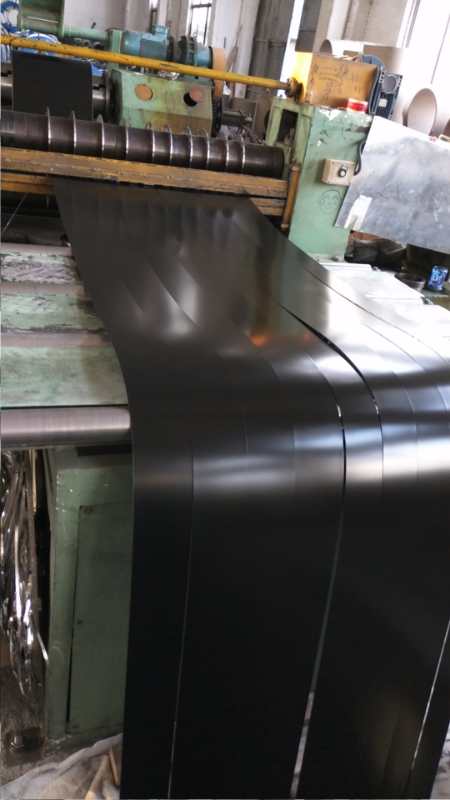
The published MoS2-coated steel data describes the following properties:
- Extreme-pressure anti-seizure behavior under severe thermal environments.
- Continuous thermal stability up to 150°C with no elastomer hardening or cracking.
- An ultra-low friction coefficient produced by the self-lubricating MoS2 matrix.
- Validation through ASTM No.3 oil immersion test protocols.
- Gauge control from 0.20 mm to 0.30 mm and width from 4.0 mm to 1,250 mm.
- Permanent bonding to tinplate, galvanized, or stainless steel substrates.
- A reported 50% reduction in material procurement cost compared with NBR rubber-coated steel.
The DuPont reference adds an important qualification. A 300°C figure for MoS2 gasket systems does not mean that every MoS2-coated steel coil is rated to 300°C in every assembly. It means the chemistry has a documented high-temperature gasket reference. The actual service limit depends on the substrate, the coating weight, the cure schedule, the contact pressure, and the duration of exposure. Buyers should use the reference to define test conditions, not to replace them.
The reference applications follow directly from those properties: automotive cylinder head gaskets, motorcycle seals, exhaust manifold gaskets, turbocharger seals, and heavy-duty powertrain joints. In these parts, the coating must resist seizure under pressure, remain stable when exposed to hot oil, and avoid the hardening and peeling that can affect elastomer coatings over time.
SECE-PTFE-MATTE-050: Low-Friction Release for Severe Deep Drawing
SECE-PTFE-MATTE-050 takes a different route. PTFE, or polytetrafluoroethylene, is a low-surface-energy fluoropolymer. In a coating system it creates a non-stick, low-friction interface that reduces adhesion between the coated steel and the forming tool or the contacting part.
The relevant manufacturing capability is deep-drawn coil coating. Youngson Metal describes its deep-drawn coating line as including Teflon, non-stick, gold, and lacquered finishes, engineered for severe forming. That is the capability that matters when the part is a motor housing with deep draws, tight radii, and a requirement that the coated blank release cleanly from the die.
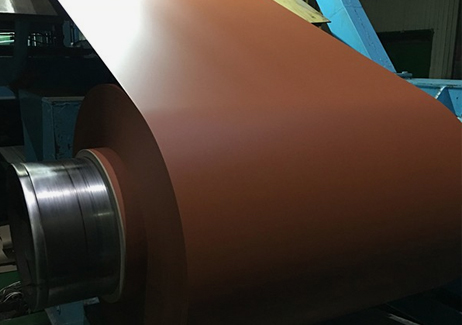
The advantages of the PTFE route are concentrated in forming and release:
- Low friction at the die interface during deep drawing.
- Non-stick release that can reduce pickup and galling on forming tools.
- A matte black appearance suitable for visible motor housings and formed covers.
- Compatibility with severe forming when the coating system and substrate are correctly matched.
The limitations are equally important. The supplied data set does not quantify a continuous service temperature for SECE-PTFE-MATTE-050. That ceiling is grade-specific and must be obtained in writing from the coating supplier and verified against the actual thermal profile. PTFE is also a polymer coating; at drawn corners and tight radii, the film is thinned and stressed. Adhesion after forming must be tested, not assumed.
Do not substitute one non-stick chemistry for another without qualification. Youngson Metal’s non-stick product line also includes PES-based coatings described as PFAS-free and resistant to temperatures up to 220°C. PES and PTFE are different chemistries. A 220°C PES data point is not a PTFE temperature rating, and a PTFE grade should not be approved on the basis of a PES test report.
The Trade-Off: Thermal Stability vs Forming Complexity
The decision between the two grades becomes clearer when the trade-off is stated directly. MoS2 is optimized for the thermal and tribological side of the application: heat, oil, pressure, and seizure risk. PTFE is optimized for the forming side: deep draws, release, and low friction at the tool interface.
A common mistake is to treat the black color as a heat-shielding feature. A black surface is not automatically a heat shield. Thermal protection in a high-heat assembly comes from the overall design, including air gaps, insulation, heat shields, and the actual thermal stability of the coating system. Neither grade should be selected on appearance alone, and neither should be described as a thermal barrier without measured data.
A second mistake is to assume that a coating developed for heat must also be the better coating for deep drawing, or that a coating developed for deep drawing must also be the better coating for heat. The two properties are not ranked on a single scale. They are design intentions, and the correct choice depends on which stress dominates the part.
Step-by-Step Breakdown: How to Select Between the Two Grades
- Map the thermal profile. Record the continuous operating temperature, the peak temperature, the duration of each peak, and the number of thermal cycles. Compare the continuous figure with the 150°C continuous stability of the MoS2 composite and with the high-temperature gasket reference of up to 300°C from the DuPont data. For the PTFE grade, obtain the grade-specific ceiling from the datasheet before making any comparison.
- Define the lubrication regime. State whether the part runs dry, in oil, in fuel, in coolant, or in a sealed grease environment. MoS2-coated steel has been validated through ASTM No.3 oil immersion and is described as resistant to oil-induced swelling, hardening, and peeling. A PTFE surface is non-stick and low-friction, but its chemical resistance to the specific oil, fuel, or coolant must be confirmed for the grade.
- Quantify the forming severity. Record the draw ratio, the blank-holder pressure, the corner radii, and the number of forming stages. The PTFE-coated SECE is positioned for severe deep drawing and motor housings. The MoS2 composite is supplied in 0.20–0.30 mm gauge and is used in stamped and blanked gasket parts. If the part combines a deep draw with a high service temperature, that combination should trigger a sample qualification rather than a data-sheet decision.
- Match substrate and dimensions. MoS2 coatings are described as permanently bonded to tinplate, galvanized, or stainless steel substrates, with a width range of 4.0 mm to 1,250 mm. The PTFE grade is built on an SECE substrate and should be specified with its own thickness and width range. Do not transfer the MoS2 dimensional range to the PTFE product without written confirmation.
- Validate adhesion after forming. Require cross-cut cupping, forming tests, and standard T-bend tests on the actual production geometry. These tests simulate post-forming stress and expose coating fatigue, micro-cracking, or adhesion loss before the coil reaches the press. The acceptance criterion should be defined in the purchase order, and pre-shipment testing should be listed as the acceptance basis.
- Lock traceability and commercial terms. Require Mill Test Certificates for full batch traceability and confirm technical alignment with the stamping or forming process. The reported commercial basis is a minimum order quantity of 1 ton per specification, a typical lead time of 15 to 30 days, and a monthly production capacity of 1,000 tons. Delivery terms include FOB, CIF, CFR, DDP, DDU, and EXW, with payment terms of 30% T/T in advance and 70% after shipment.
Use Cases: Where Each Coating Fits
1. Automotive cylinder head gaskets: MoS2 composite
This is the reference application for MoS2 solid-lubricant coatings. The part sees heat, oil, and high contact pressure, and it must resist seizure without relying on an elastomer that can harden or swell.
2. Exhaust manifold and turbocharger sealing: MoS2 composite
These parts combine thermal cycling with extreme-pressure contact. The inorganic MoS2 layer remains bonded to the base metal and does not depend on rubber-like recovery.
3. Deep-drawn motor housings: PTFE-coated SECE
The dominant risk is forming, not oil immersion. A low-friction, non-stick PTFE surface supports severe deep drawing and release from the die, provided the coating remains adhered at the drawn corners.
4. Oil-immersed industrial seals: MoS2 composite
ASTM No.3 oil immersion validation and the reported resistance to oil-induced swelling make the MoS2 grade the more direct starting point for oil-contact sealing parts.
5. Heating-appliance housings and formed covers: grade-specific decision
If the part is formed deeply and the service temperature stays within the PTFE grade’s confirmed window, the PTFE-coated SECE can be suitable. If the part faces sustained heat, oil, or pressure, the MoS2 composite should be evaluated first. The decision should be made on the measured thermal profile, not on the color of the finish.
Comparison Table: MoS2 Composite vs PTFE-Coated SECE
| Decision factor | Premium MoS2-M025 | SECE-PTFE-MATTE-050 |
|---|---|---|
| Lubrication mechanism | Inorganic MoS2 solid-lubricant matrix with a self-lubricating crystalline structure | PTFE low-surface-energy film forming a non-stick, low-friction interface |
| Continuous thermal stability | Up to 150°C, with no elastomer hardening or cracking | Grade-specific; not quantified in the supplied data set — obtain the datasheet and test report |
| High-temperature reference | MoS2 gasket systems reported up to 300°C in DuPont MOLYKOTE D-7620 data; cure temperature 220°C | No high-temperature figure in the supplied data set; validate against the actual thermal profile |
| Oil and fuel exposure | Validated through ASTM No.3 oil immersion; no oil-induced swelling, hardening, or peeling | Low-surface-energy non-stick surface; chemical resistance must be confirmed for the specific oil, fuel, or coolant |
| Forming route | Thin coated strip for stamping and gasket blanking; 0.20–0.30 mm gauge | Designed for severe deep drawing; Teflon and non-stick line engineered for severe forming |
| Width and gauge | 4.0–1,250 mm width; 0.20–0.30 mm thickness for the MoS2-coated steel data | Confirm thickness and width for the specific SECE-PTFE grade |
| Reference parts | Cylinder head gaskets, exhaust manifold gaskets, turbocharger seals, motorcycle seals, heavy-duty powertrain joints | Deep-drawn motor housings and formed parts requiring release and low friction |
| Cost logic | Reported 50% lower material cost than NBR rubber-coated steel | Cost depends on grade, substrate, and forming yield; evaluate total fabrication cost |
| Verification focus | Adhesion after forming, oil immersion, thermal exposure | Adhesion at drawn corners, coating continuity, thermal exposure |
FAQ: MoS2 vs PTFE Coated Steel Selection
Are MoS2 and PTFE coated steels RoHS and REACH compliant?
Youngson Metal reports that its coated steel products have passed SGS testing for REACH and RoHS heavy-metal regulations. Compliance is not a blanket property of a coating family. The report must match the exact coating chemistry, substrate, and production batch. For a MoS2 or PTFE program, request the current test report and confirm its scope before approving the grade. If the part also needs a food-contact or regulated-market claim, add the specific migration or contact test required by the destination market.
Can Youngson Metal supply both MoS2 and PTFE coated grades, and what ranges are available?
Yes. Youngson Metal’s portfolio includes deep-drawn coil coating with Teflon, non-stick, gold, and lacquered finishes, alongside its MoS2-coated steel range. The published MoS2 data covers 0.20–0.30 mm thickness and 4.0–1,250 mm width. The PTFE grade should be specified by its own datasheet because thickness, substrate, and coating weight are grade-specific. Monthly production capacity is 1,000 tons, with typical lead times of 15 to 30 days.
Which coating is more economical for high-volume production?
For gasket and seal applications, MoS2-coated steel is reported to cut material procurement costs by 50% compared with NBR rubber-coated steel. That is a material-level comparison, not a complete part cost. PTFE-coated SECE should be evaluated on total fabrication cost: blank cost, die performance, rejection rate, and post-forming scrap. A higher-priced coil can still produce the lower-cost part if it eliminates die pickup, polishing downtime, and rework.
Can we validate the coating with samples before placing a production order?
Validation should be built into the order rather than left to first production. Youngson Metal’s quality protocol includes batch sampling with cross-cut cupping, forming tests, and standard T-bend tests to simulate post-forming stress. Acceptance is based on pre-shipment testing. Trial quantities start from the minimum order quantity of 1 ton per specification, so the sample plan should define the tests, the acceptance limits, and the batch records before the trial coil is produced.
What are the MOQ and lead time for MoS2 or PTFE coated steel?
The minimum order quantity is 1 ton per specification. Typical production lead time is 15 to 30 days, and monthly capacity is 1,000 tons. Full batch traceability is provided through Mill Test Certificates, and technical alignment with the customer’s stamping or forming requirements is part of the supply process. For a quotation on Premium MoS2-M025 or SECE-PTFE-MATTE-050, contact Youngson Metal at info@youngsonmetal.com or +86-23-62566629.
Conclusion: Select on Function, Then Prove It on the Part
Neither grade is universally better. Premium MoS2-M025 is the more direct choice when heat, oil, and extreme-pressure seizure define the application. SECE-PTFE-MATTE-050 is the more direct choice when severe deep drawing and non-stick release define the application. The trade-off is not between two colors; it is between two lubrication mechanisms and two sets of process risks.
The practical decision rule is to let the dominant stress choose the starting grade, then validate the choice on the actual geometry. Map the thermal profile, define the lubrication regime, quantify the forming severity, confirm the substrate and dimensions, and require cross-cut cupping and T-bend results before releasing the coil to production. That sequence protects the die, the assembly, and the end user from a coating failure that visual inspection cannot detect.
Next Step: Qualify the Grade Against Your Assembly
Send the thermal profile, forming route, substrate, and target dimensions to Youngson Metal. The technical team can align the coating recommendation with your stamping or forming process, provide the relevant grade data, and arrange batch-level validation. Email info@youngsonmetal.com or call +86-23-62566629. The full product catalogue is available for download: Youngson Metal product catalogue.
Have Questions or Need More Details?
Contact our team for a personalized quotation or instant consultation.
Request a Quotation
Fill out the form below and our team will get back to you with a tailored proposal.
WhatsApp Direct Chat
Prefer to chat in real-time? Message us on WhatsApp for instant assistance & quick answers.
- Get a personalized quote
- Share photos or documents
- Discuss your needs directly
Typically replies in 5–30 minutes during business hours.