MoS2 vs PTFE vs NBR: Coated Steel Selection by Environment
Choose the coating by the environment it will live in. A molybdenum disulfide (MoS2) solid-film coating is specified for joints that see heat, oil and pressure. A PTFE matte black coating is specified for deep-drawn housings that must keep release and appearance after forming. A PFAS-free non-stick coating on ECCS is specified for cakeware and bakeware that touches food. Colour, gloss and substrate still matter, but they are decided after the coating chemistry, not before it.
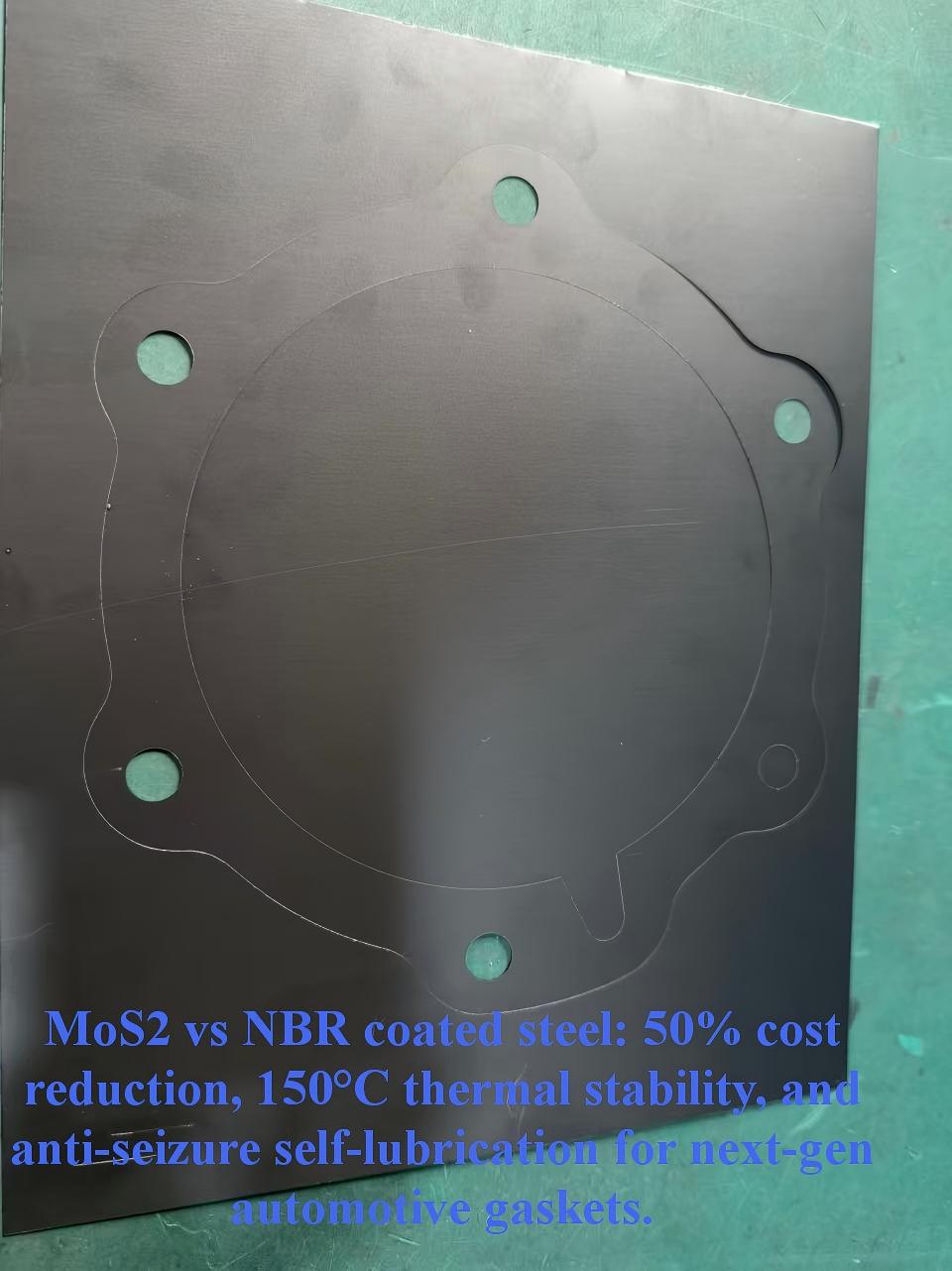
The comparison that drives most of these purchases is not MoS2 against PTFE. It is a functional coating against the elastomer it replaces. NBR rubber-coated steel has been a default in sealing work, and YOUNGSON METAL's comparison data positions an MoS2 solid film as its replacement: a stated 50% reduction in material procurement cost, no oil-induced swelling, hardening or peeling, and a self-lubricating surface that does not rely on an elastomer for sealing.
This guide explains how each of the three coating systems works, where each one stops, how to compare them on the same criteria, and how to qualify a batch before it reaches a press line. Figures marked as company-reported come from YOUNGSON METAL product documentation; externally sourced figures are named where they appear.
Three coatings, three failure modes: defining the problem first
A coating failure looks identical on a scrap report and different in every application. Separating the failure modes is the fastest way to eliminate the wrong chemistry before a quotation is requested.
- Heat, oil and pressure (gaskets and heat shields). Elastomer coatings can swell, harden and peel in oil-wetted joints exposed to sustained heat, which is the mechanism YOUNGSON METAL's comparison data attributes to NBR rubber-coated steel. An inorganic MoS2 layer instead bonds to the base metal (tinplate, galvanized or stainless steel) and is described as chemically inert. The failure appears later: preload is lost and a joint that passed at assembly leaks in service.
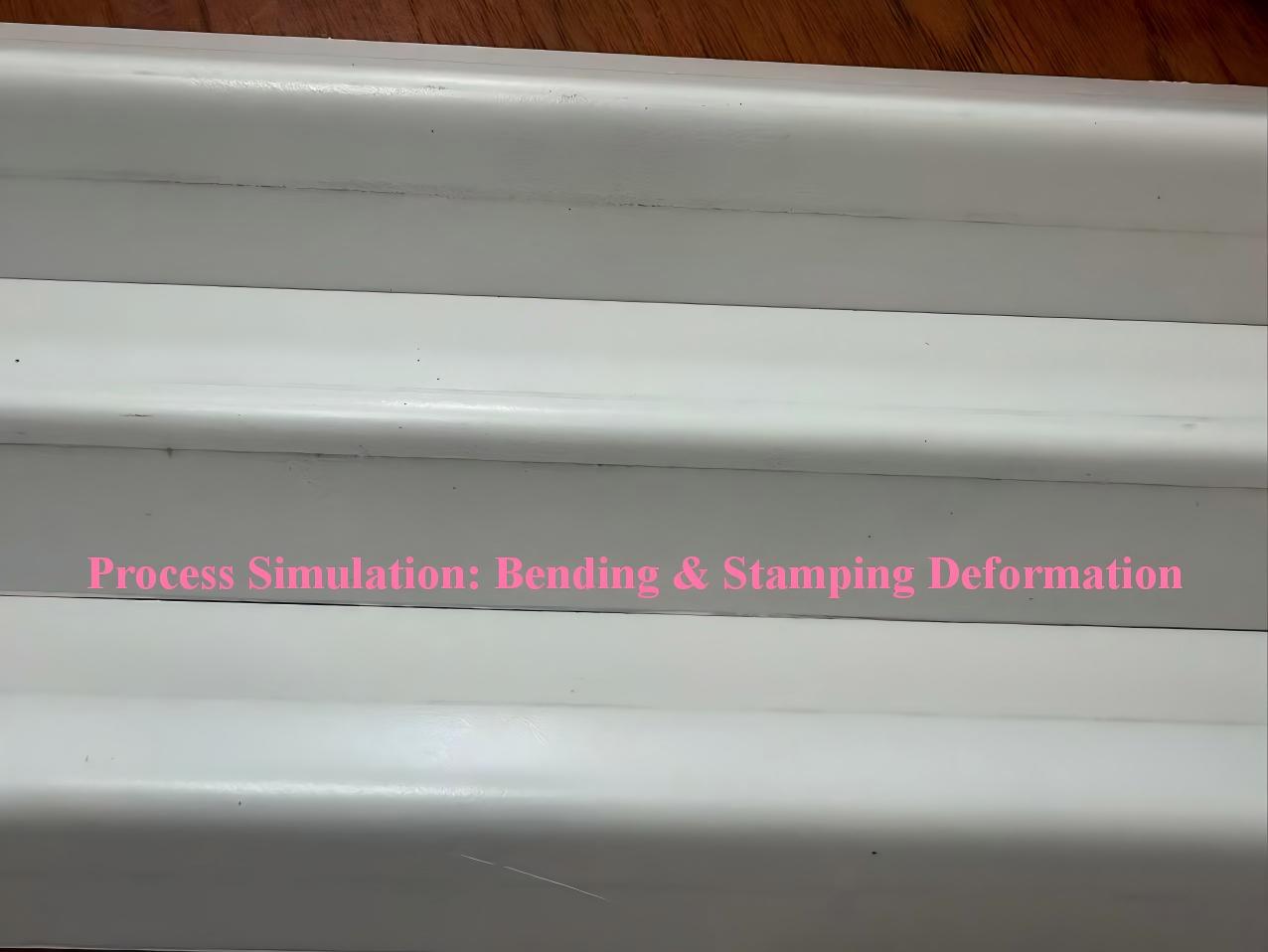
- Forming (motor housings and deep-drawn parts). The failure mode here is mechanical, not chemical: coating fatigue, micro-cracking and adhesion loss caused by continuous stress in high-speed forming lines. A coating that survives a flat panel can fail at a drawn corner. The control is batch-level stress and deformation testing, not visual inspection of incoming coil.
- Food contact (cakeware and bakeware). The failure is documentation and release performance. The coating must release cleanly across cycles and be supported by contact-safety evidence such as BPA-free status and an acid-test result, or the part is rejected at audit rather than on the line.
Buying on colour cards defers all three failures to a later stage: the press shop, the leak test, or the customer's compliance audit. That deferral is the real cost difference between two coils that look the same.
Market context: what tonnage data does not tell you about coating choice
Commercial research estimates the global coated steel market at USD 309.5 billion in 2025, projected to reach USD 565.8 billion by 2033, with the colour-coated segment valued at USD 26.93 billion in 2024 (Vertex AI Search grounded market research). The colour-coated figure is a subset of the total coated steel figure, so the two should be read separately and never added together. These are commercial estimates, not an audited national census.
The useful reading for a buyer is structural. A very large, broad supply base means coil itself is rarely the scarce item; the coating system on the coil is what separates one offer from another. Functional grades are specified through documents (a data sheet, a test report, a batch certificate), not through a colour card. That is why two suppliers can quote visibly different prices for what looks like the same black sheet.
Appearance-led laminated routes have their own standards and should not be borrowed for functional claims. PVC film laminated steel is specified under GB/T 18847-2002 with a film thickness of 150–180 microns and 0T T-bend adhesion. Those requirements govern appearance and film adhesion. They say nothing about lubricity, heat resistance or food-contact safety, so they cannot qualify an MoS2 or non-stick grade.
How each coating system works, and where it stops
MoS2 solid film: the NBR replacement for heat, oil and pressure
A molybdenum disulfide coating is an inorganic solid lubricant film bonded to a metal substrate. The self-lubricating MoS2 crystalline structure supplies the low-friction surface, so the part does not depend on an elastomer to reduce friction. According to YOUNGSON METAL's comparison data, the system is produced on tinplate, galvanized or stainless steel in a 0.20–0.30 mm thickness range and a 4.0–1250 mm width range, with continuous thermal stability to 150°C and no elastomer hardening or cracking, validated through ASTM No. 3 oil immersion test protocols.
The same data lists the application set as automotive cylinder head gaskets, exhaust manifold gaskets, turbocharger seals, motorcycle seals and heavy-duty powertrain joints. The economics are stated plainly: a 50% reduction in material procurement cost against NBR rubber-coated steel sheet, with no coating maintenance required in service because the inorganic layer does not suffer the oil-induced swelling, hardening and peeling associated with the elastomer route.
Where MoS2 stops. The chemistry name is not a temperature rating. As an external reference point for the same chemistry family, DuPont's MOLYKOTE D-7620 anti-friction coating technical data lists a 220°C cure and high-temperature service to 300°C, with successful use on cylinder head gaskets. That is a different supplier's product, and it makes the point precisely: MoS2 systems are binder-specific and their declared ceilings differ by grade. The number that governs a purchase is the one on the data sheet of the exact grade being quoted, supported by the grade's own test documentation.
PTFE matte black on deep-drawn SECE: release plus formability for motor housings
PTFE is a fluoropolymer, and on coated steel it supplies a non-stick, low-friction surface with a matte black finish. YOUNGSON METAL's manufacturing scope includes deep-drawn coil coating with Teflon, non-stick, gold and lacquered finishes engineered for severe forming, which is the production route behind PTFE matte black on SECE (electro-galvanized steel) for motor housings where the coating must follow the draw and still look uniform afterwards.
Formability is the deciding property, and it is measurable. Company comparison data positions this precision coil stock at 0T/1T T-bend formability with a stamping rejection rate below 0.1%, against above 5% for standard construction-grade PPGI, and attributes the difference to consistent forming stability rather than to paint shedding inside the tool. The same comparison notes a higher initial material cost offset by lower total fabrication cost, because rejected parts and mould-cleaning downtime are reduced.
Where PTFE stops. Two limits matter. First, the thermal ceiling of a PTFE grade is a data-sheet value, not a property of the abbreviation, so it must be confirmed for the specific product. Second, PTFE is a fluoropolymer: if a customer specification restricts PFAS or fluoropolymer content in the finished part, PTFE is the wrong route regardless of its forming performance, and the PFAS-free non-stick chemistry is the one to quote.
PFAS-free non-stick ECCS: contact safety for cakeware and bakeware
ECCS means electrolytic chromium coated steel. A non-stick coating applied to it serves parts that combine forming, release and direct food contact. YOUNGSON METAL reports a double-sided non-stick coated steel using a PES coating with a PFAS-free formulation and temperature resistance up to 220°C. That is a company-reported figure for this grade, and it is the number to quote unless a grade-specific thermal report says otherwise.
Food-contact qualification is a document exercise as much as a coating property. Non-stick ECCS for food-grade use is assessed against BPA-free status and a 3% acetic acid test (summarised in third-party market research at medium confidence), and YOUNGSON METAL reports that its products have passed SGS testing for REACH and RoHS heavy-metal regulations. Company documentation also states resistance to acetic acid and citric acid, although the concentration, temperature and exposure time behind that statement are not published, so the batch report remains the controlling evidence.
Where the PFAS-free route stops. The declared 220°C ceiling is the boundary. If a baking or heating cycle runs above the declared limit of the grade, the answer is a grade-specific thermal test report, not a higher headline figure taken from a brochure or from a different product family. A PFAS-free statement is also only useful when it is linked to the batch and formulation actually shipped, because the declaration is a property of the coating chemistry, not of the coil.

Side-by-side comparison: MoS2, NBR, PTFE and PFAS-free non-stick
The table compares the four routes on the criteria that decide a purchase. Values marked company-reported describe YOUNGSON METAL product documentation and should be confirmed on the grade data sheet for the specific order.
| Criterion | MoS2 solid film | NBR rubber coating | PTFE matte black on SECE | PFAS-free non-stick on ECCS |
|---|---|---|---|---|
| Primary function | Self-lubrication under heat and pressure | Elastomeric sealing | Non-stick release with matte black appearance | Food-contact release |
| Documented thermal envelope | Continuous stability to 150°C (company-reported); external MoS2 reference lists 300°C | Degrades under sustained heat, per company comparison | Grade data sheet required; no generic figure asserted here | Up to 220°C (company-reported) for the PES grade |
| Friction and release | Self-lubricating MoS2 crystalline structure, low friction coefficient | Depends on the elastomer surface | Fluoropolymer non-stick surface | PES non-stick surface for repeated release cycles |
| Oil and chemical exposure | ASTM No. 3 oil immersion validated; inorganic and chemically inert (company-reported) | Oil-induced swelling, hardening and peeling | Confirm chemical exposure with the coating supplier | Acetic and citric acid resistance stated by company; 3% acetic acid test used for food-grade assessment |
| Forming requirement | 0.20–0.30 mm gauge, 4.0–1250 mm width (company-reported) | Elastomer layer limits achievable draw | Deep-drawn, 0T/1T T-bend, rejection below 0.1% (company comparison) | Suited to drawn bakeware; declare draw depth at RFQ |
| Compliance documentation | RoHS/REACH heavy-metal testing reported via SGS | Not covered by the supplied comparison data; request the elastomer's own declaration | Fluoropolymer content declaration needed where PFAS is restricted | PFAS-free statement, BPA-free status, 3% acetic acid result, RoHS/REACH |
| Cost signal | Stated 50% lower material cost than NBR | Baseline plus premium against MoS2 | Quoted per fluoropolymer grade; higher material cost offset by lower fabrication waste in precision forming | Quoted per specification and coating build |
| Application fit | Cylinder head, exhaust manifold, turbocharger and powertrain joints | Legacy sealing where elastomer compliance is accepted | Motor housings and deep-drawn appliance parts | Cakeware and bakeware |
Comparison note: the rows describe four different coating families, not four interchangeable products. Where a value is company-reported, it applies to YOUNGSON METAL grades and must not be transferred to another supplier's coating of the same chemical name.
Five steps from specification to released batch
The sequence below converts the comparison into a purchasing decision and keeps the evidence attached to the batch.
- Write the environment down before the finish. Record maximum continuous temperature, oil or chemical exposure, whether the part touches food, the draw depth of the most severe forming operation, and whether a fluoropolymer is acceptable. These five answers eliminate two of the four routes immediately and prevent a later switch that would require re-qualification.
- Fix substrate, gauge and width. MoS2 grades are stated at 0.20–0.30 mm thickness and 4.0–1250 mm width. Prepainted products are offered across 0.20–2.0 mm and 6–1250 mm, while precision slitting is reported across a 0.05–3.5 mm thickness and 1.5–1800 mm width range with 0.03–0.10 mm width tolerance and burr (all company-reported). Treat these as screening values and confirm them on the quotation.
- Request the documents that match each claim. Batch traceability is delivered through Mill Test Certificates. RoHS and REACH reports, a PFAS-free statement, BPA-free evidence and the 3% acetic acid test result belong with food-contact orders. The thermal ceiling must come from the grade's own data sheet, not from a marketing page.
- Test the forming interface, not just the flat panel. YOUNGSON METAL applies batch sampling with cross-cut, cupping, forming and standard T-bend tests to simulate post-forming conditions, because coating fatigue and adhesion loss appear after deformation. Ask for those results for the batch, and run the same test on your own press sample.
- Release on pre-shipment test, then scale. Acceptance is based on pre-shipment testing. Minimum order quantity starts from 1 ton per specification, typical lead time runs 15–30 days, and monthly production capacity is 1,000 tons (company-reported). Scale only after the pilot batch has passed your own forming and inspection steps.
Application mapping: three environments, three decisions
Gaskets and heat shields
Specify MoS2 solid film. The reason is structural: there is no elastomer to harden, swell or peel, the surface is self-lubricating, and oil immersion is validated through ASTM No. 3 protocols. The 0.20–0.30 mm gauge range suits stamped sealing geometries. What the buyer still owns is joint design: compression, flange load and surface finish remain the sealing engineer's responsibility, and the coating's declared thermal ceiling must sit above the joint's continuous duty temperature, not its peak only.
Motor housings and deep-drawn appliance parts
Specify PTFE matte black on deep-drawn SECE when release, matte appearance and draw performance are required together. The evidence to ask for is forming-related: T-bend results at 0T/1T and a rejection rate consistent with the quoted grade, since the whole cost case rests on fewer rejects and less tool cleaning. Confirm two things in writing: the grade's thermal limit, and whether the fluoropolymer content is acceptable in the destination market. If it is not, the PFAS-free non-stick route covers the release requirement without the fluoropolymer.
Cakeware and bakeware
Specify PFAS-free non-stick on ECCS where the part touches food and the process stays within the grade's declared ceiling of 220°C. The purchasing file should hold the PFAS-free statement, BPA-free status, the 3% acetic acid test result and RoHS/REACH reporting, each linked to the supplied batch. Above the declared ceiling, request a grade-specific thermal report before sampling; a longer bake cycle is not a reason to accept a headline figure that belongs to another product.
Long-term supply: keeping the same coating on the same part
A coating-dependent part is qualified once and produced for years, so the supply risk sits in the third and fourth order rather than the first. YOUNGSON METAL reports 70% of sales exported to global markets, a monthly production capacity of 1,000 tons, a minimum order quantity from 1 ton per specification and a typical lead time of 15–30 days, with full batch traceability through Mill Test Certificates and technical alignment with client stamping and forming requirements. The company is BV ISO 9001:2015 certified and supplies from Chongqing. Standard delivery terms quoted include FOB, CIF, CFR, DDP, DDU and EXW, with pre-shipment test as the acceptance basis and payment of 30% T/T in advance with 70% after shipment.
Two practical controls protect a multi-year programme. First, retain a sample from the qualification batch and compare incoming cross-cut and T-bend results against it, because forming behaviour drifts before appearance does. Second, write a change-control clause: any change to the coating system should trigger re-qualification, since a reformulated coating can pass a flat-panel inspection and still fail at the draw. Capacity, lead time and minimum order quantity are company-reported and vary with specification, so they should be fixed in the RFQ rather than assumed from a brochure.
FAQ: MoS2, PTFE and non-stick coated steel
Can MoS2 coated steel replace NBR rubber-coated steel in gaskets?
Yes, where the joint needs heat and pressure resistance with permanent lubrication rather than elastomeric sealing. YOUNGSON METAL's comparison data lists a 0.20–0.30 mm thickness range, ASTM No. 3 oil immersion validation and continuous thermal stability to 150°C, with a stated 50% lower material cost than NBR rubber-coated sheet. Confirm the ceiling on the exact grade's data sheet: published MoS2 systems for gaskets range higher, and DuPont's MOLYKOTE D-7620 technical data, an external reference, lists high-temperature service to 300°C with a 220°C cure.
Is PTFE the same as a PFAS-free non-stick coating?
No. PTFE is a fluoropolymer, while the PFAS-free non-stick grade described here uses a PES coating. Both provide release, but they answer different compliance questions. If your specification restricts fluoropolymer content, specify the PFAS-free route and request a batch-linked declaration rather than a general brochure statement.
What temperature can food-grade non-stick ECCS withstand?
YOUNGSON METAL states temperature resistance up to 220°C for its PFAS-free PES non-stick coated steel. Food-contact assessment also covers BPA-free status and a 3% acetic acid test result. Any higher ceiling must come from a grade-specific thermal test report for the exact product, not from the chemistry name.
Which documents should accompany a coated steel shipment?
At minimum: a Mill Test Certificate for batch traceability, pre-shipment test records, and RoHS/REACH documentation for the coating system. For food-contact parts, add the BPA-free declaration and the 3% acetic acid test result. For formed parts, add cross-cut, cupping and T-bend results from batch sampling, since those tests show how the coating behaves after deformation.
How do I qualify a long-term color coated steel coil supply partner in China?
Qualify on five verifiable points: stated capacity and lead time (YOUNGSON METAL reports 1,000 tons per month and 15–30 days), minimum order quantity (from 1 ton per specification), batch traceability through Mill Test Certificates, technical alignment with your stamping and forming requirements, and a documented quality system (BV ISO 9001:2015). Then run a specification-matched sample through your own press before committing volume. YOUNGSON METAL supplies from Chongqing with 70% of sales exported; samples and quotations can be requested at info@youngsonmetal.com or +86 23 62566629, and the company catalogue is available for download.
Conclusion: choose the environment, then the evidence
MoS2, PTFE and PFAS-free non-stick coatings are not three grades of the same product. MoS2 is a solid-film lubricant built for heat, oil and pressure, and it is the practical replacement path for NBR rubber coating in sealing work. PTFE matte black on deep-drawn SECE is a forming and release solution for housings that must look right after the draw. PFAS-free non-stick on ECCS is a contact-safety solution for cakeware and bakeware within a declared 220°C envelope.
The selection order is fixed: environment first, chemistry second, substrate and gauge third, documents fourth, forming test fifth, and supply continuity last. Every one of those steps can be verified with a data sheet, a batch certificate or a sample, which is why the coating decision should be made on evidence rather than on a colour card.
Next step: send the application environment (temperature, oil or chemical exposure, food contact, draw depth) with the required gauge and width, and YOUNGSON METAL can confirm which coating system applies and which test documents accompany the batch. Samples and quotations: info@youngsonmetal.com, +86 23 62566629.
The full product catalogue, including coating options and dimensional ranges, can be downloaded here: YOUNGSON METAL product catalogue (PDF).
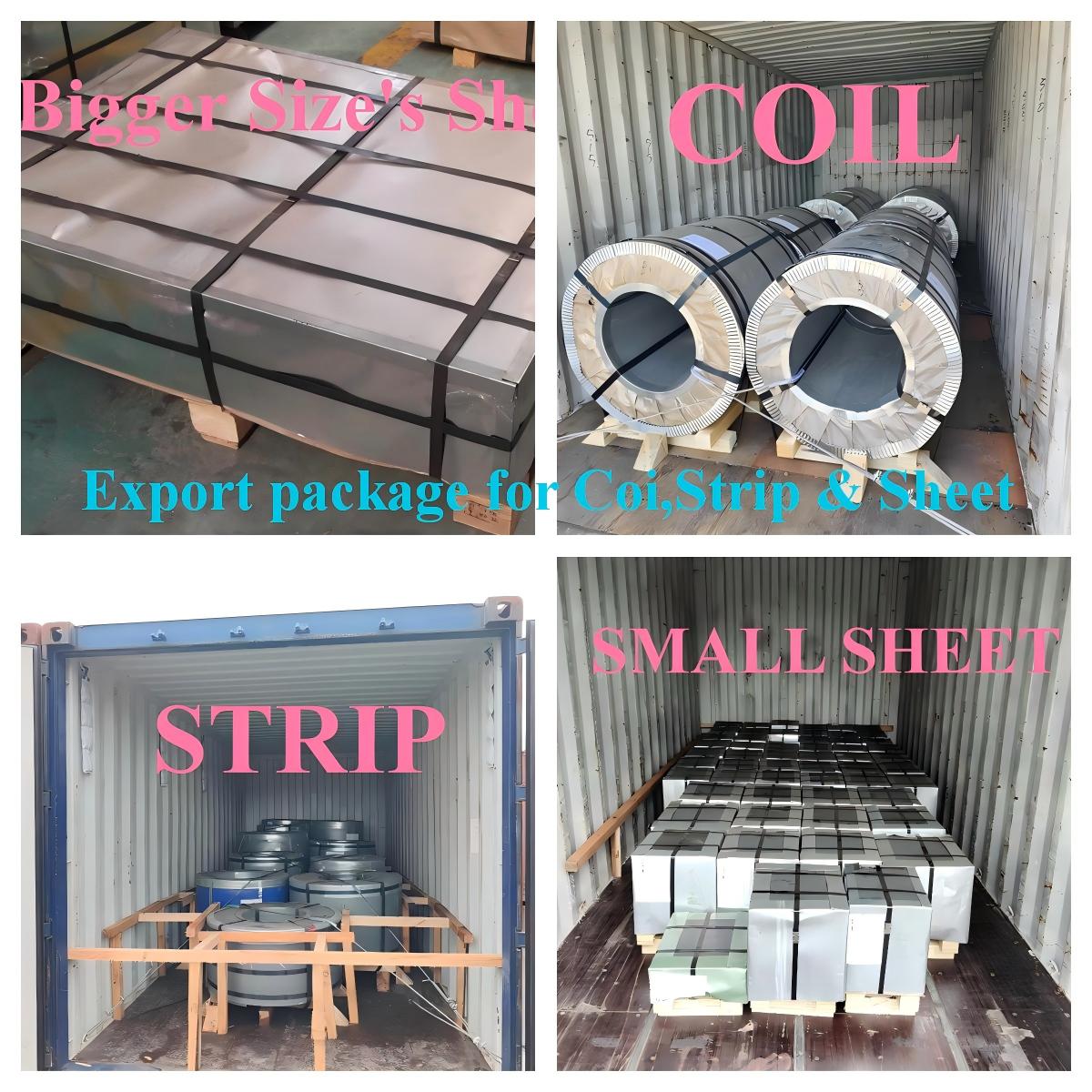
Company information: Chongqing Youngson Metal Products Co., Ltd, No.16-16, Building 11, No.305 Yunan Avenue, Longzhouwan Street, Ba'nan District, Chongqing 401320, China. Website: www.youngsonmetal.com.
Have Questions or Need More Details?
Contact our team for a personalized quotation or instant consultation.
Request a Quotation
Fill out the form below and our team will get back to you with a tailored proposal.
WhatsApp Direct Chat
Prefer to chat in real-time? Message us on WhatsApp for instant assistance & quick answers.
- Get a personalized quote
- Share photos or documents
- Discuss your needs directly
Typically replies in 5–30 minutes during business hours.