PVDF vs VCM vs PET vs PTFE vs MoS2: Coated Steel Comparison for Industrial Buyers
PVDF vs VCM vs PET vs PTFE vs MoS2: Coated Steel Comparison for Industrial Buyers
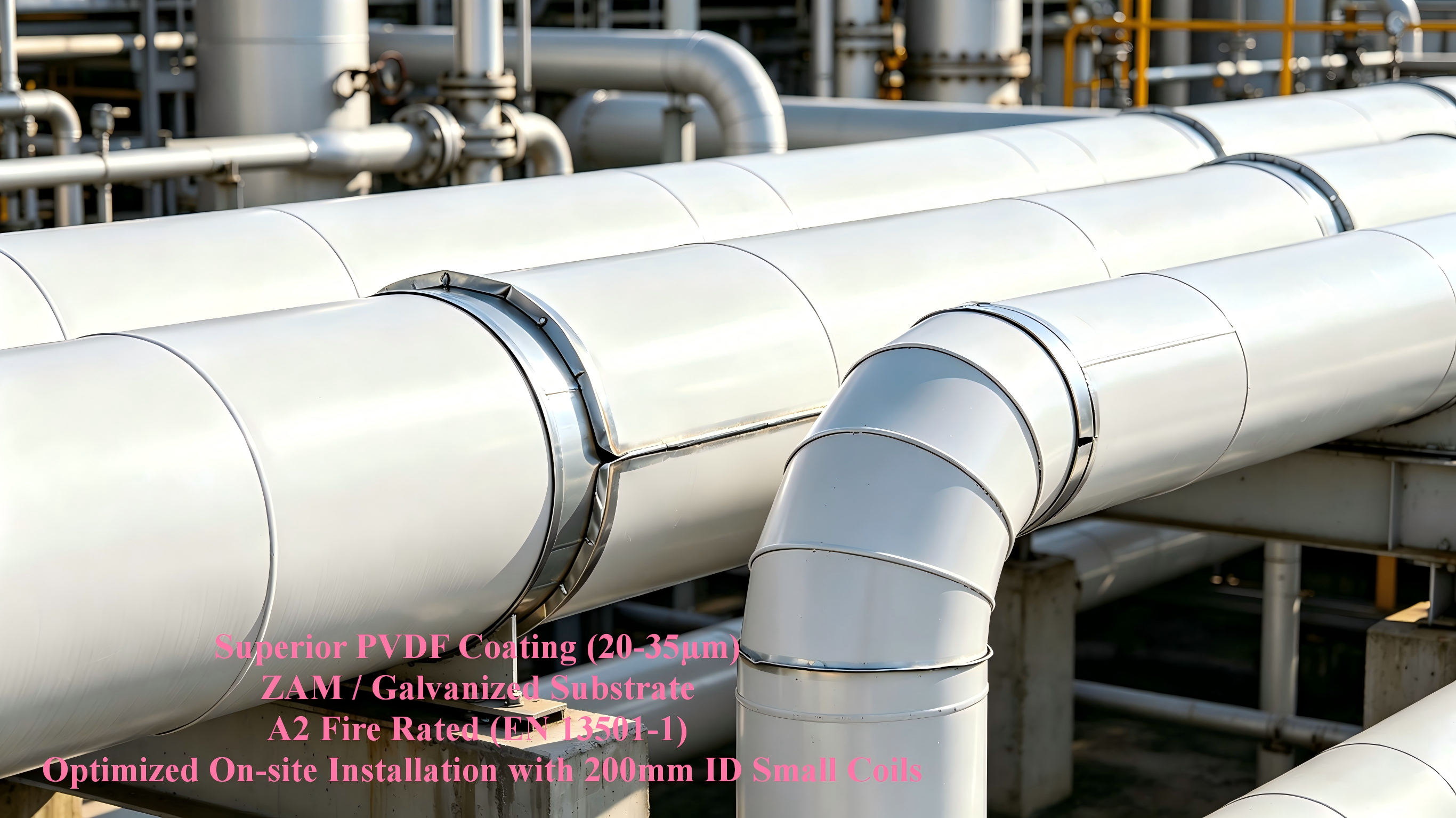
PVDF coated metal jacketing is one of five coating systems compared in this guide. Each system answers a different project requirement.
PVDF, VCM, PET, PTFE and MoS2 are five different coating chemistries applied to color coated steel coil and sheet, and they are not interchangeable grades of the same product. Each is engineered around a different balance of fire performance, chemical and temperature resistance, formability and surface behaviour, which is why the fastest way for an industrial buyer to choose between them is to start from the project failure mode rather than from the coating name.
This comparison maps five reference products from YOUNGSON METAL (Chongqing Youngson Metal Products Co., Ltd.) to real application requirements: PVDF REF A2 ZAM 0.5-0.7 for refinery pipe cladding and thermal insulation, ZAM-VCM-FR fire-retardant laminated steel for interior architecture, HD-PET 40-80um anti-scratch laminated steel for appliances and precision hardware, SECE-PTFE matte black for deep-drawn motor housings, and Premium MoS2-M025 as an NBR coating alternative for self-lubricating, high-temperature heat shields and sealing parts.
What Each of the Five Coating Systems Is Designed to Do
The five systems differ first at the chemistry level, and that chemistry is what determines the certification route and the forming route a buyer can use.
- PVDF (polyvinylidene fluoride) is a fluoropolymer coating applied over galvanized or Zn-Al-Mg (ZAM) steel. It is designed as external metal jacketing and cladding where UV, weather and chemical exposure are continuous.
- VCM (vinyl coated metal) is a laminated PVC film system applied over a ZAM alloy substrate. The fire-retardant version in this comparison is designed for interior architectural surfaces where a documented reaction-to-fire classification is mandatory.
- PET (polyethylene terephthalate) is a heavy-duty laminated film overlay in the 40-80um range. It is designed for appliance and precision hardware surfaces that must survive handling, scratch exposure and visible daily contact.
- PTFE (polytetrafluoroethylene) integrated into a matte black coating is designed as a low-friction, self-lubricating surface for deep-drawn components such as precision motor housings.
- MoS2 (molybdenum disulfide) is a solid film lubricant, not a decorative coating. It is designed as a self-lubricating alternative to nitrile rubber (NBR) coatings on gaskets, seal rings and heat-shield strips.
The Selection Problem: Coating Mismatch, Not Steel Availability
Color coated steel coil and sheet is widely available; coating mismatch is the expensive problem. When a coating system is chosen for price or appearance rather than for the project environment, the consequences appear later in the project cycle, and they are visible.
Four mismatch patterns are common in industrial purchasing:
- Fire classification mismatch. A fire-critical interior cladding specification names a reaction-to-fire class, and a coating system that carries no matching test documentation cannot be submitted. The classification must match the test method named for the market, not a similar-sounding one.
- Forming mismatch. A coating that performs well on a flat panel can delaminate or micro-crack when the same coil is deep drawn or bent to a tight radius. Deep-drawing grades need documented adhesion and elongation behaviour, not just a coating thickness.
- Chemical and thermal mismatch. Refinery cladding, oil-exposed gaskets and heated appliance parts each attack a coating differently. A coating validated for salt spray is not automatically validated for oil immersion or continuous elevated temperature.
- Documentation mismatch. Even a technically correct coating can block a project if the mill test certificate, third-party test report or compliance declaration is not available in the required format.
This is where a scenario-based comparison is more useful than a general product catalogue: the buyer can move directly from a named requirement to a specific coating system.
Industry Background: A Growing Market Under Increasing Regulation
The global pre-painted steel (color coated steel) market was valued at USD 24.63 billion in 2023 and is projected to grow at a CAGR of 5.8% through 2032, according to Polaris Market Research. China exported approximately 6.5 million tons of color-coated steel sheets in 2023, representing a significant share of global trade volume, based on MySteel data.
Supply is concentrated among large integrated producers. Fortune Business Insights lists ArcelorMittal, Nippon Steel, BlueScope Steel and Baosteel among the major global competitors in the high-end color coated steel sector, alongside a large tier of specialised coil coaters and precision slitters that serve specific coating chemistries and forming processes.
Regulation is tightening in parallel with volume growth. Color coated steel used in electronic appliances must meet the RoHS Directive 2011/65/EU and REACH requirements, as set out by the European Chemicals Agency (ECHA). On the corrosion side, Z275 galvanized coating (275 g/m2 zinc) is a standard requirement for high-corrosion environments in solar and industrial electricity infrastructure under ASTM A653 / EN 10346. For fire-critical interiors, the classification framework itself is the specification: EU projects reference EN 13501-1, US projects reference ASTM E84, and UK projects reference BS 476 Part 6/7.
The Five Systems in Detail
1. PVDF REF A2 ZAM 0.5-0.7 - Refinery Pipe Cladding and Thermal Insulation
PVDF-REF-A2-ZAM-0.5-0.7 is a petrochemical-grade metal jacketing built on galvanized steel (Z180) or Zn-Al-Mg (ZAM) coated steel, finished with a premium PVDF coating system of 20-35um on the top side and 5-15um on the back side. It is supplied in 0.50 mm and 0.70 mm thickness at 1,000 mm width.
Its defining characteristic is the fire and exposure profile: it is certified to EN 13501-1 (A2-s1,d0,t1) and ASTM E84 Class A, and it is optimised for oil refinery thermal insulation and petrochemical pipe cladding. A small-diameter coil option with a 200 mm inner diameter is available specifically for refinery insulation site efficiency, so the cladding can be applied without excessive coil handling.
Because PVDF is a fluoropolymer, weather and chemical resistance is the primary reason it is specified on outdoor and process-exposed cladding. Coil coating suppliers such as AkzoNobel report that high-performance PVDF coatings typically maintain 70% of colour integrity for over 20 years, which explains why the chemistry is specified where re-cladding would be disruptive.
Limit to note: this system is designed as exterior jacketing and cladding material at 0.50-0.70 mm over Z180 or ZAM substrates. It is not presented as a deep-drawing grade, so it should not be substituted into a forming application without separate validation.
2. ZAM-VCM-FR-Series - Fire-Retardant VCM Laminated Steel for Interior Architecture
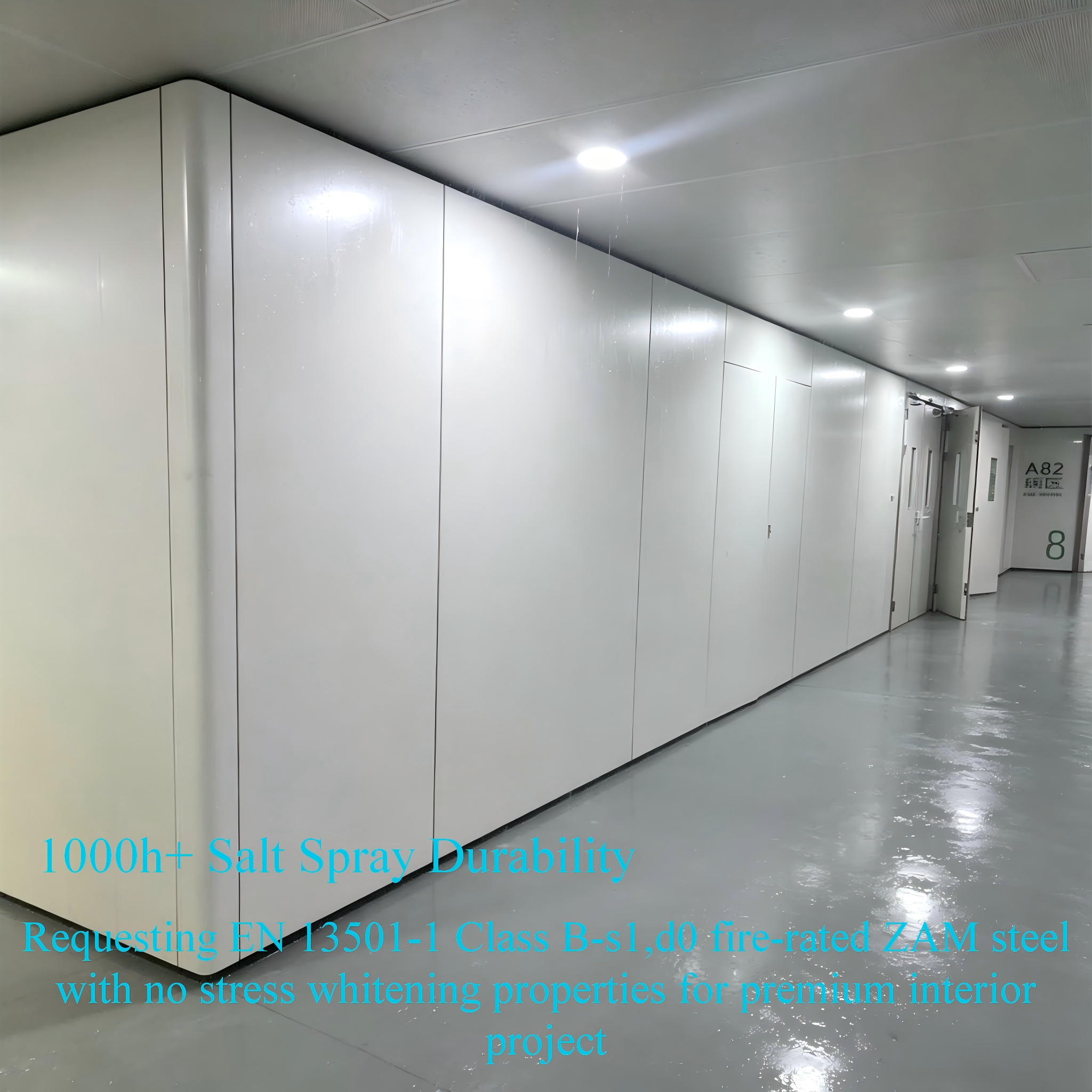
ZAM-VCM-FR fire-retardant laminated steel: a ZAM substrate with an engineered fire-retardant white PVC film for fire-rated interior surfaces.
The ZAM-VCM-FR-Series is a high-performance fire-retardant metal laminate for interior architecture, supplied at 0.50-0.70 mm thickness and 1,000-1,250 mm width. The substrate is premium ZAM (zinc-aluminium-magnesium) alloy coated steel, and the coating is an industrial-grade white VCM (vinyl coated metal) film with a PVC film thickness of 40um-100um.
The fire documentation is the reason this system exists: UL 94 V-0 rating for the PVC film, EN 13501-1 Class B-s1,d0, ASTM E84 Class A, and BS 476 Part 6/7 Class 0 for fire propagation and flame spread. Corrosion performance is supported by a verified 1000h+ salt spray test, and the laminate delivers zero stress whitening during severe precision bending and deep drawing.
That combination points to specific interior environments: data centres and mission-critical infrastructure, medical facilities and pharmaceutical cleanrooms, marine and offshore vessel interiors, server enclosures and telecom cabinets, precision metal cassettes and high-end fire door OEM production, and industrial controlled environments. In these spaces the surface must satisfy a fire class, resist a humid or coastal atmosphere, and still look finished after CNC bending and laminate fabrication.
How it compares on fire class: within the EN 13501-1 hierarchy, A2 ranks above B. PVDF jacketing carries A2-s1,d0,t1 while the VCM fire-retardant laminate carries B-s1,d0, so the two systems serve different risk profiles: process-exposed external cladding on one side, fire-rated interior surfaces with cut-edge protection and 1000h+ salt spray durability on the other.
3. HD-PET 40-80um - Anti-Scratch Laminated Steel for Appliances and Precision Hardware
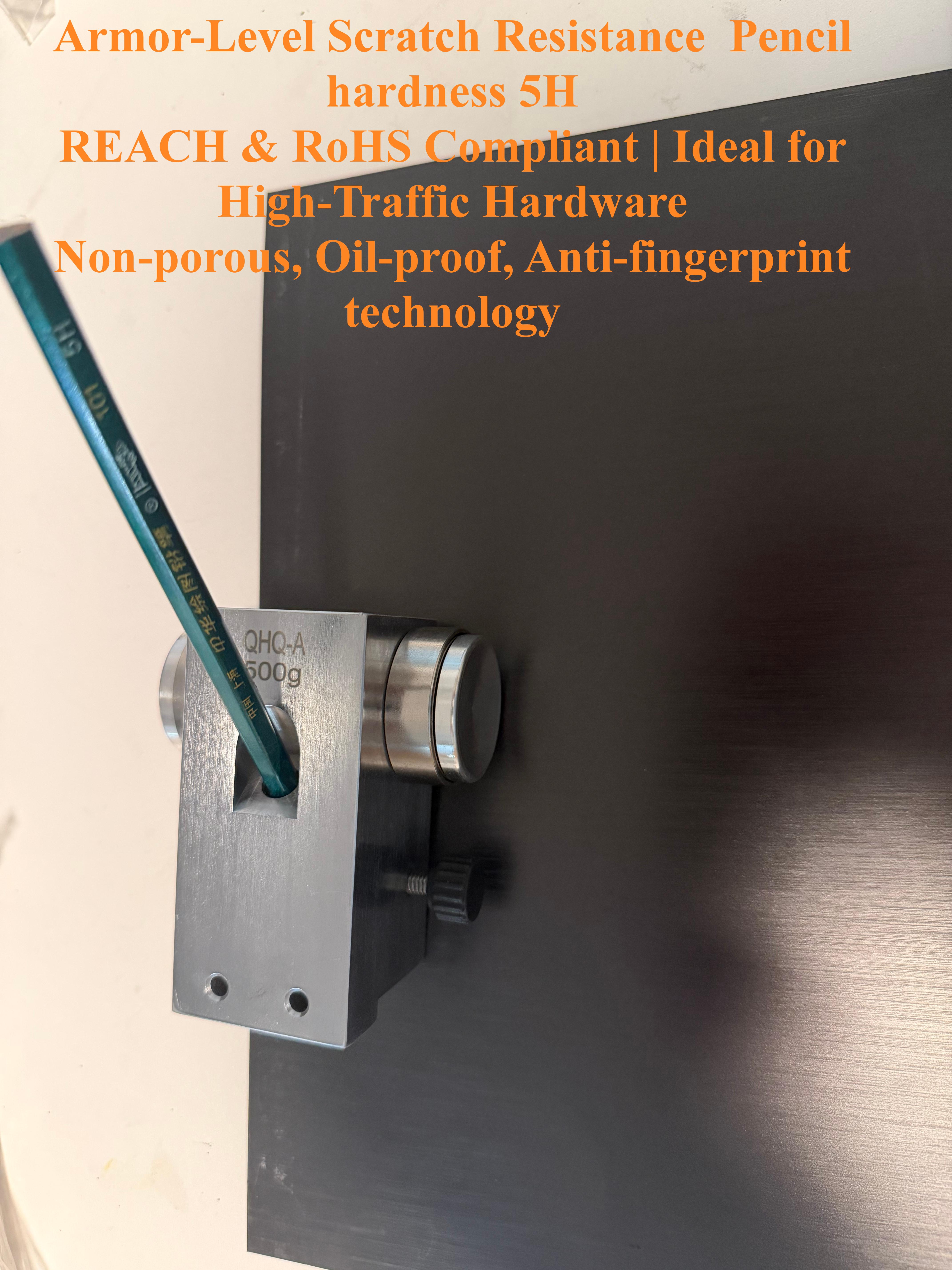
HD-PET uses a 40-80um heavy-duty PET structural overlay to deliver 3H and 5H anti-scratch surface resilience.
HD-PET-40-80UM is a PET laminated steel for appliance and precision hardware engineering. The differentiator is the coating weight: a 40um-80um heavy-duty PET structural overlay rather than a thin decorative film. Substrates include high-grade stainless steel, galvanized and Zn-Al-Mg steel in a 0.40-2.0 mm range, with additional options across galvanized coil, tinplate, ZAM coil, aluminium coil and stainless steel coil.
Performance data published for this product covers both forming and daily-use behaviour: superior deep-drawing stability that prevents delamination and micro-cracking, armour-level anti-scratch resistance at 3H and 5H with high-traffic durability, and an oil-proof, anti-fingerprint shield aimed at appliance touchpoints. Finishes include premium metallic looks (brass, copper, golden), matte black, and brushed or wood-grain effects, and the product is REACH and RoHS certified as heavy-metal free.
Typical applications are luxury appliance manufacturing, high-end security hardware, precision architectural metal parts and commercial interior fittings. The pattern is consistent: visible surfaces that are touched, cleaned and handled, where a scratch or a fingerprint shows immediately and where a delaminated edge is a reject.
Limit to note: PET is a film laminate optimised for surface resilience and forming stability, not for continuous high-temperature service or for fire-classified interior partitions. Those requirements belong to the VCM and MoS2 systems described here.
4. SECE-PTFE-MATTE-050 - Deep-Drawn Motor Housings with Self-Lubricating Matte Black
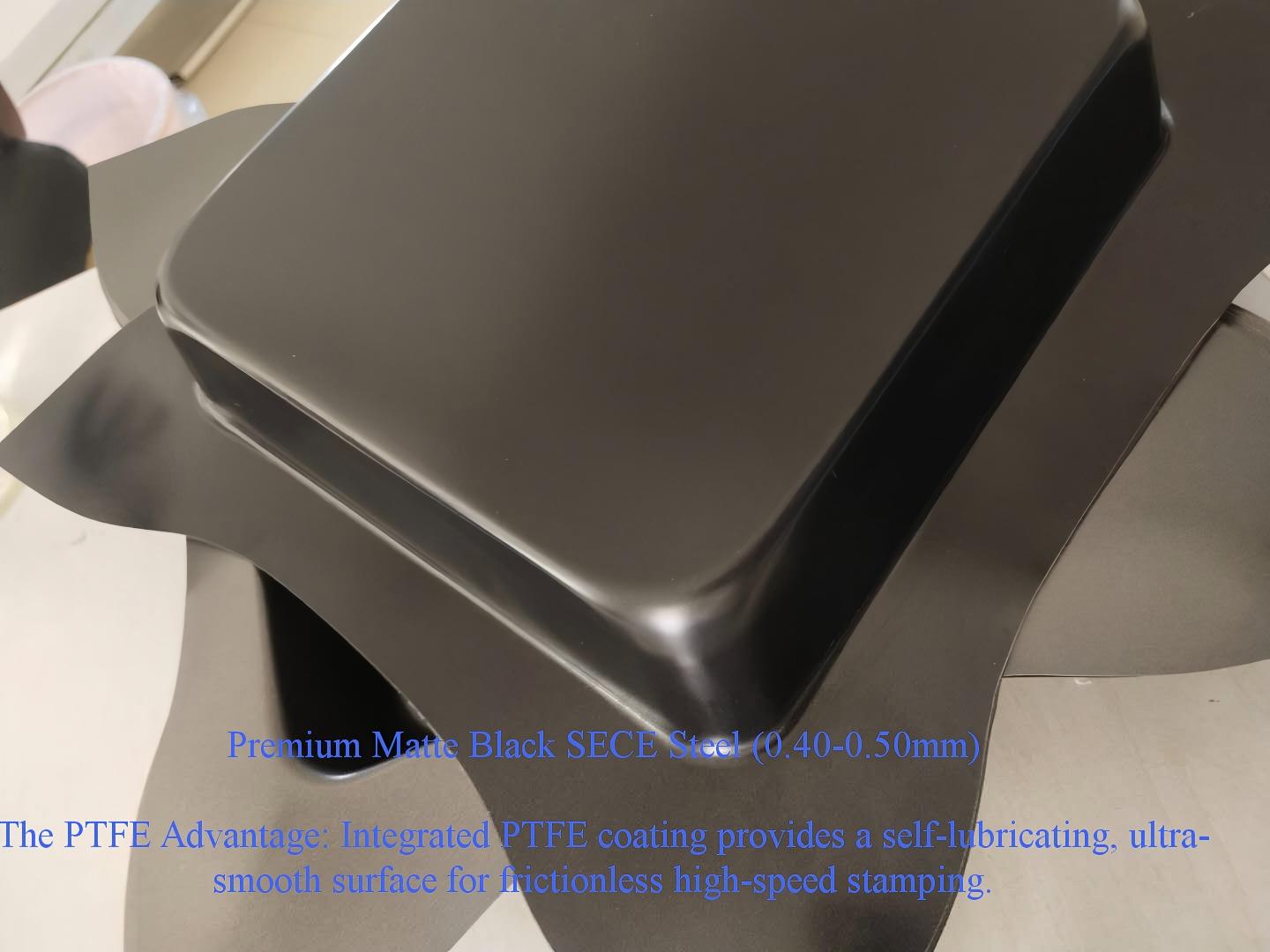
SECE-PTFE combines an EDDQ deep-drawing SECE base with a PTFE-integrated matte black coating for low-friction forming.
SECE-PTFE-MATTE-050 is a surface-treated black coated electrogalvanized steel sheet supplied at 0.40-0.50 mm thickness with a width range of 4.0-1,250 mm, including custom slit-to-width strip.
Two features drive its use. First, the base metal is deep-drawing quality (EDDQ) SECE steel in high-precision tolerance, which is what allows the material to be drawn into motor housings without cracking. Second, the coating is a specialised matte black finish with integrated PTFE for low friction, producing an ultra-smooth, self-lubricating surface. The product is REACH and RoHS compliant and SGS certified.
Documented applications are precision electric micro-motors, automotive electronics, smart appliances and high-speed actuators. For a buyer, the self-lubricating surface is the cost-relevant detail: friction control is built into the material rather than added later by a separate lubricant step, and the matte black finish is delivered as part of the coil rather than as a post-forming paint operation.
5. Premium MoS2-M025 - An NBR Coating Alternative for Gaskets and Heat Shields
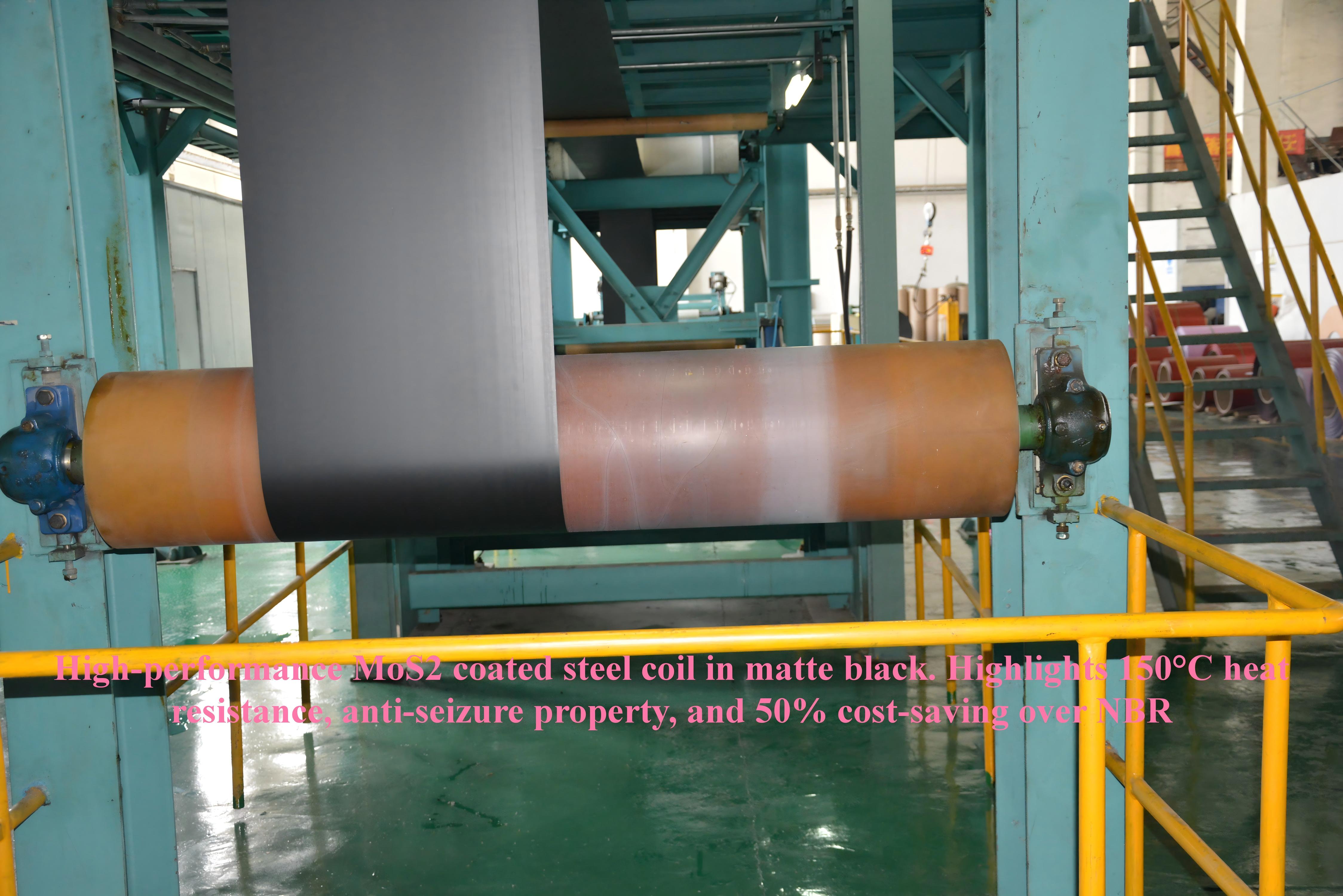
Premium MoS2-M025 is positioned as a lower-cost, self-lubricating alternative to NBR coated gasket sheet.
Premium MoS2-M025 is a self-lubricating heat-shield metal sheet and strip built on a high-purity molybdenum disulfide (MoS2) solid film lubricant, applied single-sided or double-sided with high adhesion and anti-blistering behaviour. It is supplied at 0.20-0.30 mm thickness and 4.0-1,250 mm width in custom precision slits, in matte black or navy blue.
Its published performance profile is specific: long-term thermal stability of 150 degrees C continuous for 5 hours with zero blistering and zero peeling, full optimisation for 2000W+ high-precision laser cutting and stamping, and an ASTM 3# standard calibration oil immersion test passed with no degradation. The coating provides ultra-low boundary friction for anti-galling and extreme pressure (EP) resistance. Substrates include premium stainless steel (SUS201, SUS301), cold rolled steel, galvanized steel and tinplate.
The commercial argument is the most direct in this comparison: MoS2-M025 is stated as delivering a 50% material cost reduction compared with NBR (nitrile rubber) coated sheets. Documented applications are automotive exhaust manifold gaskets, turbocharger seal ring manufacturing, engine cylinder head gaskets, and motorcycle gaskets and sealing production.
Limit to note: the 0.20-0.30 mm gauge range and the gasket and sealing application profile mean this system is not a substitute for cladding or appliance-facing laminates. It competes with rubber-coated sheet, not with architectural coatings.
Side-by-Side Comparison of the Five Coated Steel Systems
The table below compares only the published product data for the five reference systems. Where a data point is not published for a system, it is marked as not stated rather than estimated.
| System | Substrate & thickness | Coating & finish | Fire & thermal data | Chemical / mechanical data | Primary project use |
|---|---|---|---|---|---|
| PVDF REF A2 ZAM 0.5-0.7 | Galvanized Z180 / ZAM; 0.50 mm, 0.70 mm; 1,000 mm width | PVDF 20-35um top / 5-15um back; colour-coated | EN 13501-1 A2-s1,d0,t1; ASTM E84 Class A | Weather and chemical resistance; 200 mm ID small-diameter coil option | Oil refinery thermal insulation and petrochemical pipe cladding |
| ZAM-VCM-FR-Series | ZAM alloy coated steel; 0.50-0.70 mm; 1,000-1,250 mm width | White VCM film, PVC film 40-100um | UL 94 V-0 (PVC film); EN 13501-1 B-s1,d0; ASTM E84 Class A; BS 476 Part 6/7 Class 0 | 1000h+ salt spray; zero stress whitening in bending and deep drawing | Fire-rated interior cladding, data centres, cleanrooms, marine interiors, fire door OEM |
| HD-PET-40-80UM | Stainless, galvanized, ZAM; 0.40-2.0 mm | 40-80um PET overlay; metallic, matte black, brushed, wood grain | Not stated for fire classification | Anti-scratch 3H and 5H; oil-proof and anti-fingerprint; deep-drawing stability, no delamination | Luxury appliance manufacturing, high-end security hardware, precision architectural parts |
| SECE-PTFE-MATTE-050 | EDDQ SECE (electrogalvanized); 0.40-0.50 mm; 4.0-1,250 mm width | PTFE-integrated matte black; ultra-smooth, self-lubricating | Not stated for fire classification | Low friction; REACH and RoHS compliant, SGS certified | Precision electric micro-motors, automotive electronics, smart appliances, high-speed actuators |
| Premium MoS2-M025 | SUS201 / SUS301, CRS, galvanized, tinplate; 0.20-0.30 mm; 4.0-1,250 mm width | MoS2 solid film lubricant; matte black or navy blue | 150 degrees C continuous for 5 hours with zero blistering or peeling | ASTM 3# oil immersion passed; ultra-low boundary friction, anti-galling, EP resistance; 50% lower material cost vs NBR coated sheet | Exhaust manifold gaskets, turbocharger seal rings, cylinder head gaskets, heat shields |
Comparison based on published YOUNGSON METAL product data. Where a metric is not published, it is shown as not stated rather than inferred.
Step-by-Step: How to Select the Right Coated Steel System
The selection sequence below works from the project requirement inward, which prevents a technically suitable material from being rejected on documentation or forming grounds later.
- Name the failure mode first. Write down what the part must survive: a fire inspection, a salt-spray or coastal atmosphere, oil or calibration-fluid contact, a deep-drawing step, visible scratch exposure, or continuous heat. Each failure mode points to a different coating family in the table above.
- Fix the substrate and the gauge before the coating. The reference systems here use galvanized Z180, ZAM, EDDQ SECE, stainless, cold rolled and tinplate substrates, with thickness ranges from 0.20 mm to 2.0 mm depending on the system. For high-corrosion environments, Z275 (275 g/m2 zinc) is the recognised standard requirement under ASTM A653 / EN 10346.
- Match the fire classification to the test method named for the market. EU projects reference EN 13501-1, US projects reference ASTM E84, UK projects reference BS 476 Part 6/7, and film-level flame retardancy is documented to UL 94. Confirm which method the specification actually names before submitting a coating system.
- Verify formability against your real forming step. Bending, deep drawing and laser cutting plus stamping place different demands on adhesion. Relevant evidence includes zero stress whitening in bending (VCM), deep-drawing stability without delamination or micro-cracking (PET), EDDQ base metal for drawing (SECE-PTFE), and optimisation for 2000W+ laser cutting and stamping (MoS2).
- Confirm chemical and surface requirements. Oil immersion, anti-fingerprint behaviour, anti-scratch hardness at 3H and 5H, low friction, and hygiene-related surfaces should each be tied to a specific published test rather than to a general description.
- Lock documentation and sampling before mass production. Request the mill test certificate, third-party test reports and compliance declarations, then validate a slitted sample against your own forming line before releasing a production order.
Where Each System Fits: Application Mapping
- Refinery and petrochemical pipe cladding, thermal insulation jacketing: PVDF REF A2 ZAM 0.5-0.7, in 0.50 mm or 0.70 mm, with the 200 mm inner-diameter coil option for site handling efficiency.
- Fire-rated interior architecture - data centres, cleanrooms, marine and offshore interiors, server and telecom enclosures, fire door OEM: ZAM-VCM-FR-Series, where the fire class, 1000h+ salt spray durability and zero stress whitening on bending are all part of the same specification.
- Appliance fronts, touchpoints and precision hardware: HD-PET-40-80UM, where 40-80um PET, 3H/5H anti-scratch resilience and anti-fingerprint behaviour protect a visible surface through handling and cleaning.
- Deep-drawn motor housings, actuators and automotive electronics: SECE-PTFE-MATTE-050, where EDDQ drawing quality and a self-lubricating PTFE-integrated matte black surface remove a downstream lubrication or painting step.
- Gaskets, seal rings, cylinder head and manifold sealing, heat shields: Premium MoS2-M025, where a 0.20-0.30 mm self-lubricating strip replaces NBR coated sheet at a stated 50% lower material cost.
Documentation, Quality Control and Compliance Verification
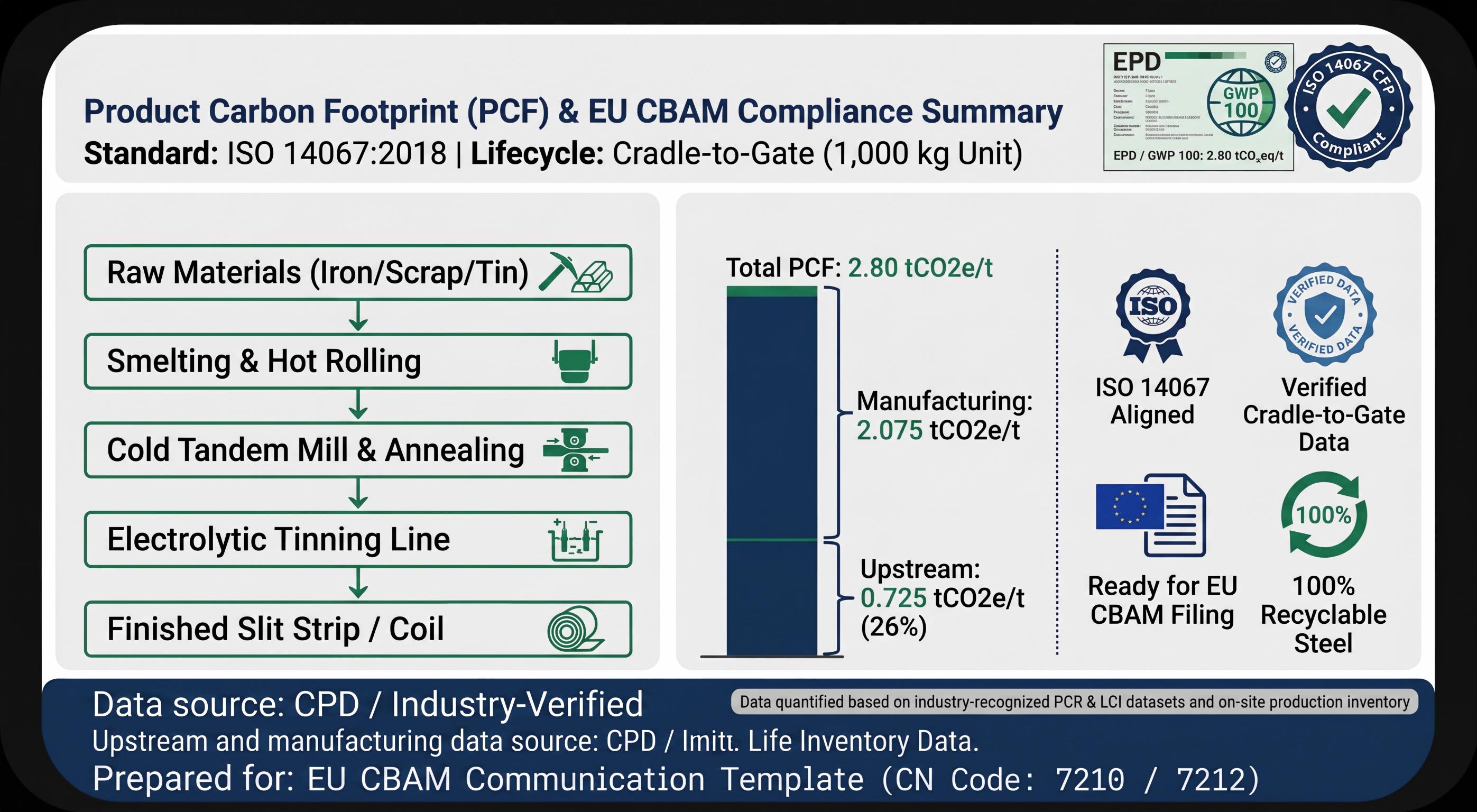
Regulated markets increasingly require carbon and compliance documentation alongside mechanical test data.
YOUNGSON METAL (Chongqing Youngson Metal Products Co., Ltd.) is a manufacturer founded in 2016, BV ISO9001:2015 certified, specialising in precision metal surface processing and premium coil supply, with an annual processed capacity exceeding 10,000 tons and an export ratio of 70% to global markets. Its five product lines cover drawn PET film laminated steel coil, drawn VCM PVC film laminated steel coil, deep drawn coil coating (Teflon, non-stick, gold and lacquered finishes), commercial and deep drawn pre-painted steel and pre-painted stainless steel, and full-range mild carbon steel (cold rolled, electrogalvanized, aluminized, galvanized and copper plated) plus multi-grade stainless steel.
For coated steel buyers, the verification stack matters as much as the coating itself. Published quality control covers 100% in-house inspection of thickness, coating mass, tensile strength, T-bend, salt spray and surface roughness, MTC EN 10204 3.1 documentation, third-party inspection by SGS, BV or TUV, and certified EPD and CFP (ISO 14067) documentation. Products have passed SGS testing for REACH and RoHS heavy metal regulations, and additional forming tests such as Erichsen cupping, cross-cut adhesion and 0T/1T T-bend verification are used to confirm stamping and bending performance.
Customisation capability spans material grades (tinplate, pre-painted steel, cold rolled, galvanized, galvalume, Zn-Al-Mg steel, stainless steel, aluminium), thickness from 0.08 mm to 6.0 mm, slitting tolerance of plus or minus 0.02 mm, zinc coating from 30 to 600 g/m2, surface finishes including 2B, BA, No.4, anti-fingerprint and RAL coatings, temper and hardness options, coil inner and outer diameter, export anti-rust packaging, and CBAM/EPD carbon footprint data.
Frequently Asked Questions
How should buyers choose a color coated steel coil supplier for fire-proof plate projects?
Start with the fire documentation, not the price. A fire-proof plate project requires a coating system whose classification matches the test method named in the specification: EN 13501-1 for EU projects, ASTM E84 for US projects, BS 476 Part 6/7 for UK projects, and UL 94 for film-level flame retardancy. In this comparison, the ZAM-VCM-FR-Series fire-retardant VCM laminated steel carries UL 94 V-0 for the PVC film, EN 13501-1 Class B-s1,d0, ASTM E84 Class A and BS 476 Part 6/7 Class 0, with 1000h+ salt spray durability and zero stress whitening during severe bending. Also confirm that the supplier can provide MTC EN 10204 3.1 documentation, third-party inspection reports and cut-edge protection data, because a fire-rated surface that rusts at the cut edge will still fail on site.
Can one supplier cover both petrochemical cladding and fire-retardant interior laminate systems?
A supplier needs distinct coating and lamination capability to serve both. YOUNGSON METAL operates its own advanced coating lines and precision slitting equipment across five product lines: drawn PET film laminated steel coil, drawn VCM PVC film laminated steel coil, deep drawn coil coating including Teflon and non-stick finishes, commercial and deep drawn pre-painted steel and pre-painted stainless steel, and mild carbon steel and multi-grade stainless steel. That structure allows one supplier to offer PVDF refinery jacketing, fire-retardant VCM laminate, PET appliance laminate, PTFE-coated deep-drawing SECE and MoS2 lubricant-coated strip from the same quality and documentation system.
Is MoS2 coating genuinely cheaper than NBR-coated sheet?
For the MoS2-M025 reference product, yes: it is stated as delivering a 50% material cost reduction compared with NBR (nitrile rubber) coated sheets, while providing a self-lubricating MoS2 solid film with anti-galling and extreme pressure resistance. Supporting data includes 150 degrees C continuous thermal stability for 5 hours with zero blistering or peeling, a passed ASTM 3# calibration oil immersion test with no degradation, and compatibility with 2000W+ laser cutting and stamping. The trade-off is application scope: at 0.20-0.30 mm, it is designed for gaskets, seal rings and heat-shield parts, so it replaces rubber-coated sheet rather than cladding or appliance laminates.
How can a buyer validate coating performance before committing to a production order?
Use a documented, sample-first process. Ask for the published test set relevant to the system: cross-cut adhesion and Erichsen cupping for forming, 0T/1T T-bend verification for bending, salt spray for corrosion, and the specific fire classification report for the destination market. Then request a slitted sample at your production width and run it on your own forming line before releasing mass production. YOUNGSON METAL supports this with 100% in-house inspection of thickness, coating mass, tensile strength, T-bend, salt spray and surface roughness, MTC EN 10204 3.1 certificates, third-party inspection through SGS, BV or TUV, and EPD and CFP documentation under ISO 14067.
What MOQ and lead time should be expected for specialty coated steel?
Published capability data for this supplier indicates a minimum order quantity of 2-3 tons depending on sizes, and a lead time of 5-30 days depending on sizes, with a monthly capacity of approximately 1,200 tons. After-sales support includes metallurgical and slitting technical support, direct EU CBAM carbon emission data reporting, quality claim handling with a response within 24 hours, third-party testing coordination, and global ocean freight and tracking. For a project-specific quotation or sample, contact YOUNGSON METAL directly at info@youngsonmetal.com or review the full product range in the catalogue linked below.
Conclusion: Match the Coating to the Project, Not the Price List
The five systems compared here are not competing versions of one product. PVDF REF A2 ZAM 0.5-0.7 answers petrochemical cladding and thermal insulation. ZAM-VCM-FR answers fire-rated interior architecture with a documented reaction-to-fire classification across EU, US and UK test methods. HD-PET 40-80um answers visible, scratch-exposed appliance and hardware surfaces. SECE-PTFE matte black answers deep-drawn motor housings that need built-in low friction. Premium MoS2-M025 answers oil-exposed, high-temperature gasket and heat-shield parts at a stated 50% material cost saving versus NBR coated sheet.
For an industrial buyer, the reliable selection method is to start from the failure mode, then confirm substrate, gauge, fire class, chemical and thermal data, formability and documentation in that order. Where a system does not publish a given metric - and that is the case for several values in the comparison table above - the correct action is to request test data rather than assume a rating.
Next step: send your drawing and working condition.
Share the part drawing, the forming method, the working temperature, the fire or corrosion requirement and the destination market, and YOUNGSON METAL will recommend the matching coating system, confirm the gauge and substrate, and prepare a sample coil or strip for validation before you commit to production.
Website: www.youngsonmetal.com | Email: info@youngsonmetal.com | Tel: 0086-23-62566629 | WhatsApp: 0086-13594107385
Address: NO.16-16, Building 11, NO.305 Yunan Avenue, Longzhouwan Street, Ba'nan District, Chongqing, China 401320
Have Questions or Need More Details?
Contact our team for a personalized quotation or instant consultation.
Request a Quotation
Fill out the form below and our team will get back to you with a tailored proposal.
WhatsApp Direct Chat
Prefer to chat in real-time? Message us on WhatsApp for instant assistance & quick answers.
- Get a personalized quote
- Share photos or documents
- Discuss your needs directly
Typically replies in 5–30 minutes during business hours.