Milky White & Sulfur-Resistant Tinplate for Meat Cans: OEM Coating and Slitting Capabilities
Milky White & Sulfur-Resistant Tinplate for Meat Cans: OEM Coating and Slitting Capabilities
Choosing an OEM tinplate manufacturer for meat cans is not simply a purchase decision; it is a process-capability decision. The supplier must be able to coat, print, slit, test, and package tinplate to food-can standards while controlling the variables that cause rejects in high-speed can-making lines. Chongqing Youngson Metal Products Co., Ltd., founded in 2016, is a BV ISO 9001:2015 certified manufacturer offering OEM and ODM services for custom material grades, thickness, width, and finish. Its product system covers commercial-grade and deep-drawn grade tinplate and TFS, including lithography, coil coating, and laminated PET film.
This guide explains what to evaluate when sourcing a tinplate OEM partner for meat cans, how the factory solves coating and slitting challenges, and how to move from evaluation to execution.
Problem Definition: OEM Tinplate for Meat Cans Is a Capability Question
Buyers searching for an 'OEM tinplate manufacturer for meat cans' are often looking for a combination of external printing, internal protection, precise thickness, and reliable edge quality. The searches 'milky white coated tinplate sheet for meat cans' and 'high sulfur resistant printed tinplate sheet for fish cans' point to two common coating requirements: a clean exterior finish and a protective internal lacquer system.
A supplier that only provides bare tinplate cannot solve the complete problem. The OEM manufacturer must manage substrate selection, coating formulation, printing or lacquering, precision slitting, edge protection, and food-contact compliance. If any one of these steps fails, the can-maker sees the result as peeling, staining, die jams, edge rust, or line stoppages.
Industry Background: Food-Can Demand and Thin-Gauge Tinplate
According to Fortune Business Insights, the global tinplate market was valued at USD 14.59 billion in 2023 and is projected to reach USD 19.38 billion by 2032. China's exports of tinplate (HS Code 721012) reached 1.4 million tons in the first three quarters of 2023, according to the General Administration of Customs of China. Grand View Research estimates that the canned food packaging market is growing at a CAGR of 3.9% through 2030.
Can makers are also moving toward thinner material. Metal Packaging Europe reports that double cold reduced (DR) tinplate with thickness as low as 0.14-0.16mm, for example DR8, is increasingly used for cost reduction and light-weighting. This creates a stronger need for processors that can handle ultra-thin tinplate without burrs, waves, or surface damage.
Detailed Solution: What a Meat-Can OEM Supplier Should Be Able to Deliver
Youngson Metal's answer to 'OEM tinplate manufacturer for meat cans' is not a single stock item but a controlled production system with four core capabilities.
1. OEM and ODM Coating Development
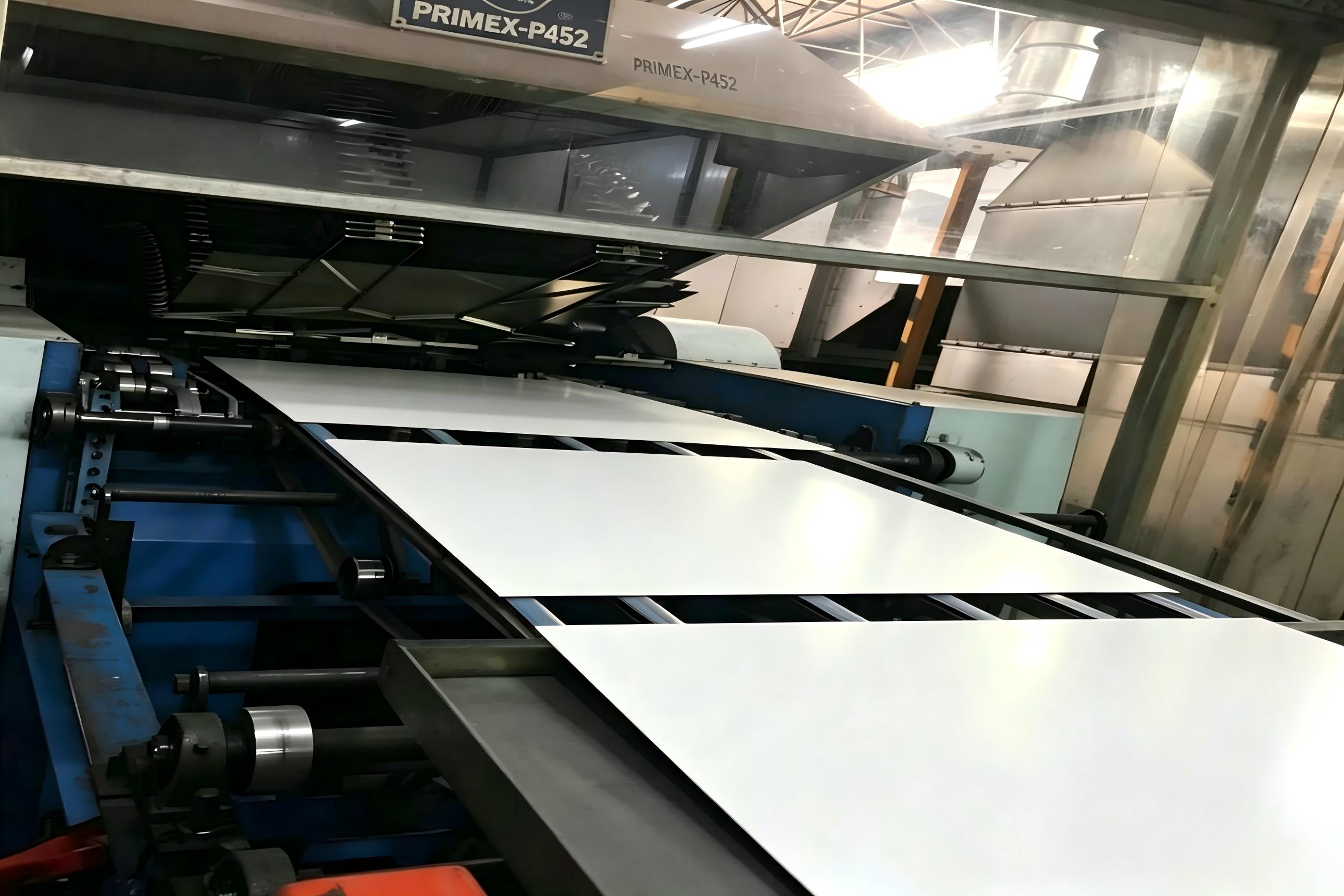
OEM services are available. ODM services include custom material grades, thickness, width, and finish. For can-making customers, the factory supports custom lithography, coil coating, and eco-friendly laminated PET film on commercial-grade and deep-drawn grade tinplate and TFS. The coating system can be single-sided or double-sided and can use single or multi-color lacquers, including lacquer, brass, black, red, grey, blue, and laser color finishes. Common decorative options also include bronze, copper-look, golden, matte black, bright black, and mirror bronze finishes on ETP or TFS substrates.
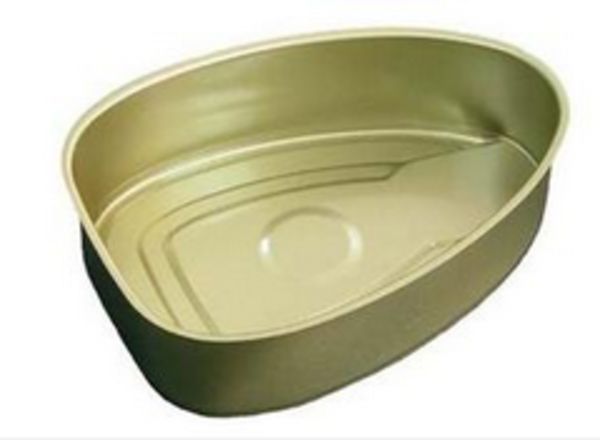
For protein-food packaging, sulfur resistance is a well-known requirement. Youngson Metal supplies a BPA-free internal sulfur-resistant aluminum paste coated tin free steel (TFS) for 2-piece DRD fish cans. This material is available in 0.14mm, 0.15mm, 0.155mm, and 0.16mm thicknesses, with DR8, DR9, or DR10 temper, and is designed for draw-and-redraw deep drawing. It resists 121°C retort sterilization for 60 to 90 minutes and offers oil and brine resistance for applications such as tuna, sardines, and salmon.
2. Precision Slitting and Edge Protection
High-speed can-making lines require consistent coil geometry. Youngson Metal's precision slitting capability covers widths from 4.0mm to 1050mm, thickness from 0.14mm to 0.55mm, thickness tolerance of ±0.005mm, width tolerance of ±0.05mm, and burr height controlled to ≤0.05mm.
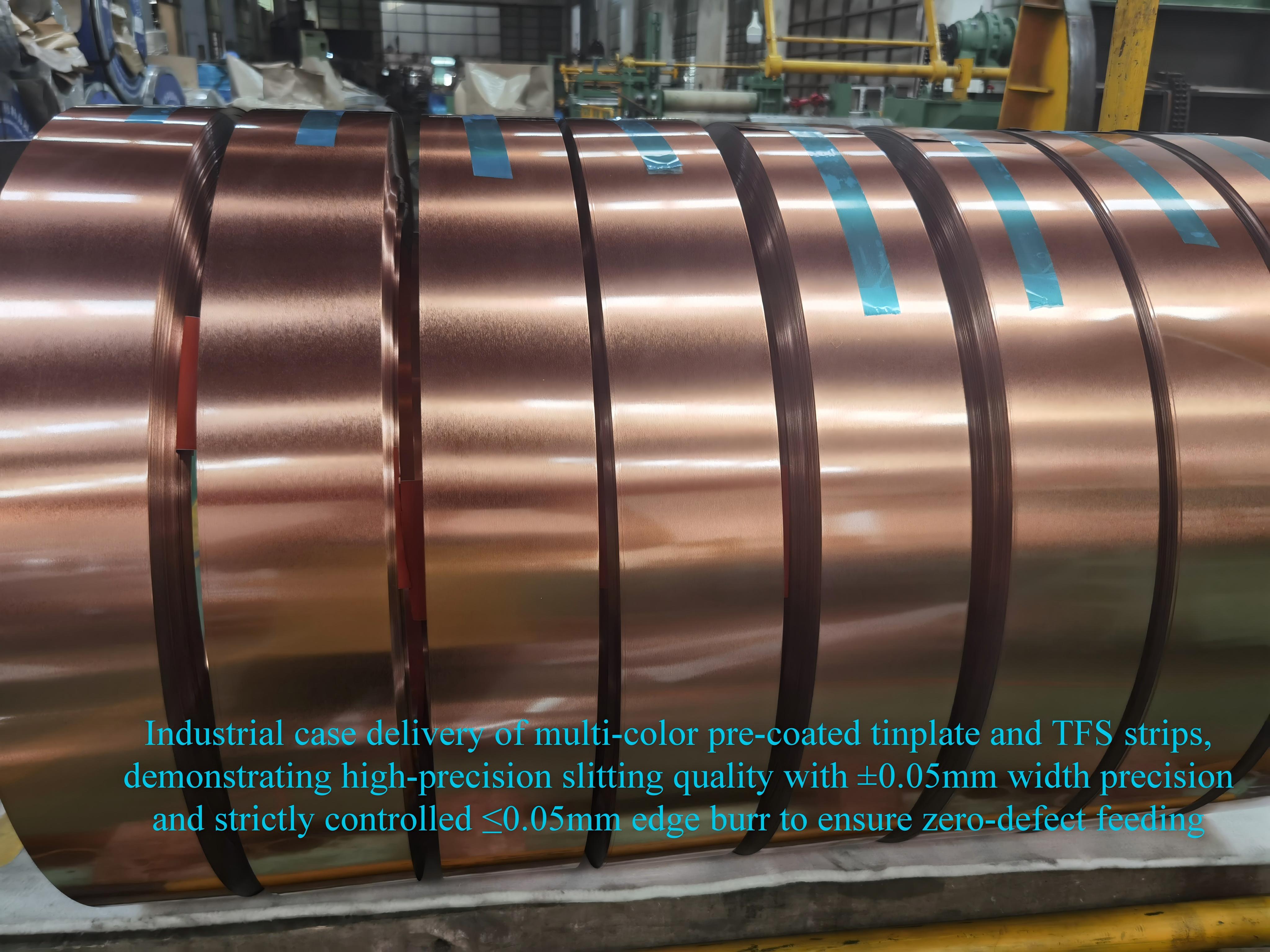
The factory defines its slitting quality as '5-ZERO': zero joints, zero notches, zero wavy edges, zero overlapping bands, and zero rust spots on every coil. Slit edges are sprayed with anti-rust oil, making the material suitable for humid climates and long marine transit.
3. Temper and Formability Matrix
Meat-can projects may require soft material for severe drawing or high-tensile material for light-weighting. Youngson Metal provides tempers from T1 to T5 and from DR7 to DR10, including deep drawing quality (DDQ) and extra deep drawing quality (EDDQ) grades. An ultra-thin 0.17mm T2 strip is available for complex bending without cracking. For high-strength work, DR8, DR9, and DR10 grades combine ultra-thin gauge with deep-drawing performance without micro-cracking or earing.
4. Compliance, Traceability, and Export Support
At the base-material level, SPTE and ECCS specifications commonly follow ASTM A623 or EN 10202, covering temper grades from T1 to T5 and DR7 to DR9. Because the application is food contact, the buyer's quality team should also verify that coatings and lacquers meet RoHS and FDA 21 CFR 175.300 requirements for fish and meat cans.
Youngson Metal operates under a Bureau Veritas ISO 9001:2015 certificate, number CN058611, valid until 2028-12-22. The company also holds an SGS RoHS 2.0 certificate, number CZXHL25001691201, for RoHS-compliant high-precision color coated tinplate and TFS strips. In addition, products have passed SGS REACH & RoHS heavy metal testing, and the manufacturer provides Mill Test Certificates (MTC) in accordance with EN 10204 3.1. Third-party inspection by SGS, BV, or TÜV can be arranged.
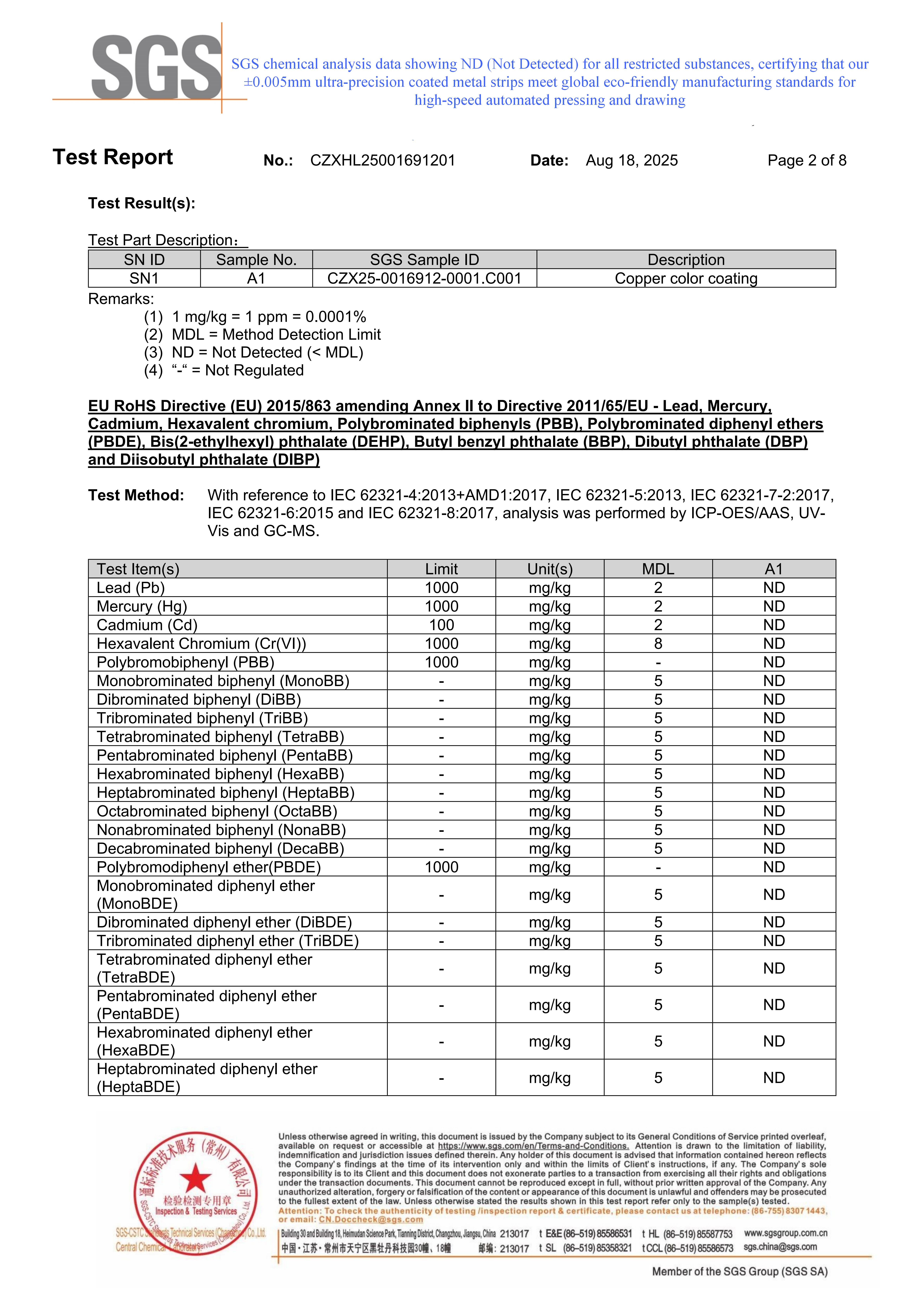
For European shipments, the manufacturer also provides EPD and CFP certified low-carbon steel supply that is EU CBAM compliant, with custom precision slitting, cold rolling, and cut-to-length processing.
Step-by-Step Breakdown: From Meat-Can Specification to Execution
- Define the can form and coating system. Identify whether the project is a 3-piece meat can body and end or a 2-piece drawn can. Decide the exterior finish, internal lacquer, sulfur-resistance level, and retort requirements.
- Select the base metal and temper. Choose electrolytic tinplate (ETP/SPTE), tin free steel (TFS/ECCS), or a pre-coated steel alternative. For severe forming, use T1, DDQ, or EDDQ grades. For light-weighting, consider DR8, DR9, or DR10.
- Confirm dimensions and tolerances. Specify thickness, slit width, coil inner diameter, and edge burr limit. Youngson Metal can hold thickness tolerance to ±0.005mm, width tolerance to ±0.05mm, and burr height to ≤0.05mm.
- Review compliance documents. Check the BV ISO 9001 certificate, SGS RoHS certificate, food-grade test reports, REACH/RoHS data, and Mill Test Certificates. For EU projects, request EPD/CFP and CBAM data.
- Request sample material. Sample rolls and sheets are available for industrial press trialing. Use them to verify coating adhesion, deep-draw behavior, and edge quality before mass production.
- Run production with factory QC. The factory applies 100% in-house inspection and uses two quality gates: five-defect elimination and tolerance control. Each slit coil receives a unique quality ID for full batch traceability.
- Arrange export packaging and delivery. Slit edges receive anti-rust oiling, and each coil gets independent protective packing. Shipping can be arranged FOB, CFR, CIF, DDP, or DDU by ocean or air; payment can be T/T or L/C at sight.
Use Cases: Meat Can Exteriors, Sulfur-Resistant Fish Cans, and Deep-Drawn Proof
Meat can exteriors: milky-white and printed finishes
A meat-can OEM project often needs an exterior that remains clean after lacquering and printing. The search phrase 'milky white coated tinplate sheet for meat cans' describes this requirement. Youngson Metal's custom lithography and coil coating capability can produce a milky-white exterior on tinplate or TFS while keeping the reverse side available for a food-grade internal lacquer. The company's product range also includes food-grade lacquered tinplate coils and eco-friendly color coated tinplate sheets.
Fish cans: high sulfur resistant printed tinplate and TFS
The phrase 'high sulfur resistant printed tinplate sheet for fish cans' is closely connected to 2-piece drawn food cans. Youngson Metal offers BPA-free internal sulfur-resistant aluminum paste coated TFS for 2-piece DRD fish cans. This material is designed for severe draw-and-redraw forming, retort sterilization, and oil/brine exposure, with zero discoloration or anti-sulfur staining after retort.
Deep-drawn production evidence
One metal packaging can-maker used Youngson Metal's precision slit strips and multi-color coated coils for high-speed progressive die stamping, including severe drawing and flanging for non-round fish cans. The project achieved zero-defect continuous stamping, zero coating delamination or foil-bursting during deep drawing, and 35% longer progressive die tool life. Another high-speed candle lid plant used 0.14mm and 0.15mm ultra-thin high-tensile matrix with DR8, DR7, and TH520 tempers for deep-drawn gold lids over a 10-year supply relationship. The result included zero coating peeling, zero tooling crashes from coil joints, and 35% lower die wear from controlled tolerance and burr.
Comparison Table: OEM Capability Checklist for Meat-Can Tinplate
| OEM Project Requirement | What to Verify | Youngson Metal Response |
|---|---|---|
| Food-contact compliance | BV ISO 9001, SGS RoHS/food-grade testing, REACH/RoHS data | BV ISO 9001:2015 certificate CN058611; SGS RoHS 2.0 certificate CZXHL25001691201; 100% passed SGS REACH & RoHS heavy metal testing |
| Custom coating | External color, internal lacquer, sulfur resistance, single/double-side coating | OEM/ODM available; custom lithography, coil coating, laminated PET film; single/multi-color lacquer; BPA-free internal sulfur-resistant TFS for 2-piece DRD fish cans |
| Dimensional precision | Thickness tolerance, width tolerance, burr height, joints | Thickness 0.14-0.55mm ±0.005mm; width 4.0-1050mm ±0.05mm; burr ≤0.05mm; 5-ZERO defect control |
| Formability | Temper range and deep-drawing grade | T1-T5 and DR7-DR10; DDQ/EDDQ grades; ultra-thin high-temper options for deep drawing |
| Supply and logistics | MOQ, lead time, shipping terms, payment | MOQ 1 ton or as per specifications; lead time 14-25 days; FOB/CFR/CIF/DDP/DDU by sea or air; T/T or L/C at sight |
FAQ: OEM Tinplate Manufacturer for Meat Cans
Is the OEM tinplate manufacturer certified for food-contact coatings?
Yes. Youngson Metal operates under BV ISO 9001:2015 certificate CN058611 and has passed SGS RoHS/food-grade testing. The RoHS-compliant color coated tinplate and TFS strips are certified under SGS certificate CZXHL25001691201. Products have also passed SGS REACH & RoHS heavy metal testing.
Can Youngson Metal produce custom milky-white or sulfur-resistant coated tinplate for meat and fish cans?
Yes. OEM/ODM services include custom material grades, thickness, width, and finish. The factory supports custom lithography, coil coating, laminated PET film, and single/multi-color lacquer systems. For fish cans, the company supplies BPA-free internal sulfur-resistant aluminum paste coated TFS for 2-piece DRD fish cans, with 121°C retort resistance for 60 to 90 minutes and oil/brine resistance.
What thickness, temper, and slitting tolerances can be supplied for meat can projects?
Youngson Metal supplies thickness from 0.14mm to 0.55mm, slit widths from 4.0mm to 1050mm, thickness tolerance of ±0.005mm, width tolerance of ±0.05mm, and burr height ≤0.05mm. Temper grades range from T1 to T5 and DR7 to DR10, with DDQ and EDDQ grades for severe deep drawing.
Can the manufacturer provide samples before an OEM order?
Yes. Sample rolls and sheets are available for industrial press trialing. This allows the can-maker to verify coating adhesion, drawability, edge burr, and line feeding performance before mass production.
What is the MOQ, lead time, and export support?
MOQ is 1 ton or as per specifications for custom pre-coated strips. Typical lead time is 14 to 25 days depending on specification. Shipping terms include FOB, CFR, CIF, DDP, and DDU by ocean or air; payment terms are T/T or L/C at sight.
Conclusion: From Evaluation to Execution
An OEM tinplate manufacturer for meat cans should be judged on coating capability, dimensional precision, temper control, compliance, and supply terms. Youngson Metal combines BV ISO 9001 and SGS RoHS/food-grade compliance with custom coating, precision slitting, and a documented process for export. That makes it possible to move from a specification to a production-ready tinplate strip or sheet without guessing.
Ready to test a tinplate OEM partner?
Send your meat-can or fish-can specification to Youngson Metal. You can request sample rolls for press trialing, ask for SGS RoHS and food-grade documentation, or download the company catalogue for the full product range.
Email: info@youngsonmetal.com | WhatsApp: +86 13594107385 | Website: www.youngsonmetal.com

Have Questions or Need More Details?
Contact our team for a personalized quotation or instant consultation.
Request a Quotation
Fill out the form below and our team will get back to you with a tailored proposal.
WhatsApp Direct Chat
Prefer to chat in real-time? Message us on WhatsApp for instant assistance & quick answers.
- Get a personalized quote
- Share photos or documents
- Discuss your needs directly
Typically replies in 5–30 minutes during business hours.