From Peeling Coating to 280°C: Fixing Heating Appliance Failures with High-Emissivity SECC Steel
From Peeling Coating to 280°C: Fixing Heating Appliance Failures with High-Emissivity SECC Steel
Heating appliance failures rarely begin at the heating element. They begin at the coating interface. When a matte black or non-stick film blisters, lifts and finally flakes off a griddle plate, a heating disk or a toaster element cover, the cosmetic damage is only the first symptom. The exposed steel radiates heat less efficiently, the surface develops hot and cold zones, and a component specified for years of service fails far earlier than its design life.
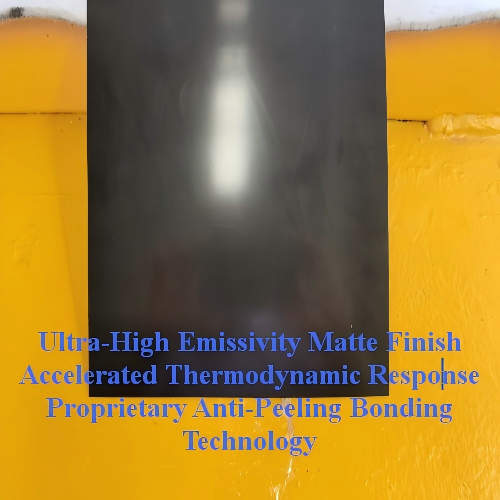
TC-70SECC-MB-HE is the material YOUNGSON METAL engineered for that specific failure mode. It is a 0.70 mm anti-peeling, high-emissivity matte black SECC steel, classified within the high-performance pre-coated steel strips and coils range for thermal appliances. It is built on drawn-quality electrogalvanized steel (SECC) with an advanced ThermaCoat™ high-emissivity polymer matrix. Two specifications answer the two halves of the problem: a thermal emissivity of ≥ 0.85 for radiative heat transfer, and no delamination or peeling after 1,000+ continuous high-temperature thermal cycles between room temperature and 350°C.
This article covers the failure mechanism, the specification logic behind the material, the compliance constraints that apply to color coated steel coil and sheet in appliance programs, and a practical validation sequence for buyers who need to approve the material before a production order.
Problem Definition: Why Coatings Peel Off Heating Appliances
Coating delamination in a thermal appliance is a mechanical failure caused by thermal cycling, not by a cosmetic defect. Two failure routes dominate.
The first is interfacial fatigue. A heating disk, hot plate or element cover heats and cools dozens of times per day. The polymer film and the steel beneath it expand and contract at different rates, and the resulting shear stress concentrates at the coating–substrate interface. Once the local bond strength is exceeded, the film separates. The visible result is blistering, edge lifting and eventual flaking — the pattern that YOUNGSON METAL describes as peeling or blistering during long-term, high-frequency hot-to-cold thermal cycling.
The second is forming-induced initiation. Coated steel for heating appliance parts is normally deep drawn or stamped into shape. Where forming leaves micro-cracks or thinning in the coating, the film has fewer pathways to release stress, and those points become the seed sites for delamination later in the field.
The consequences extend beyond appearance. A surface with lower emissivity radiates less of the heat it generates, so the appliance needs more input power to reach the same working temperature, and the heating distribution becomes uneven. In practice, coating failure and thermal inefficiency are the same engineering problem approached from two directions.
Industry Background: Hotter Appliances, Tougher Materials, Tighter Compliance
Color coated steel remains a large and expanding material category, and appliance-grade material is one of its more demanding segments. According to Polaris Market Research, the global pre-painted steel (color coated steel) market was valued at USD 24.63 billion in 2023 and is projected to grow at a CAGR of 5.8% to 2032. China's export of color-coated steel sheets reached approximately 6.5 million tons in 2023, according to MySteel, representing a significant share of global trade volume.
Alongside that volume growth, the constraint environment has tightened. Color coated steel used in electronic appliances must meet the RoHS (Restriction of Hazardous Substances) Directive 2011/65/EU and REACH requirements, as set out by the European Chemicals Agency. Where the coating sits on a food-contact surface, the applicable frameworks are FDA 21 CFR 175.300 or EU No 10/2011 for resinous and polymeric coatings in contact with food.
Three practical shifts follow from this for appliance OEMs and heating element manufacturers:
- Specifying a coating by color and thickness alone is no longer sufficient; buyers increasingly request thermal cycling data and forming data attached to the material.
- Compliance documentation is now part of the material specification, not a post-award formality, because the coating chemistry determines whether a part can be sold into EU or US channels.
- Energy efficiency targets push heating surfaces toward higher emissivity finishes, because radiative transfer is the dominant heat path in many radiant heating designs.
| Constraint area | Applicable framework or requirement | What it means for a heating appliance program |
|---|---|---|
| Hazardous substances | RoHS Directive 2011/65/EU and REACH (European Chemicals Agency) | Coated steel used in electronic appliances must be documented for restricted substances before the part can be placed on the EU market |
| Food-contact coatings | FDA 21 CFR 175.300 or EU No 10/2011 | Applies where the coating contacts food, for example griddle, bakeware and warming surfaces |
| Supplier-side documentation | SGS certificate CZXHL25000452102 for color coated steel strip, sheet & coil (0.14–2.0 mm thickness) | Third-party evidence of RoHS 2.0 and REACH heavy-metal-free compliance across EU, USA, Asia, Middle East, Africa, South America and China markets |
The Material Answer: TC-70SECC-MB-HE Anti-Peeling High-Emissivity Matte Black SECC Steel
Product classification and specifications
TC-70SECC-MB-HE belongs to the category of high-performance pre-coated steel strips and coils for thermal appliances. Its base metal is drawn-quality electrogalvanized steel (SECC), and the coating is a high-emissivity matte black finish based on an advanced ThermaCoat™ high-emissivity polymer matrix.
- Model: TC-70SECC-MB-HE
- Thickness: 0.70 mm (precision tolerance: −0.01, −0 mm)
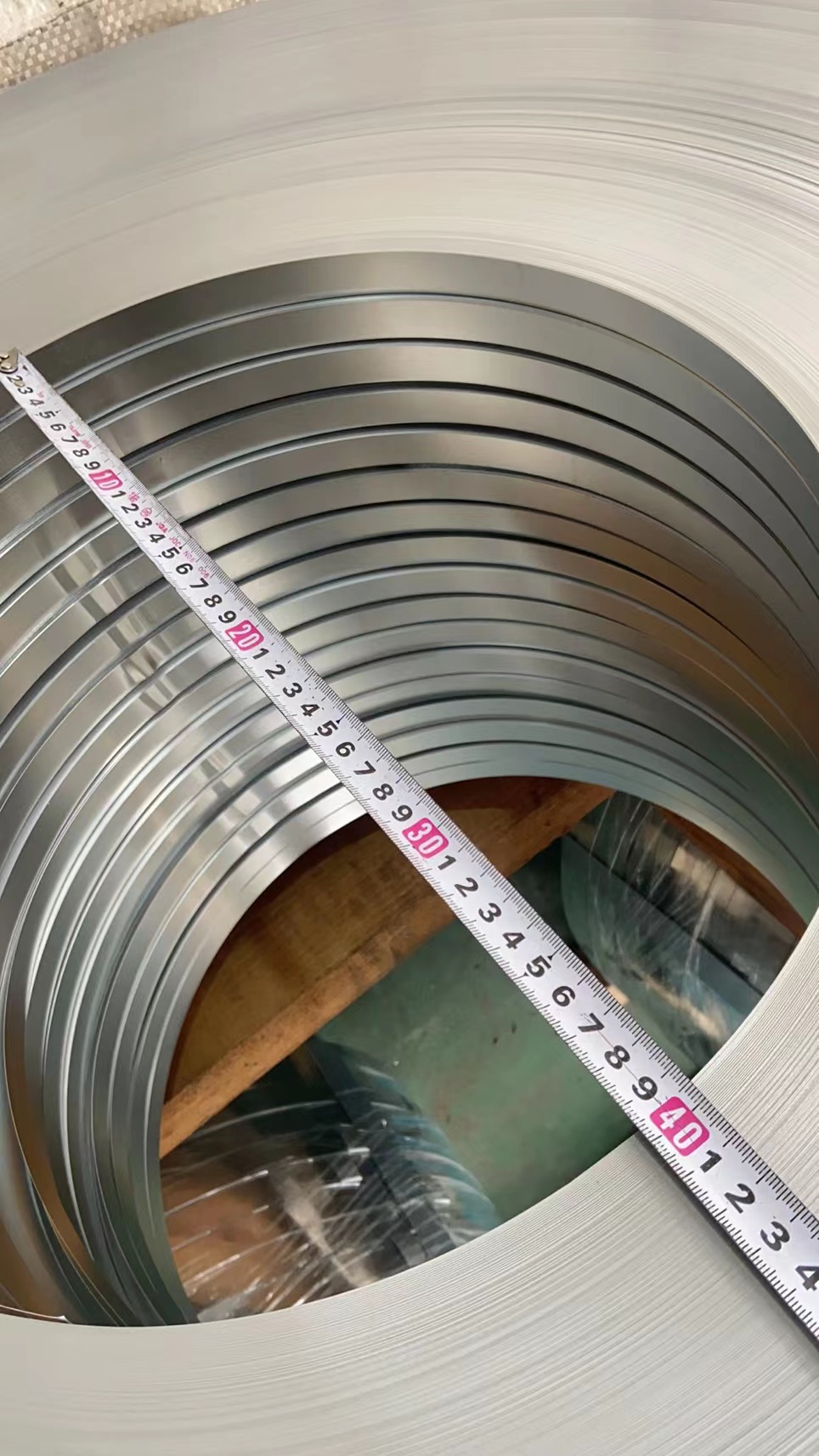
- Width range: 4.0 mm – 1250 mm, with custom slitting available for narrow strips
- Base metal: SECC (drawn-quality electrogalvanized steel)
- Coating finish: high-emissivity matte black
- Thermal emissivity: ≥ 0.85, optimized for radiative heat transfer
- Thermal shock resistance: no delamination or peeling after 1,000+ continuous high-temperature thermal cycles (room temperature to 350°C)
- Heat transfer speed: engineered for rapid thermal response and uniform heating distribution
How the anti-peeling mechanism works
Anti-peeling performance in this material comes from the combination of a bonding system and a forming-capable substrate, rather than from coating thickness alone.
The coating side uses a proprietary anti-peeling bonding technology, described by YOUNGSON METAL as eliminating coating peeling or blistering during long-term, high-frequency hot-to-cold thermal cycling. The design intent is that repeated heating and cooling is absorbed by the coating system instead of concentrating at the interface until the film releases.
The substrate side relies on drawn-quality electrogalvanized SECC. Because this grade is intended for severe deep drawing, parts can be formed into heating disks and element covers without micro-cracking. Forming quality matters directly here: micro-cracks and coating thinning created during a poor draw are the most common initiation points for later delamination in service, so a substrate that forms cleanly removes the defect sites before they exist.
The specification that measures the result is thermal shock resistance: no delamination or peeling after 1,000+ continuous high-temperature thermal cycles from room temperature to 350°C.
Why high emissivity changes the thermal equation
In a radiant heating appliance, the surface transfers heat to the load through radiation, and a surface with high emissivity radiates a larger share of the energy it holds. That is the reason a matte black finish with thermal emissivity of ≥ 0.85 is specified rather than a decorative or high-gloss finish.
The practical consequences are faster warm-up, more uniform heat distribution across the plate or disk, and less electrical input required to hold a working temperature. Application data recorded for this material class supports the point: after 5,000+ hours of continuous high-temperature thermal cycling, the material showed zero coating delamination or cracking, and the recorded heat radiation efficiency improvement was 18%, contributing to lower power consumption in the end appliance.
Specification note. Emissivity and coating adhesion are separate requirements and should be specified and tested separately. A coating can be matte and still fail adhesion under thermal cycling; equally, a well-bonded coating can underperform thermally if its emissivity is low.
Where 280°C sits in the specification chain
Many heating appliance surfaces — particularly food-contact bakeware, cakeware and warming surfaces — operate inside a temperature band where a PFAS-free non-stick coating system is the appropriate choice. YOUNGSON METAL's YS-ECCS-G2-PF food-grade non-stick ECCS coated steel coil, used for cakeware, bakeware and commercial food processing equipment, carries a thermal resistance rating of up to 280°C.
Above that band, and in parts where repeated thermal cycling rather than food contact is the controlling requirement, the constraint shifts to delamination resistance. That is the design space of TC-70SECC-MB-HE, which is validated through thermal cycling from room temperature to 350°C and is positioned for radiant heating components rather than food-contact cookware liners. Choosing between them is a question of which failure mode governs the part, not of which material is superior.
Thermal appliance categories this material fits
- Household thermal appliances: premium heating disks, electric griddles, skillet bases, electric kettle element covers and toaster components.
- Commercial and industrial heating: industrial heating plates, laboratory thermal equipment and culinary warming apparatus.
- Automotive and HVAC: specialized radiant heat reflectors and compact thermal management modules.

Step-by-Step: Validating an Anti-Peeling High-Emissivity SECC Before You Commit
The following sequence mirrors how a coated steel for thermal appliances is normally qualified from research through evaluation to a production order.
- Define the thermal envelope of the part. Establish the maximum continuous surface temperature, the hot-to-cold cycle profile and the expected number of cycles in the appliance's service life. In the 280°C food-contact band, a non-stick ECCS system such as YS-ECCS-G2-PF may be the correct answer; where the part repeatedly cycles toward higher temperatures, an anti-peeling high-emissivity SECC is the appropriate starting point.
- Confirm the base metal and forming route. TC-70SECC-MB-HE uses drawn-quality electrogalvanized SECC at 0.70 mm, which is intended for deep drawing into heating disks and element covers without micro-cracking. If the part is formed by a different process, confirm that the coating system was specified for that route.
- Set the emissivity requirement explicitly. Write the emissivity target into the material specification. For this material the figure is thermal emissivity ≥ 0.85, which is what converts the coating from a cosmetic layer into a thermal design element.
- Verify adhesion after forming, not before. Adhesion should be confirmed on formed parts. Typical methods used for coated steel include cross-cut adhesion testing and Erichsen cupping for stamping performance, with T-bend flexibility checks for bending routes; YOUNGSON METAL applies these checks as part of its multi-stage quality protocol.
- Assemble the compliance file. For color coated steel strip, sheet and coil, YOUNGSON METAL holds SGS certificate CZXHL25000452102 for RoHS 2.0 and REACH heavy-metal-free compliance, tested under IEC62321, 2011/65/EU, (EU)2015/863 and IEC 62321-8:2017 by ICP-OES/AAS, UV-Vis and GC-MS. Mill Test Certificates to EN 10204 3.1 are provided, and third-party inspection by SGS, BV or TÜV can be arranged.
- Run a pilot, then scale. Validate a pilot quantity under the real cycle profile, then confirm slitting widths, packaging and delivery timing with your supplier. YOUNGSON METAL produces under a 100% in-house inspection regime covering thickness, coating mass, tensile strength, T-bend, salt spray and surface roughness.
Use Cases in Thermal Appliance Manufacturing
The material is specified by home appliance OEMs, premium heating element manufacturers, commercial kitchen equipment producers, electric skillet and rice cooker tier-1 suppliers, and industrial thermal management engineers.
Heating disks and griddle plates
These parts combine deep drawing with continuous thermal cycling. Drawn-quality SECC at 0.70 mm supports the forming requirement, while the anti-peeling bonding system addresses the cycling requirement. In one recorded appliance-heating application, 5,000 kg of coil was supplied for high-efficiency heating plates, electric skillet heating elements, rice cooker thermal discs and commercial hot plates.
Kettle element covers and toaster components
Small radiant components frequently fail at the coating edge rather than in the middle of the part, because edges are where forming stress and thermal stress overlap. Uniform thermal response and stable adhesion at cut and formed edges are the two properties that matter most here.
Commercial and laboratory heating equipment
Industrial heating plates, laboratory thermal equipment and culinary warming apparatus operate under long duty cycles. The recorded durability target for this material class is an industrial lifespan exceeding 8 to 10 years under continuous extreme thermal stress and fluctuating temperature environments, based on application data rather than on an accelerated single test.
Radiant heat reflectors and compact thermal modules
Automotive and HVAC applications use high-emissivity surfaces to direct and distribute radiant energy in compact spaces, where even heating across a small area determines the efficiency of the whole module.
Comparison Table: Matching a Coated Steel to the Thermal Job
The table below compares coated steel options within the YOUNGSON METAL portfolio on the variables that decide a heating appliance specification: base metal, gauge, thermal capability and primary function.
| Product / model | Base metal & thickness | Thermal capability | Primary function | Typical application |
|---|---|---|---|---|
| Anti-peeling high-emissivity matte black SECC steel — TC-70SECC-MB-HE | Drawn-quality electrogalvanized SECC; 0.70 mm | Emissivity ≥ 0.85; no delamination after 1,000+ cycles from room temperature to 350°C | Anti-peeling adhesion plus radiative heat transfer | Heating disks, electric griddle and skillet bases, kettle element covers, toaster components, industrial heating plates |
| Food-grade non-stick ECCS coated steel coil (PFAS-free) — YS-ECCS-G2-PF | High-ductility ECCS or aluminized steel; 0.30–0.60 mm | Thermal resistance up to 280°C | PFAS-free non-stick food-contact surface, deep drawable | Cakeware and bakeware production, commercial food processing equipment |
| Deep drawn SECE steel with PTFE matte black coating — SECE-PTFE-MATTE-050 | EDDQ SECE (electrogalvanized); 0.40–0.50 mm | Matte black PTFE-integrated coating for low friction | Self-lubricating, ultra-smooth forming surface | Precision electric micro-motors, automotive electronics, smart appliances, high-speed actuators |
| Black MoS2 coated metal sheet (NBR alternative) — Premium MoS2-M025 | Stainless steel, CRS, galvanized steel or tinplate; 0.20–0.30 mm | Long-term thermal stability at 150°C continuous for 5 hours, zero blistering or peeling | Solid-film lubrication and heat shielding | Exhaust manifold gaskets, turbocharger seal rings, cylinder head gaskets |
| Heavy-duty PET laminated steel — HD-PET-40-80UM | Galvanized, tinplate, ZAM, aluminum or stainless steel; 0.40–2.0 mm | Anti-scratch 3H–5H surface; deep-drawing stability against delamination and micro-cracking | Structural laminate with oil-proof, anti-fingerprint surface | Luxury appliance manufacturing, precision architectural metal parts, high-end security hardware |
Read the table as a decision sequence rather than a ranking. Food contact first points to a non-stick food-grade system rated to 280°C; repeated thermal cycling in a radiant heating part points to an anti-peeling high-emissivity SECC; friction and forming dominate in motor and actuator parts; and where the requirement is a scratch-resistant decorative laminate, a PET overlay is the relevant family.
Frequently Asked Questions
1. How can buyers identify genuinely RoHS-certified color coated steel coil manufacturers?
Ask for a certificate number and read its scope. Color coated steel used in electronic appliances must meet RoHS Directive 2011/65/EU and REACH requirements under the European Chemicals Agency framework, so a compliant supplier should be able to produce documentation that names the exact product scope and the markets covered. YOUNGSON METAL's color coated steel strip, sheet and coil (0.14–2.0 mm thickness) is certified by SGS under certificate number CZXHL25000452102 for RoHS 2.0 and REACH heavy-metal-free compliance, tested under IEC62321, 2011/65/EU, (EU)2015/863 and IEC 62321-8:2017 using ICP-OES/AAS, UV-Vis and GC-MS, for the EU, USA, Asia, Middle East, Africa, South America and China markets.
2. What are the key specifications of TC-70SECC-MB-HE?
TC-70SECC-MB-HE is a high-performance pre-coated steel for thermal appliances with a 0.70 mm thickness (tolerance −0.01, −0 mm) and a width range of 4.0–1250 mm with custom narrow slitting. The base metal is drawn-quality electrogalvanized steel (SECC), the coating is a high-emissivity matte black finish based on a ThermaCoat™ polymer matrix, and the declared thermal emissivity is ≥ 0.85. Its thermal shock specification is no delamination or peeling after 1,000+ continuous high-temperature thermal cycles between room temperature and 350°C.
3. What determines the cost of an anti-peeling high-emissivity SECC coil?
Cost is driven mainly by the coating system, the substrate grade and the processing precision rather than by the base steel price alone. The high-emissivity polymer matrix and the drawn-quality SECC base are the two largest material variables; slitting precision to narrow widths, thickness tolerance and the volume of the individual order also matter. Minimum order quantity for this type of material is typically 2–3 tons depending on size, and monthly production capacity at YOUNGSON METAL is about 1,200 tons for precision slitting and technical coating work.
4. Can we sample the material and validate it under our own thermal cycle?
Yes — sampling and validation are the normal route before a production order. Coated steel for thermal appliances should be tested after forming, using adhesion methods such as cross-cut adhesion and Erichsen cupping alongside T-bend flexibility checks, under the actual cycle profile of the part. YOUNGSON METAL supports this with MTC certificates to EN 10204 3.1 and coordinated third-party inspection by SGS, BV or TÜV.
5. What are the lead time and MOQ for a heating appliance coil order?
Lead time is 5–30 days depending on size and specification, and the minimum order quantity is 2–3 tons as per sizes. Orders are shipped with 100% in-house inspection covering thickness, coating mass, tensile strength, T-bend, salt spray and surface roughness. To start a validation, send your thermal envelope and part drawing to info@youngsonmetal.com or contact the team on WhatsApp to request a sample coil and a quotation.
Conclusion
Coating delamination is the failure mode that quietly sets the service life of a heating appliance, because it removes the thermal function at the same time as it removes the finish. Solving it requires two specifications to be met together: an adhesion system that survives repeated hot-to-cold cycling, and a surface that radiates heat efficiently enough to keep the part within its design envelope.
TC-70SECC-MB-HE addresses both. It pairs a drawn-quality electrogalvanized SECC base at 0.70 mm with a high-emissivity matte black coating at emissivity ≥ 0.85, and it is validated to no delamination or peeling after 1,000+ thermal cycles from room temperature to 350°C. Where the part is a food-contact surface operating in the 280°C band, a PFAS-free non-stick ECCS system such as YS-ECCS-G2-PF is the more appropriate specification, and the two materials should be selected by failure mode rather than by preference.
For buyers in research and evaluation, the practical next step is a formed-part adhesion test under your own cycle profile, backed by a compliance file that names the certificate scope and the markets covered.
Next Step: Sample, Quotation and Catalogue
Chongqing Youngson Metal Products Co., Ltd. (YOUNGSON METAL) is a BV ISO9001:2015 certified manufacturer of precision metal surface processing and premium coil supplying, founded in 2016, with annual processed capacity exceeding 10,000 tons.
Request a TC-70SECC-MB-HE sample for thermal cycle validation, or download the full product catalogue: YOUNGSON METAL product catalogue (PDF).
Email: info@youngsonmetal.com | Tel: 0086-23-62566629 | WhatsApp: +86 135 9410 7385 | Website: www.youngsonmetal.com
Have Questions or Need More Details?
Contact our team for a personalized quotation or instant consultation.
Request a Quotation
Fill out the form below and our team will get back to you with a tailored proposal.
WhatsApp Direct Chat
Prefer to chat in real-time? Message us on WhatsApp for instant assistance & quick answers.
- Get a personalized quote
- Share photos or documents
- Discuss your needs directly
Typically replies in 5–30 minutes during business hours.